Skip to content
Search
Menu

These bookings go through Viator, and we are paid for them. Your price is the same, and the payment had nothing to do with the picks.

A giraffe standing on grass in daylight
Acdixon

Wildlife

Alabama Gulf Coast Zoo

Last updated

The little zoo that evacuated 265 animals ahead of Hurricane Ivan, then moved two miles inland so it would never have to do it again.

Photo: AcdixonCC0

Most small zoos have a founding story. This one has an evacuation story, and it is the reason the place is worth an afternoon.

In September 2004 Hurricane Ivan came ashore on this coast and the floodwater reached the zoo's old site near the beach. Over roughly thirty-six hours the director, Patti Hall, and her staff loaded something in the order of 265 animals into whatever would carry them and drove them about twenty miles inland to her own property at Elberta. Lions, tigers, primates, reptiles, the lot. Damage at the zoo ran to around half a million dollars and it stayed shut for something like fourteen months. Hall was named Person of the Week on ABC's World News Tonight, Animal Planet turned the recovery into a thirteen-episode series called The Little Zoo That Could, and a great many Americans learned the name of a town they had never visited.

The sequel took fifteen years. Rather than keep rebuilding on ground that floods, the zoo moved. Land was donated, a new site of roughly twenty-five acres was developed about two miles north of the Intracoastal Waterway, and the animals walked into it in March 2020, which turned out to be the worst possible week in a century to open anything. It survived that too.

What you get today is a private zoo of modest size with more than three hundred animals, laid out with wide paths, plenty of shade trees and a genuinely unusual amount of contact for its scale: a giraffe feeding deck, keeper talks, scheduled encounters. It is not a big-city zoo and it does not pretend to be. It is the best non-beach thing to do with children in Gulf Shores, it takes about half a day, and it sits far enough inland that a shower over the coast does not necessarily mean a wasted trip.

Getting there and parking

North out of Gulf Shores on Highway 59, over the Intracoastal Waterway bridge, then east on Oak Road. It is roughly ten minutes from the beach and signposted from the highway.

That bridge is the one variable. On a summer Saturday, when thousands of weekly rentals change over at the same time, Highway 59 backs up badly on both approaches to it. Going north mid-morning is usually fine; coming back south at four on a changeover day is not.

There is a large free car park on site, which after a week of paying fifteen dollars a day at the beach accesses feels like a small gift.

No public transport reaches the zoo and it is too far from the beach to walk. A rideshare works but can be slow to find a return trip out here, so if you are without a car, agree the pickup before you commit to the afternoon.

Why the zoo is two miles from the water

The original Zooland Animal Park opened in June 1989, close to the beach, on ground that a serious storm surge can reach. In fifteen years it took hits from Danny, Georges, Ivan, Dennis and Katrina.

Ivan in 2004 was the one that changed everything. The evacuation worked, but the lesson was not that evacuations work. It was that a zoo whose contingency plan involves driving tigers inland at short notice is a zoo in the wrong place.

The move solved it properly. The current site sits north of the Intracoastal Waterway, on higher and drier ground, with room to build enclosures for the animals rather than around them. Hurricane Sally in 2020 came ashore at Gulf Shores as a slow-moving category two and did a great deal of damage across both towns; the zoo was in its new home by then.

For a visitor the practical consequences are small but real. You will drive there rather than walk. It is about ten minutes north of the beach on Highway 59 and then east, well clear of the holiday traffic. And on a coast where a lot of attractions carry a quiet asterisk about storm damage, this one has already had its reckoning and moved.

What is actually there

Reported as more than three hundred animals across roughly twenty-five acres, which puts it firmly in the small-zoo category. Judge it on that basis and it does well.

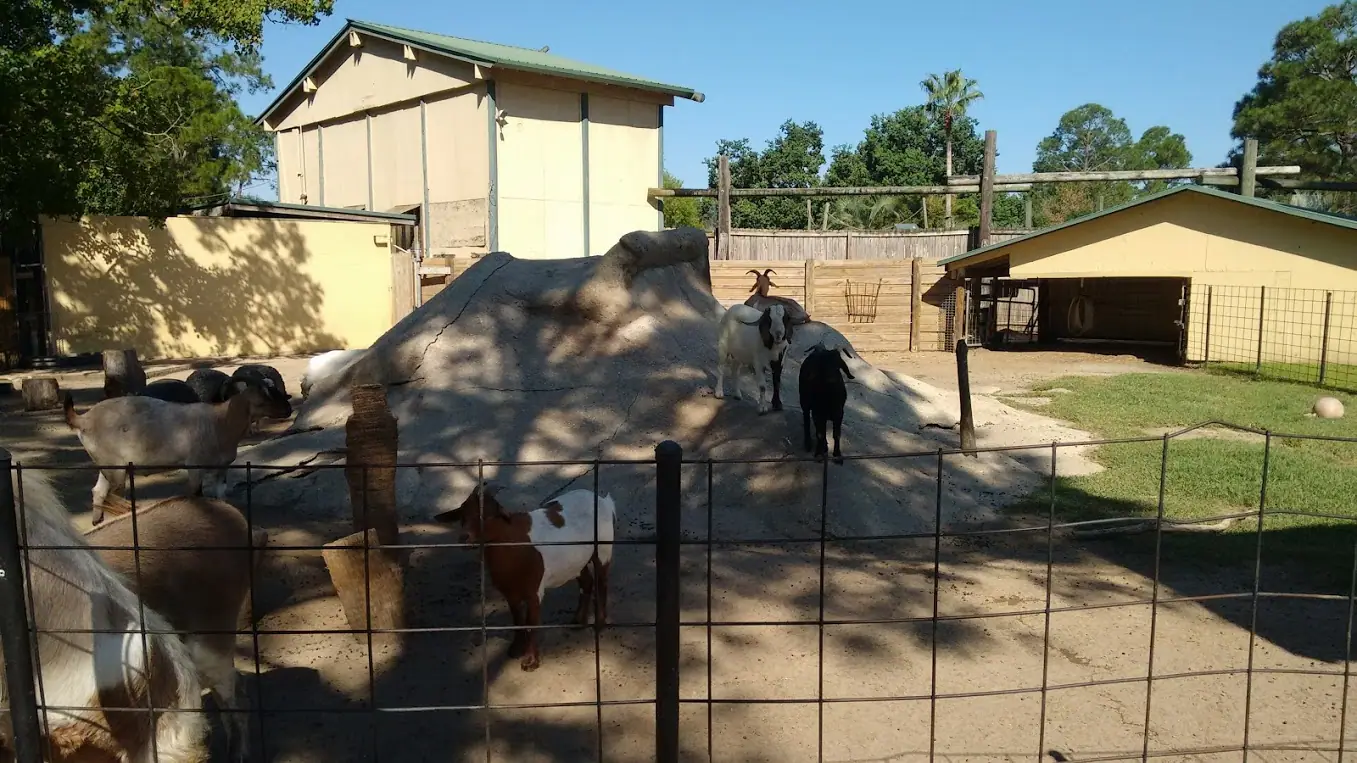
The reliable highlights: the giraffe feeding deck, where you hand over lettuce at eye level and discover how long a giraffe's tongue is; big cats including lions and tigers; lemurs, sloths, kangaroos and a reptile house; alligators, which on the Alabama coast are locals rather than exotics.

Keeper talks and scheduled shows run through the day and are worth building a visit around rather than treating as a bonus. Paid animal encounters are sold separately and are the reason a family's spend here can end up well above the ticket price. Decide in the car park, not at the counter with three children listening.

Shade is the thing this site got right. The paths are wide and there are trees, which on a July afternoon in south Alabama is not a small design decision.

Allow two to three hours for a straightforward visit and half a day if you are doing encounters. Strollers are easy on the paths. There is food on site, and, as at any zoo, it is priced accordingly.
Heat, hours and getting the timing right

South Alabama in July is not zoo weather, and animals know it before visitors do. Between June and early September the first two hours after opening are worth more than the rest of the day combined: the cats are visible, the primates are active and you are not walking a toddler through ninety-five degrees with a heat index above it.

Late afternoon is the second-best window, when the temperature drops and feeding activity picks up again. The dead zone is between about noon and three, when most of the collection is asleep in shade and so is everyone else.

Spring and autumn remove the problem entirely. March through May and late September through November are the best months to come, and they are also when the crowds thin out between the spring break and summer peaks.

Hours are seasonal and the zoo adjusts them, so check before you drive out. Rain is a genuine complication: this is an outdoor site with limited indoor space, and a wet afternoon here is not a good one. If the forecast is poor, keep it for another day rather than treating it as the rainy-day option.

Is it worth it, honestly

Yes, with a caveat about expectations.

Come if you have children under about twelve, if you want a half-day that is not the beach, if the idea of feeding a giraffe appeals, or if you have any interest in the Ivan story, which the zoo tells well and has earned the right to tell.

Think twice if you are expecting a major metropolitan zoo. This is a private operation on twenty-five acres. The enclosures are decent and improving, the collection is broad rather than deep, and some visitors arrive with San Diego in their heads and leave disappointed by arithmetic rather than by anything the zoo did wrong.

Against the alternatives: Waterville and Adventure Island are louder and cheaper per hour but teach nobody anything. The Gulf State Park trail network is free and gets you actual wild alligators, turtles and birds, but on its schedule rather than yours. The zoo is the reliable middle, and for a family with a rainy morning and a restless six-year-old it is the most dependable half-day in Gulf Shores that does not involve sand.

Near Gulf Coast Zoo

Straight-line distances, so allow more on the road — the island is long and has one main parkway.

  • Several orange water slides arranged in a row in front of a tower structure
    Entertainment

    Waterville USA

    A twenty-acre water park that predates most of the condo towers, sitting a quarter of a mile from an ocean that costs nothing.

    3–7 hoursPaid admission, historically with separate options for the water park and the dry rides, plus reduced afternoon and twilight pricing.4 mi away

  • A wooden house with wide verandahs shaded by mature trees
    Free
    Museum

    Gulf Shores Museum

    A free town museum inside a beach cottage that a 1979 hurricane took off West Beach, with a room devoted to what storms do here.

    0.5–1.5 hoursFree. No ticket and no charge for parking.3.1 mi away

  • Small boats moored alongside a timber dock and gangway on sheltered water
    Free
    Marina

    Homeport Marina

    Gulf Shores keeps its boats on a canal. Every one of them runs east to Perdido Pass or west to Mobile Bay to reach open water.

    1–4 hoursFree to walk the docks and look. Trips, rentals and slips are priced by the individual operators.2.5 mi away

  • Working fishing boats moored along a harbour dock under a heavy overcast sky
    Free
    Neighbourhood

    Bon Secour

    A river village that has processed Alabama's seafood since the 1890s, fifteen minutes from the beach and a century from the condo towers.

    1–2 hoursFree. There is nothing to pay to drive out here; the point is to buy seafood while you are there.3 mi away

Gulf Coast Zoo: common questions

Where is the Alabama Gulf Coast Zoo now?

On Oak Road East, roughly two miles north of the Intracoastal Waterway and about ten minutes' drive from the beach. It moved there from its original site near the coast and reopened on the new twenty-five-acre campus in March 2020. The relocation was deliberate: the old site flooded in Hurricane Ivan in 2004, and the new ground sits higher and drier. Parking on site is free.

What happened to the zoo during Hurricane Ivan?

Floodwater reached the old site in September 2004 and the staff evacuated the collection. Reported accounts describe roughly 265 animals moved over about thirty-six hours to the director's own property at Elberta, twenty miles inland. Damage came to around half a million dollars and the zoo stayed closed for about fourteen months. Animal Planet later made a thirteen-episode series, The Little Zoo That Could, about the recovery.

How long do you need at the Alabama Gulf Coast Zoo?

Two to three hours covers the site at a normal pace, and half a day if you book paid animal encounters or want to catch several keeper talks. It is about twenty-five acres with more than three hundred animals, so it is walkable rather than exhausting. In July, plan the visit for the first two hours after opening; the middle of the day is hot and most of the collection sleeps through it.

Is the Alabama Gulf Coast Zoo good for a rainy day?

Only partly. It is an outdoor site with limited covered space, so heavy rain makes for an uncomfortable visit rather than an impossible one. The better rainy-day plan in Gulf Shores is the museum, the arts centre over in Orange Beach or an indoor attraction, and to keep the zoo for a dry morning. It does sit far enough inland that a passing coastal shower sometimes misses it entirely.