Skip to content
Search
Menu

These bookings go through Viator, and we are paid for them. Your price is the same, and the payment had nothing to do with the picks.

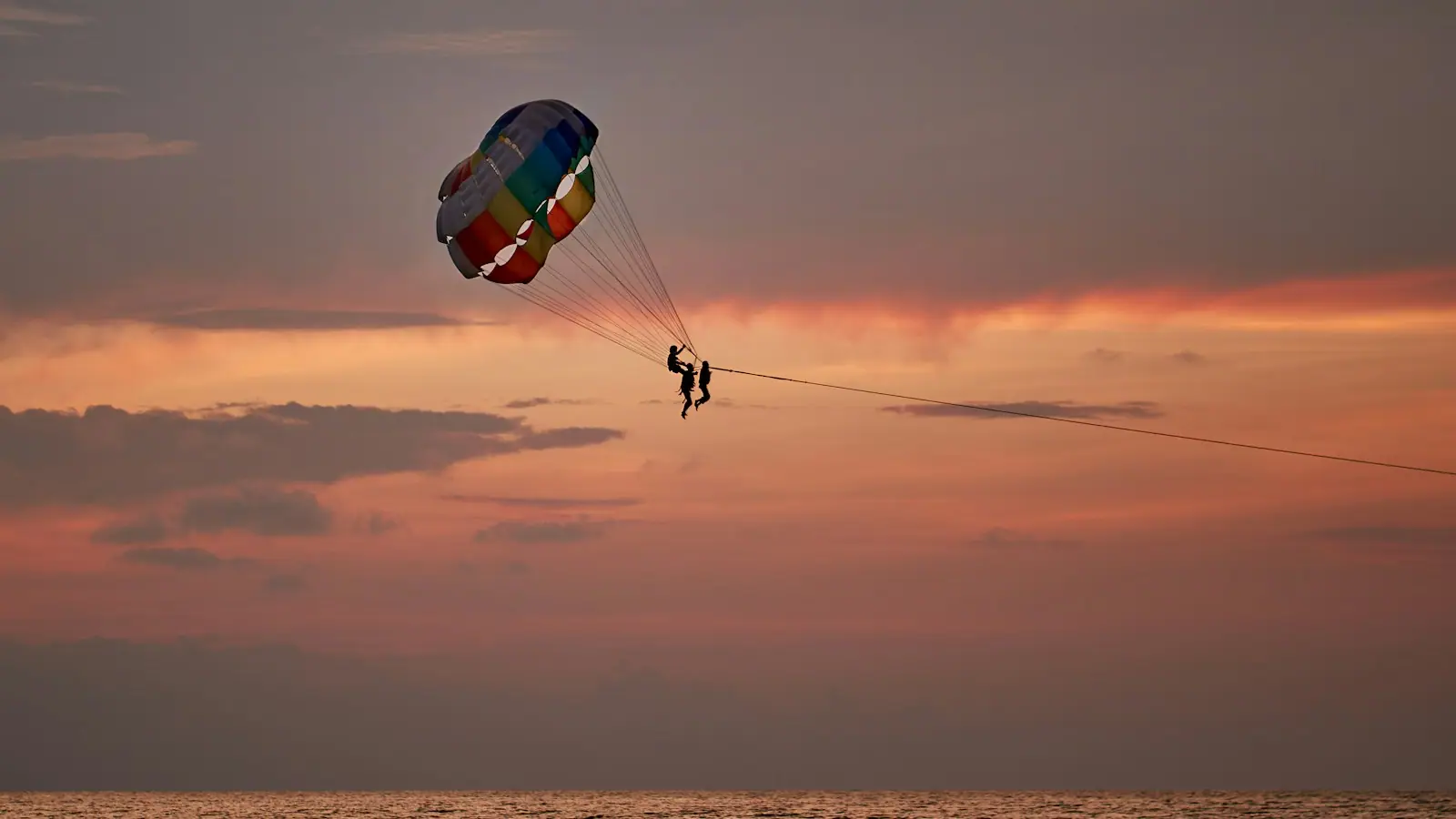
A parasail canopy hanging above the ocean in late afternoon light
Unsplash

Gulf State Park

Parasailing: The Only Way to See Both Waters at Once

Last updated

What parasailing over Gulf Shores and Orange Beach actually shows you, where the boats leave from, weight and age limits, and why mornings rarely cancel.

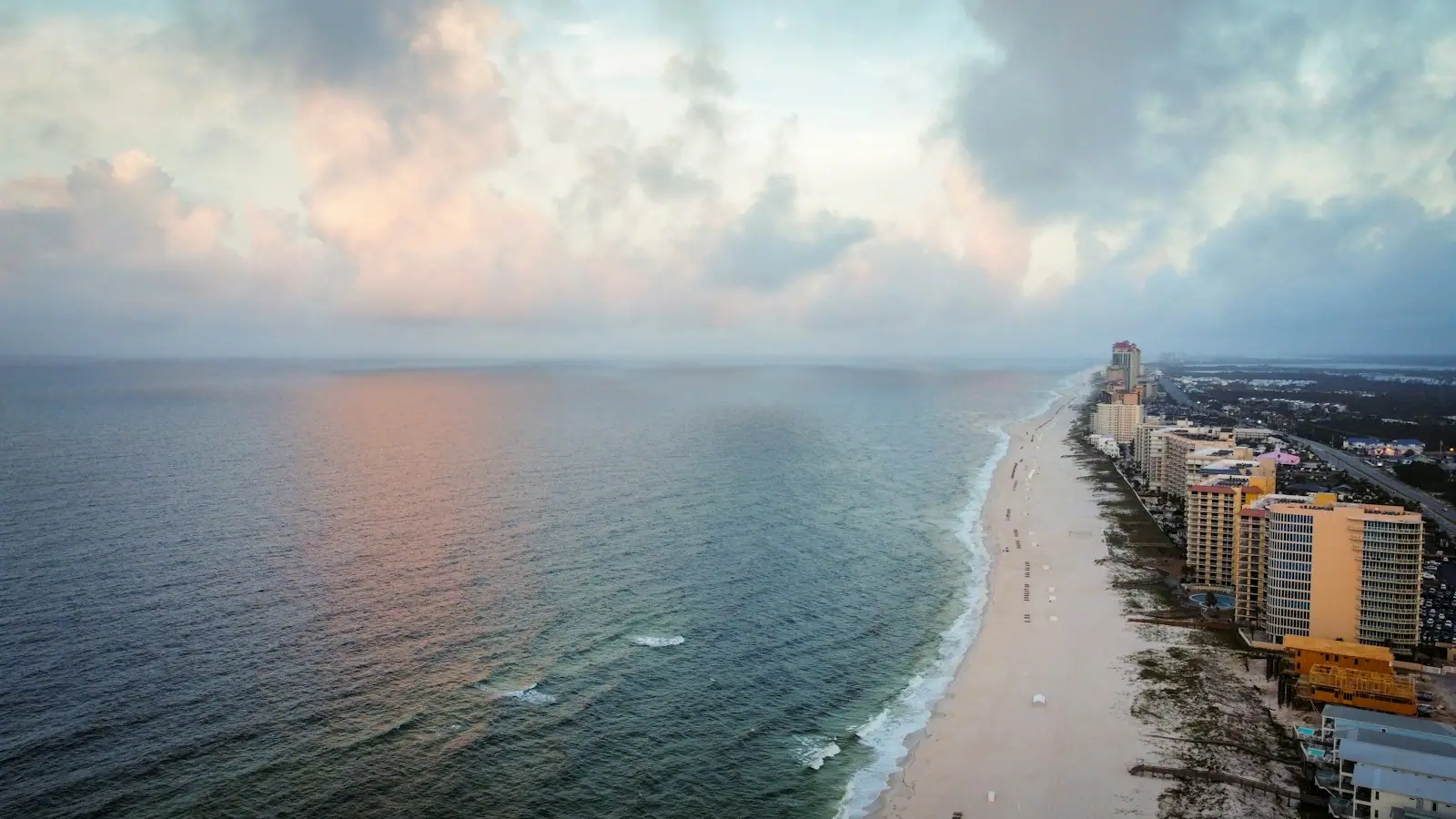
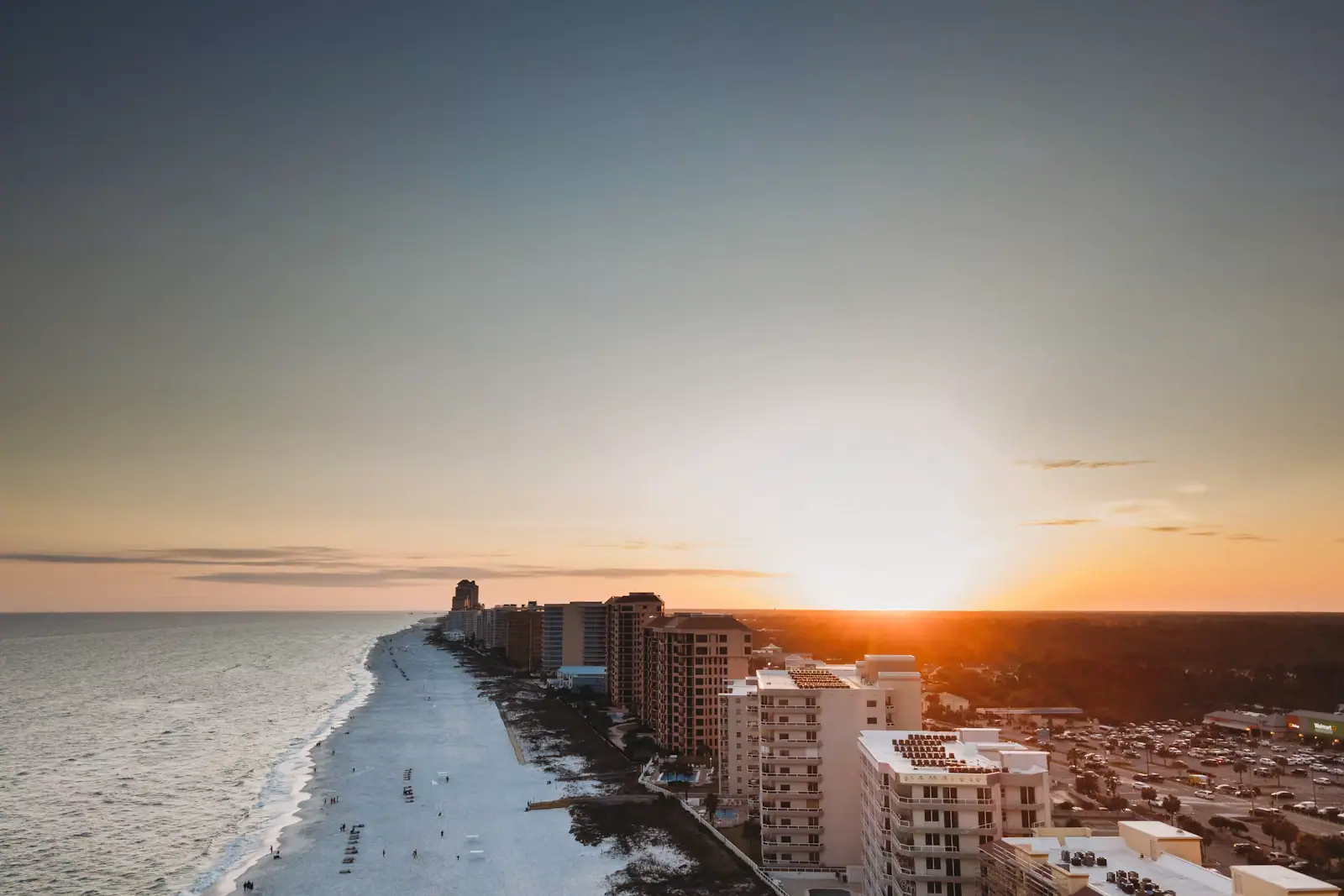
From the sand, Alabama's coast reads as a wall of condominium towers with a beach in front of it. From a few hundred feet above the water it reads as something else entirely, and that transformation is the honest reason to spend money on a parasail flight here rather than treating it as a generic beach activity.

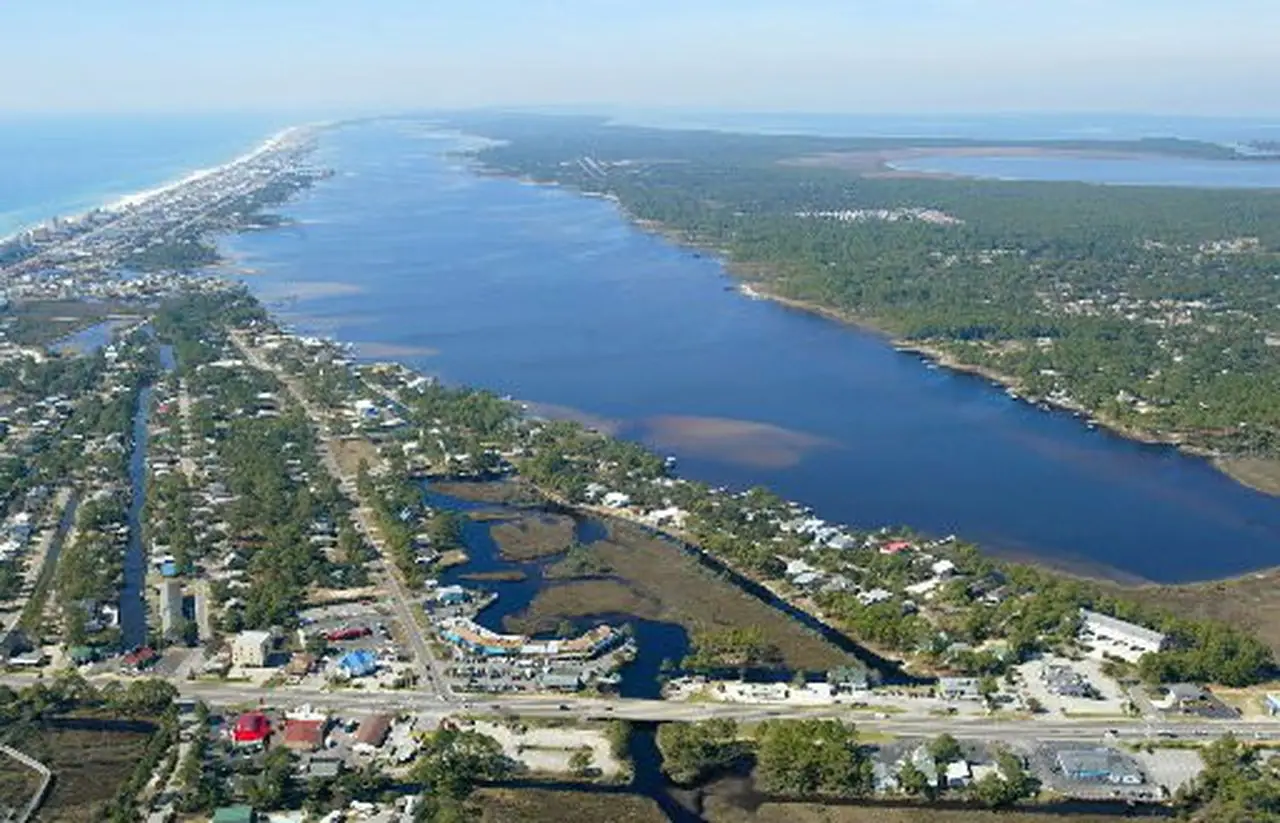
What you see is how thin this place is. The strip of land carrying the towers, Highway 182, the state park and everything else is often less than half a mile wide, and from altitude the Gulf in front and the back bays behind resolve into a single object. Little Lagoon appears as a long thin sliver running west behind the beach. The Intracoastal Waterway shows up as a straight line where nothing straight belongs. Wolf Bay and Arnica Bay open out inland. If the air is clear you can hold the Gulf and three different bays in one glance, which is not possible from any road on this coast.

The other thing altitude reveals is the gap. Gulf State Park occupies roughly 6,150 acres in the middle of the beach, between Gulf Shores and Orange Beach, and from the air it is unmistakable: a solid block of green and dune where the towers simply stop for several miles, with a pier reaching out from the middle of it. Nothing at ground level communicates that as clearly as thirty seconds at height does. If you have been wondering why the two towns feel like separate places rather than one strip, this is your answer, laid out flat.

The flights themselves are gentler than the marketing suggests. You board a boat at a marina, ride out for fifteen or twenty minutes, get harnessed on the stern, and a winch pays out line until the canopy lifts you off the deck. There is no running start, no jump and, for most people, no water at all unless you ask to be dipped on the way down. Two or three can usually fly together, which is the format families choose.

Manage your expectations about time. A typical booking is an hour to ninety minutes from dock to dock, and your share of the air is often eight to twelve minutes of it. The rest is the ride out, other passengers flying, and the ride back. Knowing that in advance is the difference between a good experience and a disappointed one, and it is why the early slot, when the water is glass and the light is low, is worth chasing.
Thirty-two miles of coast, seen edge on

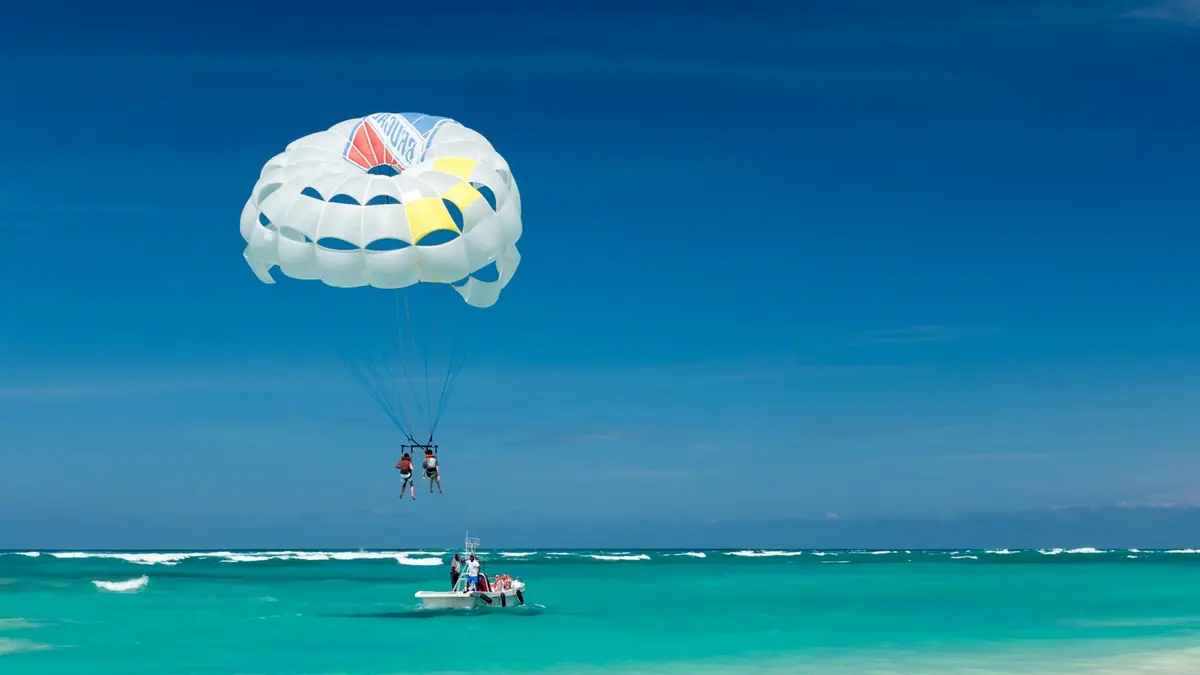
Two people suspended under a parasail canopy above the sea near a beachUnsplash
Two people suspended under a parasail canopy above the sea near a beach

Work through it in the order it appears as you climb.

Straight down. The sandbars. Alabama's nearshore bottom runs in parallel bars with troughs between them, and from the air the whole system shows up as bands of pale and darker green. Swimmers stand on the bars; rip currents run out through the gaps in them. Ten seconds looking down teaches you more about this beach than any sign at an access point.

Inland. The line of towers, then the gap. Gulf State Park's block of green between the two towns is the single most legible feature on this coast from altitude, and the pier sticking out from the middle of it gives you the scale.

Further inland. The Intracoastal Waterway, dead straight, with the bays opening off it. Little Lagoon to the west of the park is a long thin line of water paralleling the beach; Wolf Bay and the Perdido system spread out behind Orange Beach to the east.

East. On a clear day, Perdido Pass and the bridge carrying Highway 182 over it, the jetties either side, and beyond that the Florida line. The pass is the only significant break in the beach at this end of the state, and it looks it.

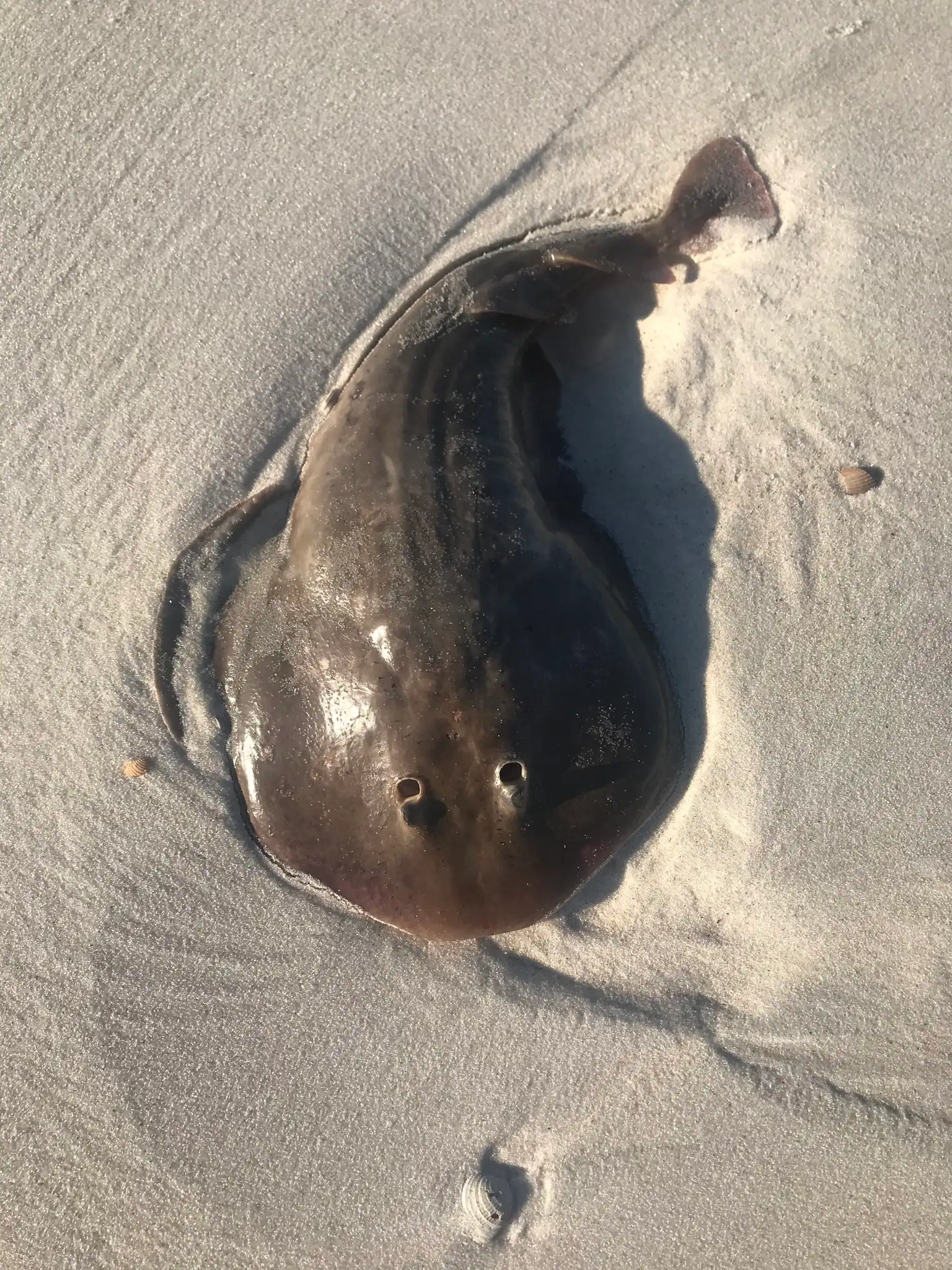
In the water. Rays, sometimes in numbers. Sea turtles between May and October. Dolphins working parallel to the shore. Passengers see more marine life from a parasail than from most boats, because you are looking down through the surface rather than across it.

Where the boats go out from

Parasail operations on this coast run out of the marinas and back bays of Orange Beach, around Perdido Pass, Cotton Bayou and Terry Cove, with a smaller presence on the Gulf Shores side of the waterway. There are also beachfront concessions that take bookings and run a boat off the sand in season.

The practical implications are two. First, if you are staying in Gulf Shores or out on Fort Morgan, most of your options involve driving east, and Highway 182 in July is not quick. Build twenty to forty minutes into the plan. Second, a boat leaving from a bay marina has to transit Perdido Pass to reach the Gulf, which adds time to the trip and means the crossing can be bumpy even when the flight is calm.

You will fly over the Gulf rather than the bays in essentially all cases. That is partly wind and partly the fact that the bridge and the back bays are no place for several hundred feet of towline.

A note on choosing an operator. This is a small market and the difference between companies is less about the equipment than about how they run the day: how many people they put on a boat, whether they keep to their slots, and whether they will tell you honestly at nine in the morning that the afternoon looks unflyable. Read recent reviews for that rather than for the view, which is the same from every boat.

The ninety minutes you are actually buying

When to go

Laid out honestly, because almost nobody does.

Check in, fifteen to thirty minutes before departure. Waivers, weights taken, harness sizing. Weights are recorded because the operator has to work out who flies with whom.

Ride out, ten to twenty minutes. Through the pass if you left from a bay marina, then along the beach until the boat is in clear air and clear water.

Waiting your turn. A boat carrying eight to twelve passengers flies them in pairs or threes. If you are last up, that is thirty or forty minutes on the deck.

Harness and launch, three minutes. You sit or stand on the winch platform at the stern, the canopy inflates behind the boat, and the line pays out. The lift-off is smooth and slower than people expect.

Airborne, eight to twelve minutes. Quiet. That is the part that surprises first-timers: away from the engine noise there is very little sound at all.

Recovery. The winch brings you back down onto the platform. If you want to be dipped in the Gulf on the way in, say so before you launch, not while you are up there.

Ride home, ten to twenty minutes.

So a ninety-minute booking is typically ten minutes of flight. Knowing that, take the first slot of the day: the water is calmest, the light is best, and you are less likely to be the eleventh passenger.

Mornings fly, afternoons cancel

When to go

The weather pattern on this coast is unusually predictable in summer, and it runs against the afternoon.

Dawn brings near-calm air and a flat Gulf. The sea breeze fills in from the south through the late morning, and by early afternoon there is a chop on the water and a stiffer, gustier wind at height. Then, on a large proportion of summer days, thunderstorms build inland over Baldwin County and move toward the coast in the late afternoon. Operators stop flying long before a storm arrives, and lightning anywhere in range ends the day.

The consequence is simple. Book the first or second slot of the morning. It is the same price, the water is glass, the light for photographs is far better, and it is the slot least likely to be cancelled.

By season. The parasail fleet runs roughly from spring into October, with the fullest schedule from May to Labor Day. September and October are the best flying of the year here: warm water, thinner crowds, and settled air once the summer storm pattern breaks. Winter largely shuts the activity down, both for air temperature at height and for the frontal wind that comes through every week or two.

If you get cancelled. Rebook for the following morning rather than the same afternoon. And book your flight early in your holiday for exactly this reason: a Tuesday cancellation has four more chances, a Friday one has none.

What it costs, and what to take up with you

What it costs

Bands advertised on this coast rather than quotes. Confirm when you book.

  • Single flyer: commonly around $85–$120.
  • Tandem, two flying together: frequently $150–$220 for the pair.
  • Triple: often $220–$300 for three, where the operator's equipment allows it.
  • Observer riding along without flying: usually $25–$45 a seat, and worth it for a parent who wants to be aboard.
  • Photographs: typically sold separately, in the region of $40–$80 for a package.

Most operators take a deposit to hold the slot and charge the balance at the dock. Ask what the cancellation terms are when they cancel for weather, which is the scenario that actually arises.

What to take. Sunscreen applied before you leave, because there is no shade on a parasail boat. A hat with a strap or no hat at all — an unsecured cap is gone the moment you lift. Sunglasses likewise, with a retainer. Water. Shoes you can get on and off easily.

What to leave. Loose phones, loose keys, loose anything. Several hundred feet of Gulf is under you and none of it is recoverable. If you want your own photographs, use a strap or a tethered case, and check with the operator first because some will not permit it at all.

Weight, age and the pairing arithmetic

Before you book

The rules here are set by the operator and by the wind on the day rather than by anything you can look up in advance, so treat everything below as what to ask about rather than what to expect.

Combined weight governs everything. Operators work to a minimum and a maximum combined weight for the harness and canopy in use. Too light and you do not fly stably in light wind; too heavy and you do not get the altitude, or you do not go at all. That is why they weigh you at check-in, and why the answer can change between the morning and the afternoon as the breeze shifts. A party that assumed they would all fly together sometimes discovers they are flying in a different arrangement.

Minimum ages exist and vary. Most operators set one, commonly somewhere in the range of a young school-age child flying tandem with an adult. Some also require a parent aboard. Ask at booking rather than at the dock, because a disappointed six-year-old at nine in the morning ruins a day.

Who should not go. Anyone pregnant, anyone with a recent back, neck or shoulder injury, anyone with a heart condition, and anyone who has had recent surgery. Operators will ask, and the waiver will ask again. Mobility matters more than people expect: you have to get onto a moving boat, along it, and onto the winch platform.

Swimming ability is not usually required because you stay dry, but a life jacket is worn under the harness regardless.

Sea state is the hidden variable. The flight is smooth; the boat ride is not always. If anyone in the party is prone to motion sickness, the morning slot matters twice over.

What actually governs safety here, and what to ask

Before you book

Parasailing is a regulated commercial passenger operation rather than an unsupervised one, and the useful thing for a visitor is knowing which layer does what.

The boat. A commercial parasail vessel carrying passengers for hire is a Coast Guard regulated passenger vessel, and the person driving it holds a Coast Guard licence. That is the foundation, and it is federal rather than local. You can ask to see it.

The equipment. Towline, harness, canopy and winch all have service lives and inspection intervals set by the manufacturer. An operator who cannot tell you when the line was last replaced is telling you something.

The weather call. This is where the real risk sits. Almost every serious parasailing accident on record traces back to flying in conditions that were marginal or deteriorating, or to a towline failure under load. Wind speed, wind direction and approaching storms are the variables, and the only protection is an operator willing to cancel.

State law. Florida passed dedicated parasailing safety legislation in 2014 setting out wind limits, insurance and weather-reporting duties. We have not been able to establish that Alabama has an equivalent statute, so do not assume the same state-level protections apply on this side of the line. Ask the operator directly what wind limits they fly to and what their insurance covers.

Two questions worth asking, in this order: what wind speed do you stop flying at? and what happens to my booking if you cancel? An operator with clear answers to both is the one to book. An operator who suggests the weather is never really a problem here is not.

On the ground

Where to go

Every place below has its own page — hours, parking, what it costs and what to expect when you get there.

  • Two anglers casting from a concrete pier into open water in the last light of the evening
    Landmark

    Gulf State Park Pier

    1,540 feet of concrete over the Gulf, rebuilt twice after hurricanes, with a three-dollar walking ticket most visitors never notice.

    1–5 hoursTwo tickets: all-day fishing around $10 for an adult, and all-day sightseeing around $3. Children 11 and under are free for both.

  • Aerial view of a narrow tidal pass cut between two low sandy shorelines
    Free
    Beach

    Alabama Point

    Six thousand feet of beach beside the only rock on the Alabama coast, and the fastest water in the state running past the end of it.

    2–7 hoursFree to use. Parking at the state-run east access is charged at the Gulf State Park beach rate, fifteen dollars a day for a car in 2026.

  • Rows of boats moored in a marina basin on flat water in early morning light
    Free
    Neighbourhood

    Orange Beach

    Alabama's other beach city: nine thousand people, a maze of back bays and the only cut from those bays to open Gulf water.

    3–10 hoursFree to visit. Beach parking is charged at both city and state park accesses.

  • Aerial view of a narrow tidal pass cut between two low sandy shorelines
    Free
    Water feature

    Perdido Pass

    The only gap in thirty-two miles of Alabama barrier coast, armoured with granite, and the wrong place to let anyone swim.

    1–3 hoursFree to visit. Parking at the adjoining Gulf State Park beach accesses is charged per vehicle per day.

  • Sea oats on a low dune with a strip of white sand and bright turquoise water behind
    Free
    Beach

    Cotton Bayou Beach

    The Orange Beach access at the foot of Highway 161, with dune boardwalks, a state-park pay kiosk and no view of the bayou it is named for.

    2–6 hoursFree to walk on. Parking is charged by Gulf State Park: fifteen dollars a day for a car in 2026, with an annual pass sold separately.

  • Two paddleboarders crossing a wide sheet of flat, pale, mirror-calm water under a soft sky
    Free
    Water feature

    Little Lagoon

    Ten miles of shallow, warm, brackish water behind West Beach, with one public ramp and a pass that eats propellers.

    1.5–5 hoursThe water is free to use. The city charges for parking at Little Lagoon Pass Park, recently around five dollars for up to four hours and ten for a full day.

Straight answers

Questions people actually ask

How high do you go parasailing in Gulf Shores?

Height depends on how much towline the crew pays out, on the wind and on your combined weight, so it varies between flights on the same boat. Operators on this coast commonly advertise several hundred feet of line, which puts a typical flight a few hundred feet above the water. Ask what line length they use if the number matters to you, and expect an honest answer to include "it depends on the day".

How much does parasailing cost in Orange Beach?

Advertised bands run roughly $85 to $120 for a single flyer, $150 to $220 for two flying together, and $220 to $300 for a triple where the equipment allows it. An observer seat for somebody who does not want to fly is commonly $25 to $45, and photograph packages are usually extra. Most operators take a deposit at booking and the balance at the dock. Confirm current pricing directly.

How long are you actually in the air?

Usually eight to twelve minutes, inside a booking of an hour to ninety minutes from dock to dock. The rest is check-in, the ride out through Perdido Pass or along the beach, waiting while other passengers fly, and the ride back. That ratio surprises people, so it is worth knowing before you book. Taking the first slot of the day reduces the waiting and gives you the calmest water.

Do you get wet parasailing?

Not unless you ask to. Flights on this coast launch and land from a winch platform on the stern of the boat, so you go up dry from the deck and come back down onto it. If you want to be dipped into the Gulf on the way in, tell the crew before you launch rather than signalling from three hundred feet up. You wear a life jacket under the harness either way.

What is the weight limit for parasailing here?

Operators work to a combined minimum and maximum for the harness and canopy they are using, and the workable range shifts with the wind on the day, which is why you are weighed at check-in. Too light and you will not fly stably in light air; too heavy and you will not get up. Ask when booking, and be prepared for your group to be paired differently than you assumed.

Can children go parasailing in Gulf Shores?

Usually yes, flying tandem with an adult, but minimum ages are set by each operator and vary. Some also require a parent or guardian to be aboard the boat. Ask at the time of booking rather than at the dock. Bear in mind that the boat ride itself is often rougher than the flight, so a child prone to motion sickness will have an easier morning than an afternoon.

What is the best time of day to go parasailing here?

The first slot of the morning. This coast has a reliable summer pattern: near-calm air at dawn, a sea breeze filling in through the late morning, chop and gustier wind at height by early afternoon, and inland thunderstorms drifting toward the coast late in the day. The early flight costs the same, gets flatter water and better light, and is far less likely to be cancelled.

Is parasailing safe on the Alabama coast?

The vessel is a Coast Guard regulated passenger boat under a licensed captain, and the equipment has manufacturer service intervals. The real variable is the weather call, since most serious incidents anywhere trace to flying in marginal conditions or to towline failure under load. Florida passed a dedicated parasailing safety law in 2014; we cannot confirm an Alabama equivalent, so ask your operator directly what wind limits they fly to.