Skip to content
Search
Menu

These bookings go through Viator, and we are paid for them. Your price is the same, and the payment had nothing to do with the picks.

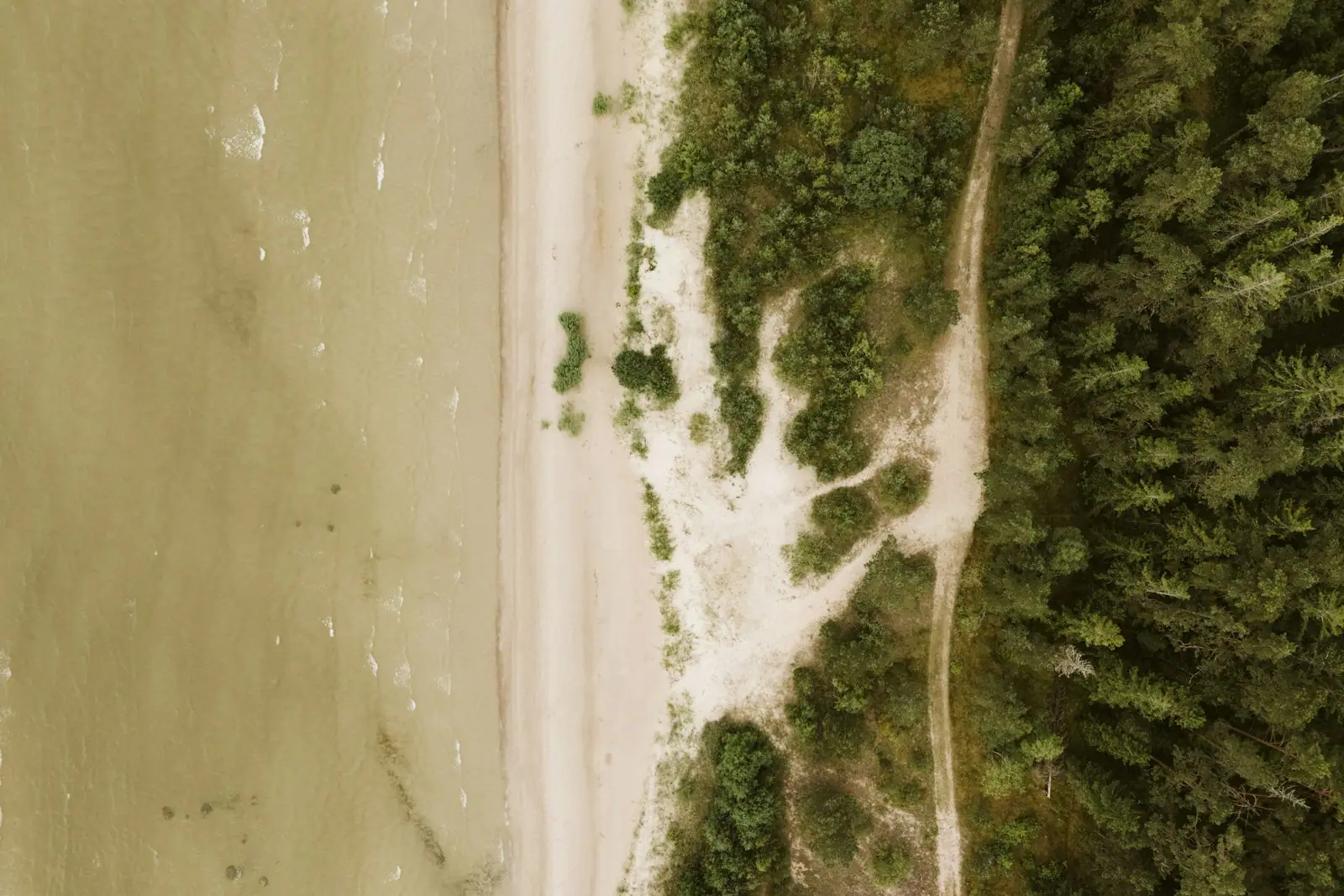
Aerial view of a narrow strip of undeveloped pale sand between green water and dense forest
Unsplash

Gulf State Park

Nature and Wildlife on Alabama's Thirty-Two Miles

Last updated

Where to find wildlife around Gulf Shores: Bon Secour refuge, the endangered Alabama beach mouse, spring bird fallouts at Fort Morgan and park alligators.

Alabama has the shortest coastline on the Gulf of Mexico, and that turns out to be the reason its wildlife is worth a trip rather than a footnote. A short coast that points south into open water behaves like a funnel. Everything crossing the Gulf has to arrive somewhere, and a great deal of it arrives here.

The clearest version of this happens every April. Songbirds wintering in Central America and the Caribbean launch north across six hundred miles of open water in a single flight, and the first land they meet is the Fort Morgan peninsula — a narrow finger of scrub oak and pine with Mobile Bay on one side and the Gulf on the other. In good weather they carry straight on inland and you barely notice them. When a north wind or a line of rain meets them halfway across, they arrive exhausted and drop into the first cover they can find, and Fort Morgan fills with warblers, tanagers, buntings and orioles in numbers that stop conversations. Birders call it a fallout. It is not scheduled, it cannot be booked, and for people who care about such things it is the single best natural event on this coast.

The second reason is negative space. Thirty-two miles of Alabama Gulf front is mostly condominium towers, and the exception is Bon Secour National Wildlife Refuge: roughly seven thousand acres protecting what is left of the state's undeveloped coastal dune system, set aside by Congress in 1980 precisely because there was so little of it. Behind the dunes there is scrub, maritime forest, freshwater at Gator Lake and salt marsh on the Bon Secour Bay side. It is the most complete surviving cross-section of what this coast looked like before the road.

Inside that dune system lives an animal found nowhere else on Earth. The Alabama beach mouse is federally endangered, nocturnal, pale enough to disappear against the sand, and entirely dependent on sea oats and the seeds they drop. Bon Secour holds one of the densest populations that remains. You will almost certainly never see one. The reason to know about it is that it explains every rope, every sign and every request to stay off the dunes between here and Fort Morgan.

Then there is the state park, which does the everyday work. Gulf State Park counts more than 370 species of birds, mammals, reptiles and amphibians across its ecosystems, and its paved trail network puts almost all of them within reach of a bicycle. Alligators along the Lake Shelby shore, ospreys overhead, gopher tortoise burrows in the sandy verges, armadillos in the leaf litter, and — with early starts and some luck — bobcats and coyotes on the dune-scrub segments.

What this coast does not have is a guided nature industry to match any of it. There are dolphin cruises out of Orange Beach and very little else. The good news is that almost everything on this page is free, self-guided and within twenty minutes of the beach.
Our picks

The ones we would book

  • Editor's Pick

    Best dolphin trip out of Perdido Pass

    Why we chose it

    The pass is where the bay water meets the Gulf and the bait stacks up, which is why the resident dolphins work it so hard. A trip that runs out through the pass and back along the island beats one that circles the bay. Look for a boat that states its passenger count and carries shade, and take the earliest departure of the day for flat water.

  • Best for Families

    Best short trip with small children aboard

    Why we chose it

    Ninety minutes is the right length with a five-year-old and two hours is not. What matters more than the itinerary is whether there is a restroom, shade and a rail a child cannot fit through. Ask before booking rather than after. Morning departures are calmer and cooler than afternoon ones on this coast.

    Mobile Area Multi-Attraction Pass
    Best for FamiliesFree cancellationInstant confirmation
    Aquariums

    Mobile Area Multi-Attraction Pass (opens in a new tab)

    67 reviews

    Experience a selection of the best attractions in Mobile/ Dauphin Island/ Spanish Fort/ Theodore - all in one money saving ticket! This…

    1 day

    Prices checked

    from $25
  • Best Value

    Cheapest way onto the water to see dolphins

    Why we chose it

    Because there is so little inventory here, price differences between boats are mostly about seat count rather than quality. A larger shared boat at a lower per-head price is a perfectly good first trip, particularly if you would otherwise skip the water entirely. Check whether the price quoted is per person or per party.

    Segway Guided Eco Tour through Gulf State Park
    Best ValueFree cancellationInstant confirmation
    Top Product

    Segway Guided Eco Tour through Gulf State Park (opens in a new tab)

    18 reviews

    Cruise through the beautiful Hugh S. Branyon Backcountry on a Segway tour designed for exploration and family fun. This 2-hour guided Eco…

    2–3 hours

    Prices checked

    from $93.50
  • Small Group

    Best small boat for actually hearing the captain

    Why we chose it

    On a six or twelve-passenger boat you can ask questions and get answers about the pass, the bays and what the shrimpers are doing, which is the difference between a wildlife trip and a photo opportunity. Smaller boats also get closer to the back-bay shallows where the terrapins and wading birds are.

Bon Secour: the last undeveloped dunes in Alabama

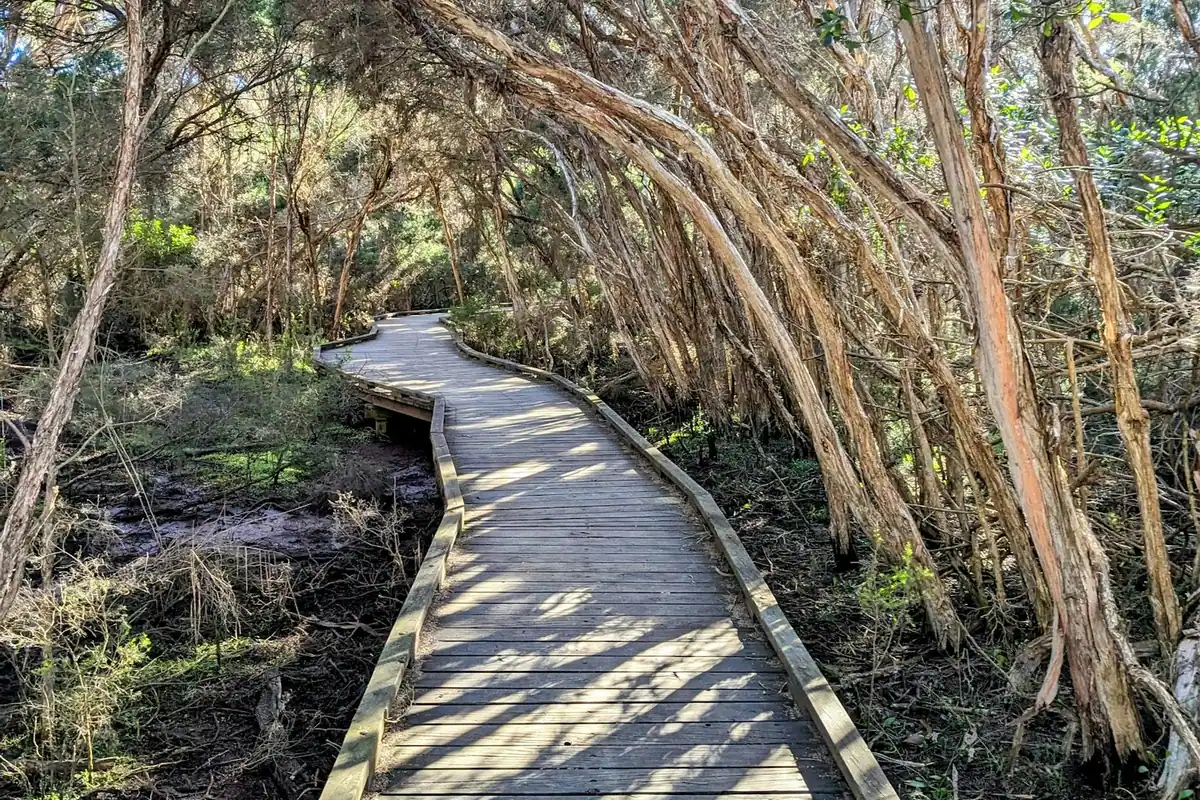
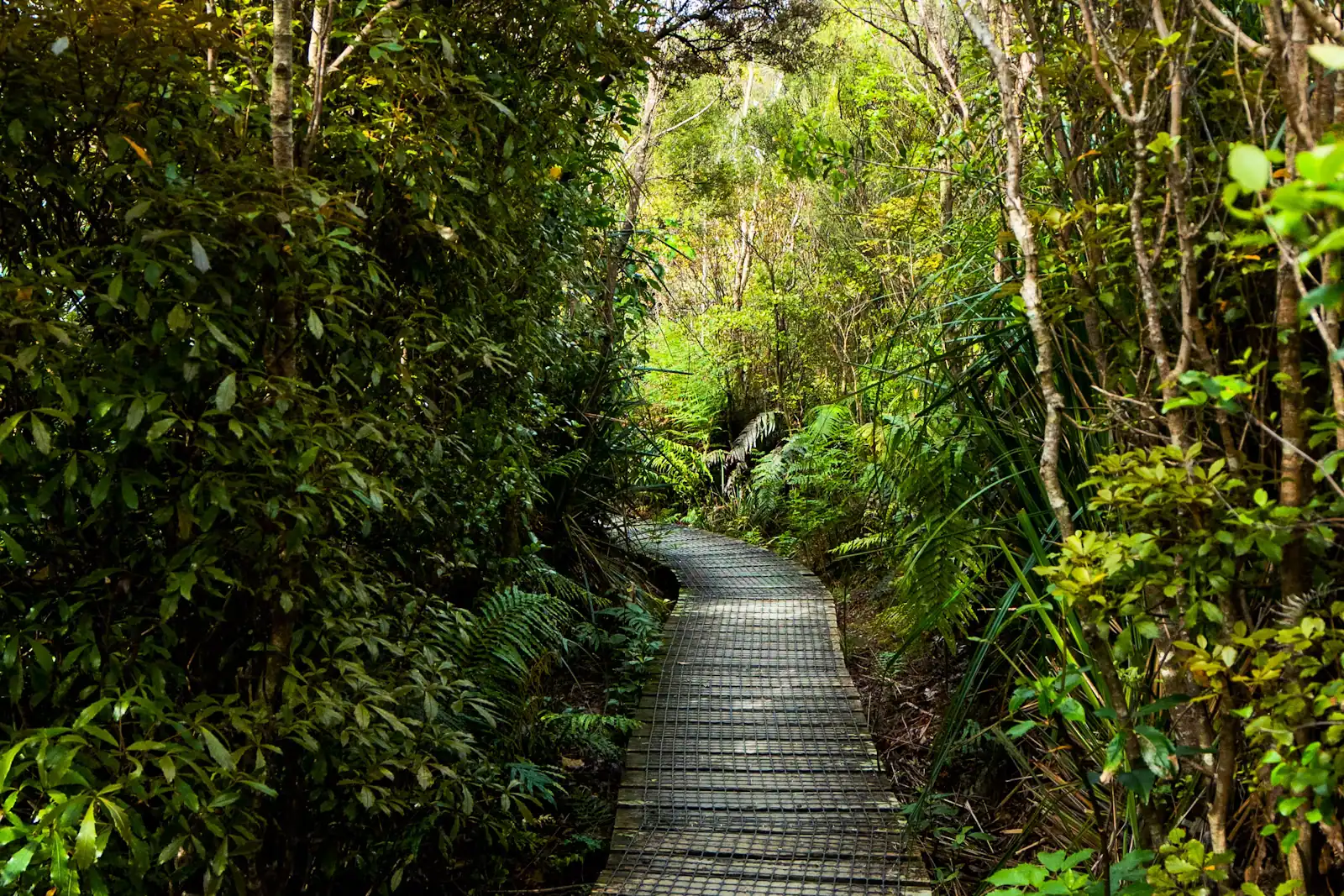
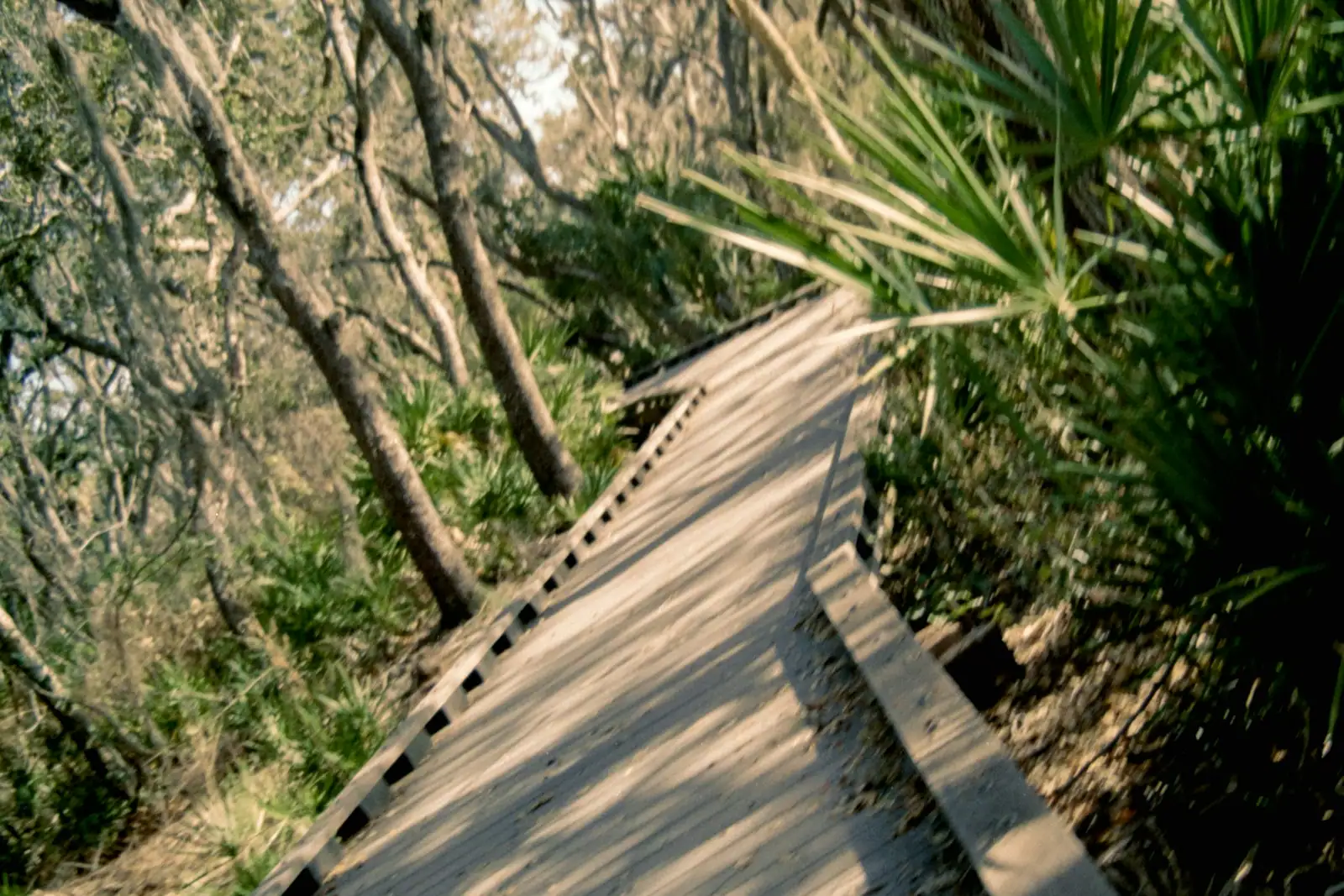
A narrow timber walkway running through scrubby coastal woodland towards waterUnsplash
A narrow timber walkway running through scrubby coastal woodland towards water

The refuge is not one block but several scattered parcels on the Fort Morgan peninsula, totalling somewhere around seven thousand acres. Congress established it in 1980 with a specific job: preserve coastal dune habitat, protect the species that depend on it, and leave a working piece of the original coast as a reference for scientists and students. It has no entry fee and no gift shop.

Two trails carry almost all the visitors.

Jeff Friend Trail is the easy one — roughly a mile, largely flat and surfaced, looping around Little Lagoon through maritime forest with water views most of the way. It is doable with a pushchair and takes under an hour at a wildlife-watching pace. Alligators are present in the lagoon.

Pine Beach Trail is the real walk: about two miles each way from the car park on Highway 180 out to the Gulf, passing Gator Lake and crossing between fresh and salt water on the way. There is no shade for long stretches, no water, no restroom at the far end and no lifeguard on the beach you arrive at. In July this is a serious undertaking and people underestimate it constantly. In February it is one of the best walks on the Gulf Coast.

The refuge has cleared out the old decayed boardwalks, and the Centennial Trail now links the Jeff Friend and Pine Beach systems so the through route is walkable in dry conditions. After heavy rain, parts hold water. Conditions change with the storm season and with the refuge's own work, so check before planning a long loop.

The mouse that explains all the rope

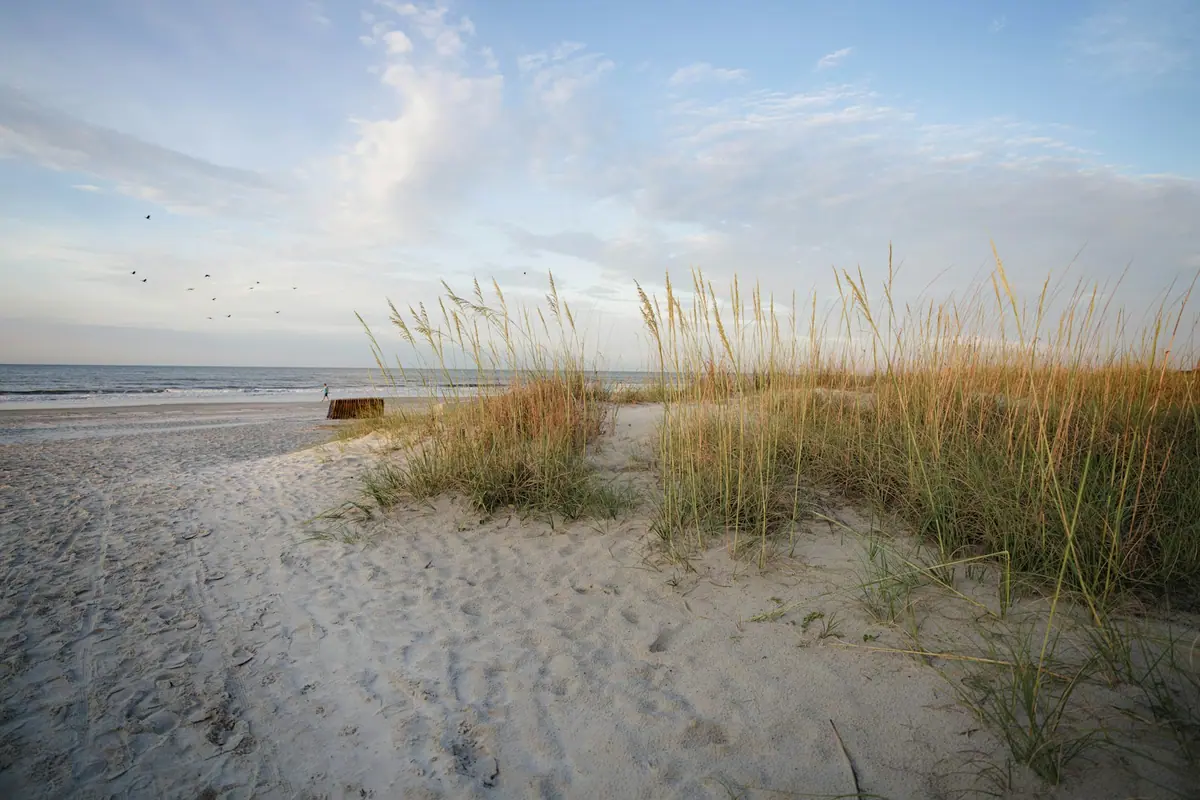
Sea oats growing on a low dune above a wide pale beach under a broad skyUnsplash
Sea oats growing on a low dune above a wide pale beach under a broad sky

Visitors on this coast are asked, constantly and by a lot of signage, to keep off the dunes and to use the walkovers. It is worth knowing why, because the reason is not tidiness.

The Alabama beach mouse lives in these dunes and nowhere else. It is a pale subspecies, small enough to sit in a tablespoon, active at night, and it survives by caching the seeds of sea oats and other dune plants in burrows dug into the sand behind the primary dune. It was listed as endangered in 1985. Development took most of its range, and hurricanes take the rest periodically and then give it back slowly as the dunes rebuild. Bon Secour holds one of the densest populations left.

Everything it needs is fragile in the same way. Sea oats hold the dune together with their roots; walking over them kills the plants, the sand blows out, and the burrow system goes with it. A single well-used shortcut across a dune can open a blowout that takes years to heal.

There is a second-order effect visitors rarely consider. Free-roaming and off-lead domestic cats and dogs are a documented pressure on beach mouse populations, which is part of why the rules about animals on this coast are stricter than they look.

You are not going to see one. Accept that, take the walkover, and consider that the reason Alabama's beaches still have a dune line at all is a rodent that almost nobody has ever laid eyes on.

April at Fort Morgan, and the banding station

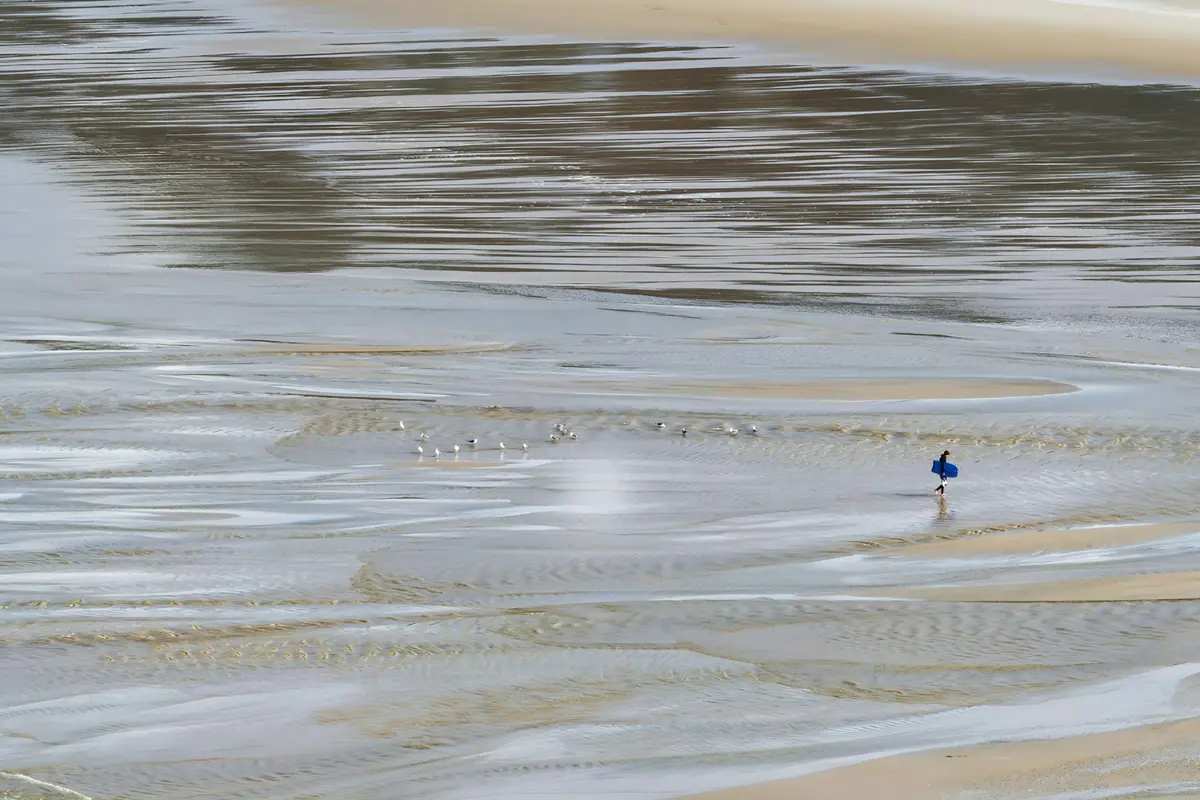
A single small shorebird walking across a thin film of water on a wide sand flatUnsplash
A single small shorebird walking across a thin film of water on a wide sand flat

When to go

Trans-Gulf migration is the headline event of the natural year here, and the window is narrow: roughly the last week of March through the first half of May, with the second half of April the heart of it.

What you are watching for is weather. On a soft southerly the birds arrive with fuel to spare and keep going north, and the peninsula looks ordinary. When a front stalls over the Gulf or a north wind meets them mid-crossing, they come ashore at the limit of their reserves and drop into whatever cover is closest. A fallout can put dozens of species into a few acres of scrub oak behind the fort, feeding on the ground in plain sight because they have no energy left to be shy.

Alabama Audubon runs a coastal bird banding station at Fort Morgan State Historic Site each spring, generally over several days in the second half of April, and it is one of very few banding operations in the United States that the public can simply walk up to. Volunteers take birds from mist nets, record and ring them, and release them, usually explaining the whole thing as they go. Sessions are free to attend though the fort itself charges admission, they run early, and places fill — check Alabama Audubon's calendar rather than turning up on spec.

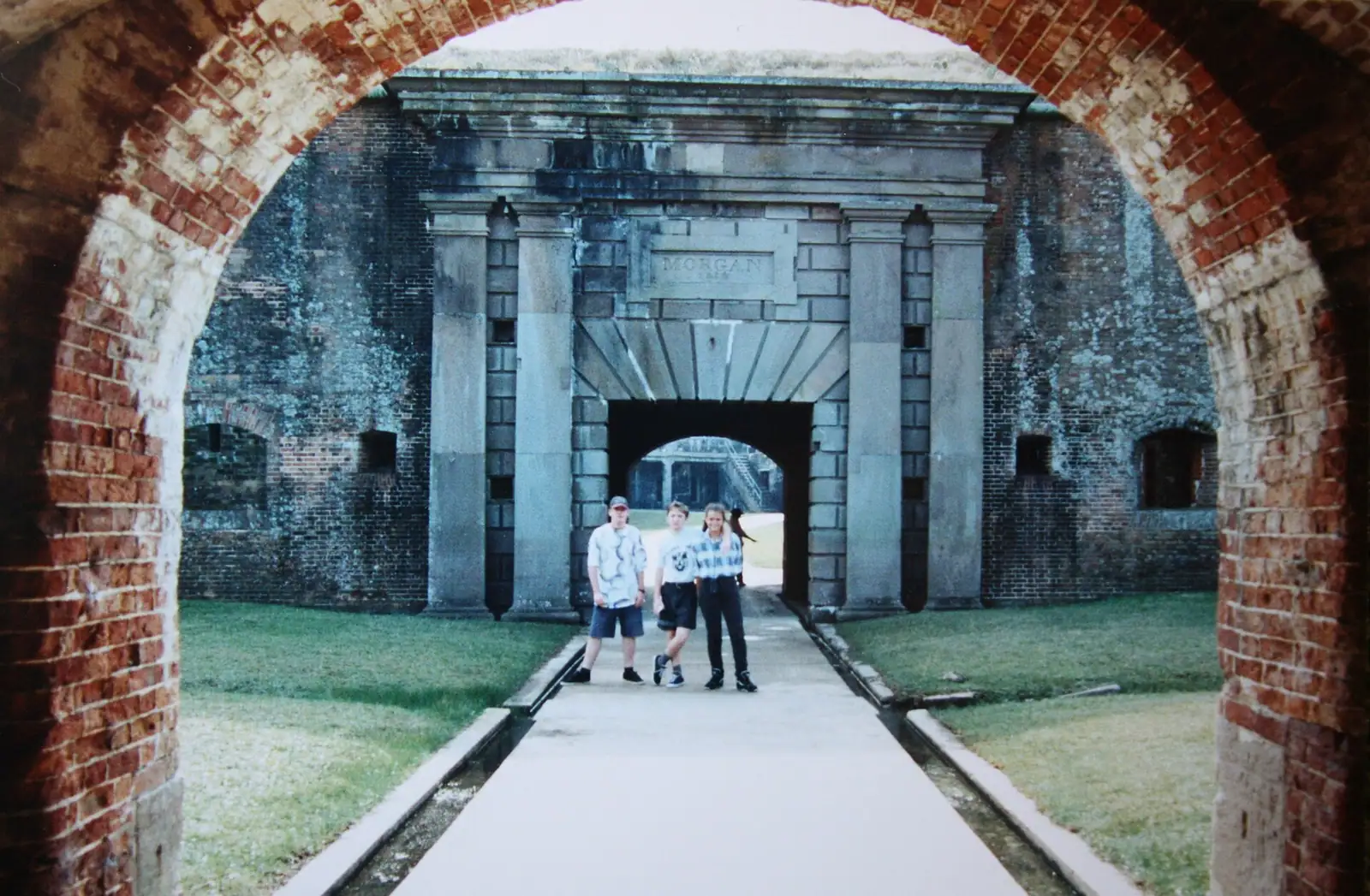
Fort Morgan itself is worth the drive regardless. The fort guards the mouth of Mobile Bay at the end of a twenty-odd mile peninsula road; admission has run around $8 for an adult with concessions and a family rate, with the grounds open longer than the museum. Autumn migration passes through as well, running from roughly August into November, and is more drawn out and less dramatic than spring.

What you will actually see in Gulf State Park

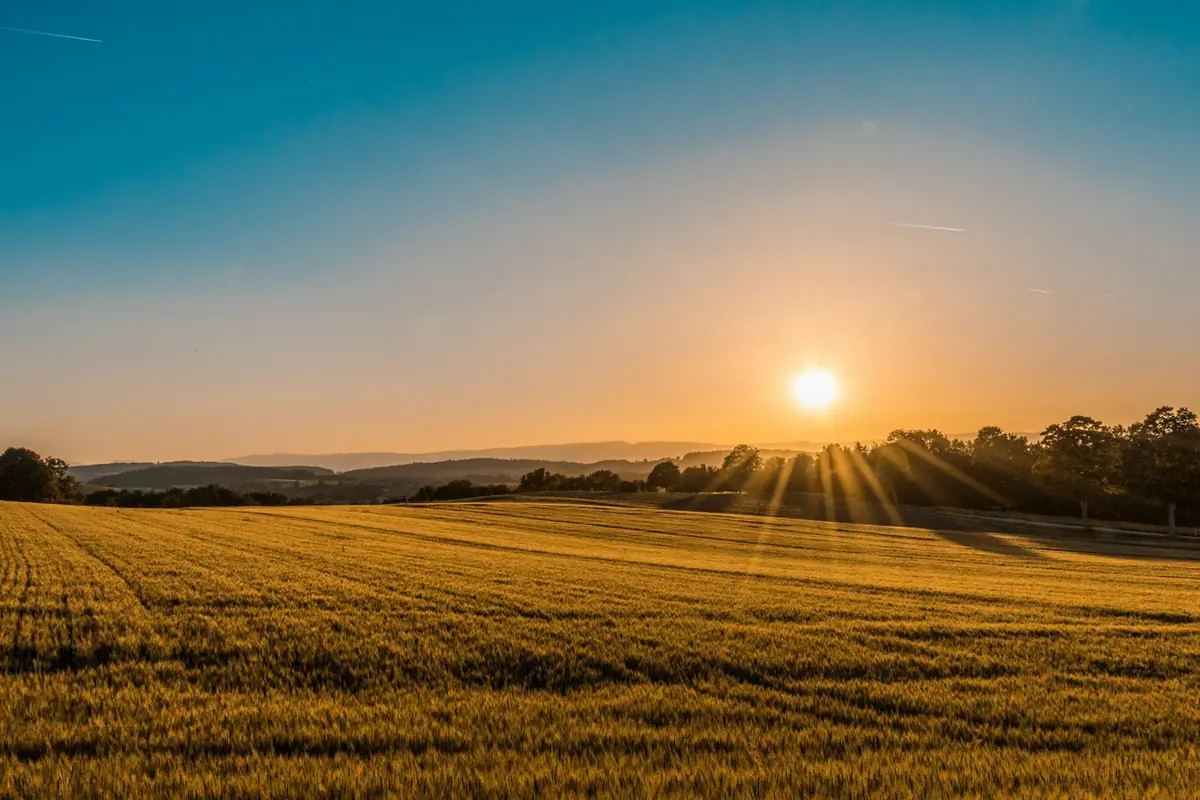
Low evening sun across a wide expanse of tall golden marsh grassUnsplash
Low evening sun across a wide expanse of tall golden marsh grass

For most visitors the park is the wildlife, because it is the bit you can reach on a bicycle before breakfast.

Alligators. In Lake Shelby, Middle Lake and Little Lake, and along the marsh margins beside the trails. The Lake Shelby shoreline from Gopher Tortoise Trail is the reliable spot, early. Thirty feet of distance, dogs on leads and well back from the bank, and never any food.

Gopher tortoises. Their burrows are obvious once you know the shape — a half-moon entrance in bare sand with a fan of spoil in front. The burrows shelter dozens of other species, which is why the tortoise gets called a keystone animal. Do not block one, and give a tortoise on the path room to cross.

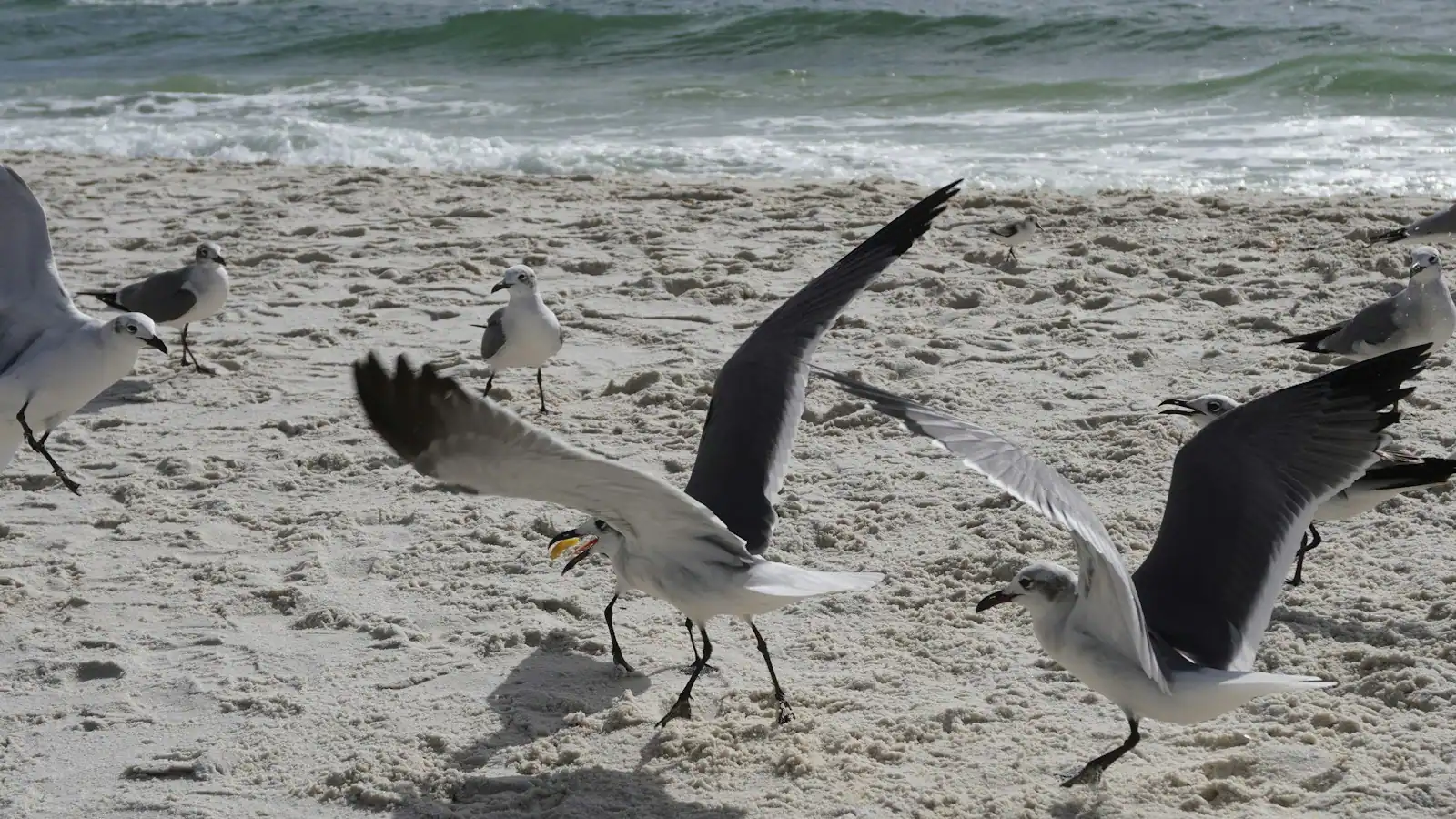
Birds. Ospreys and bald eagles over the lakes, herons, egrets and ibis in the marsh, brown pelicans working the surf, black skimmers and terns on the sand, and warblers through the oak ridges in migration.

Armadillos, in numbers. Almost blind, comically indifferent to people, and everywhere in the leaf litter at dusk.

Bobcats and coyotes. Both present, both mostly invisible. Rosemary Dunes and Bobcat Branch at first light, alone and quiet, is the realistic chance.

Snakes. Including cottonmouths near the water and the occasional rattlesnake in the dry scrub. Stay on the path, look before you sit on anything, and leave them alone; bites here are rare and almost always the result of someone interfering.

Bring insect repellent from about April to October. The mosquitoes in the wet swales behind the dune line are not a rumour.

Book it

Everything else we track

We could not find tours matching this right now

Nothing came back for Orange Beach dolphin cruise. Operators add and retire experiences constantly, so this list changes week to week. Try a broader category, or come back in a day or two.

Inland: pitcher plants, bays and the carnivorous bogs

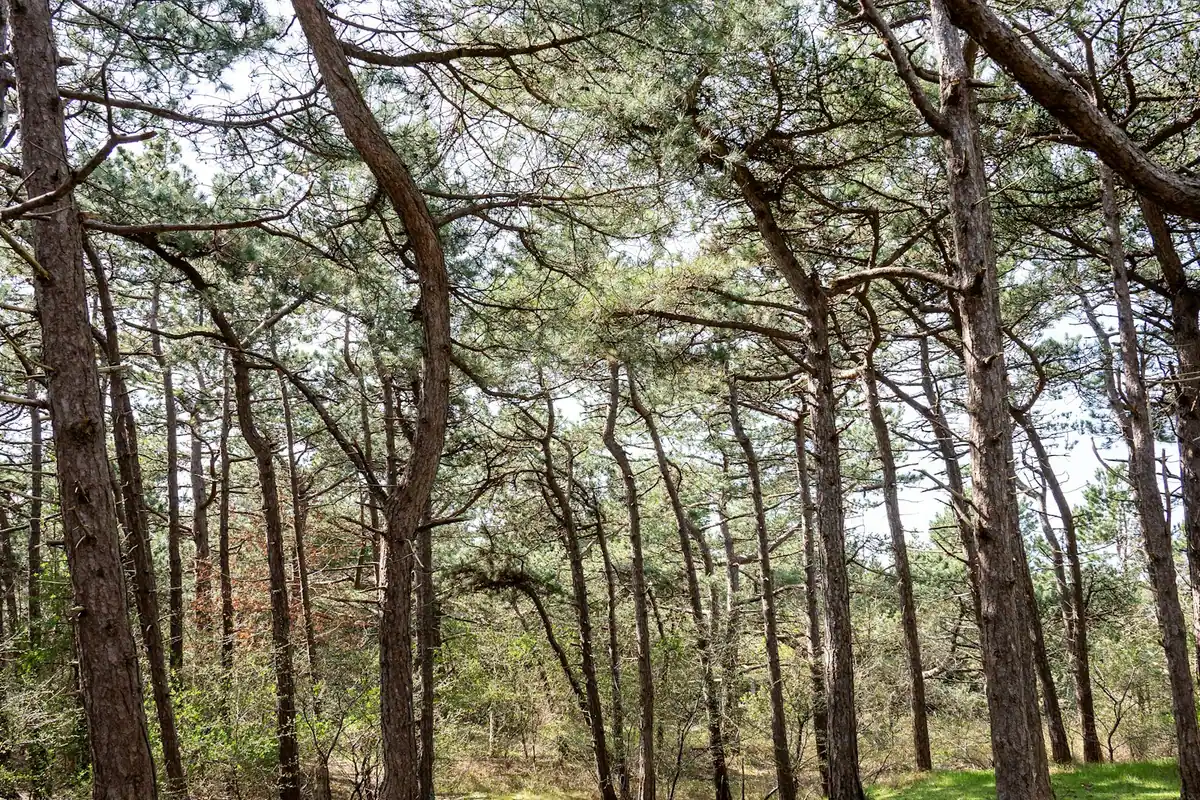
Tall widely spaced pine trunks with an open forest floor and water visible through the trees beyondUnsplash
Tall widely spaced pine trunks with an open forest floor and water visible through the trees beyond

Drive twenty minutes north of the beach and the habitat changes completely, into something most visitors to a Gulf resort never see.

The wet pine savannas of south Baldwin County are among the richest plant communities in North America by species count per square metre, and they are full of carnivorous plants. Pitcher plants stand in the wet ground with their hooded tubes waiting for insects; sundews and butterworts work the same trade at ankle height. Graham Creek Nature Preserve at Foley has trails and paddling access through this landscape and is free to enter. Weeks Bay Reserve, north-east on the Fish River, protects estuary and bog habitat with boardwalks over both, and its pitcher plant bog is the best-known example in the state.

This is also where the freshwater side of the system lives. The back bays — Wolf Bay, Bon Secour Bay, Oyster Bay, Little Lagoon — are nurseries for almost everything that ends up in the Gulf, and they hold wading birds, ospreys, diamondback terrapins and, in the colder months, the occasional manatee working its way along the Intracoastal Waterway.

Two things to time. The pitcher plants are at their most photogenic in spring, roughly March into May, when the flowers stand above the pitchers. And the bogs are wet, which is the point, so waterproof footwear changes the experience considerably.

None of these places sells tickets, runs tours or has a car park attendant. Bring water, bring repellent, and tell somebody where you are going.

Dolphins, and the honest limits of what is sold here

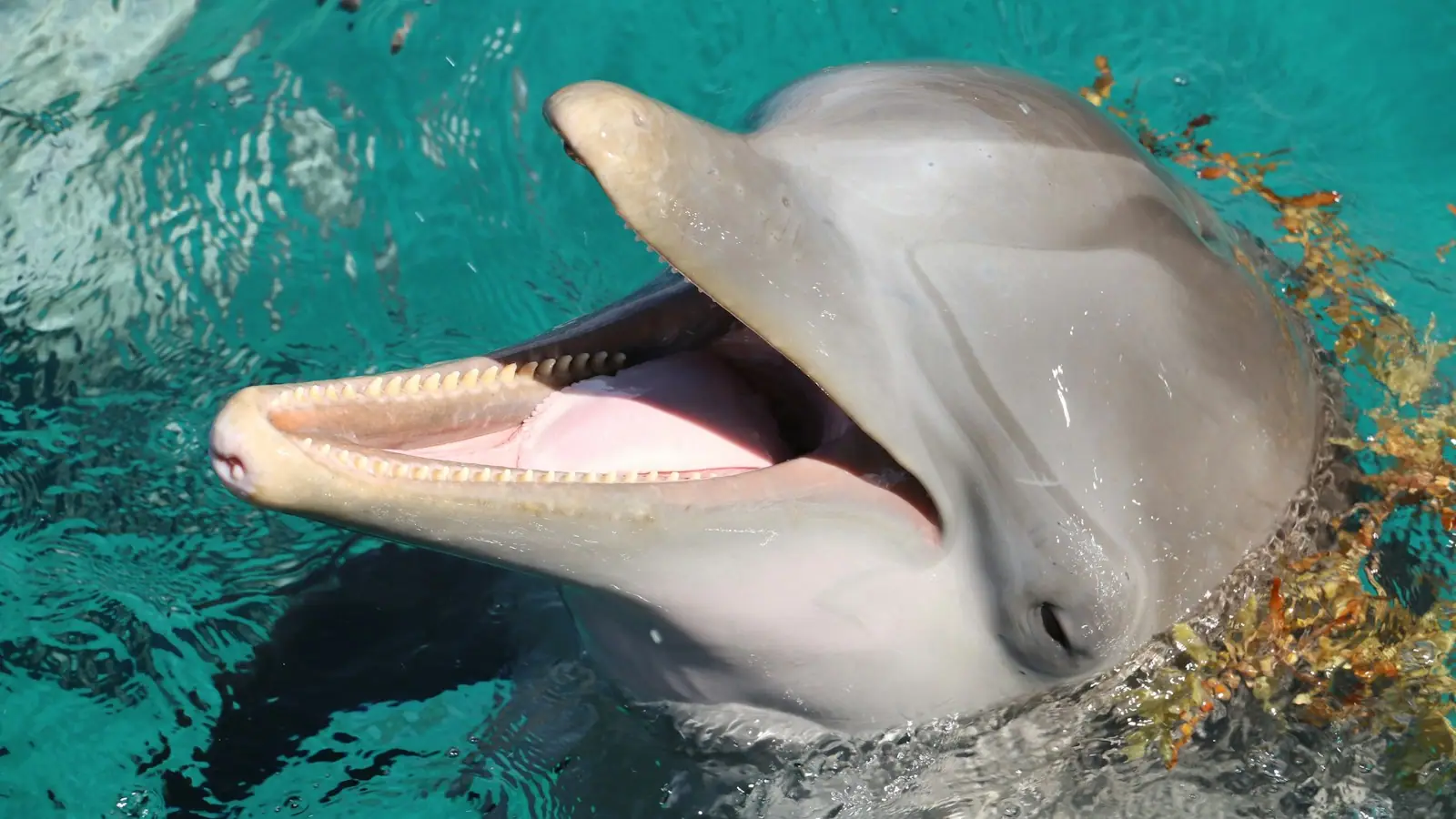
Bottlenose dolphins are resident in these waters year round, and they concentrate where food does: Perdido Pass, the mouth of Mobile Bay, the back-bay channels and behind working shrimp boats. Seeing them from a boat is easy. Seeing them from the Gulf State Park Pier, from the Perdido Pass bridge or from a kayak in Terry Cove is also entirely normal and costs nothing.

If you want the boat, the operators run out of Orange Beach and the marinas near the pass, and a trip generally lasts an hour and a half to two hours. The sensible questions to ask are the ones nobody volunteers: how many people the boat takes, whether there is shade and a restroom, and what the operator's policy is on approach distance. Federal guidance asks vessels to stay at least fifty yards from wild dolphins and never to feed them, and a crew that talks about that unprompted is a crew worth booking.

Now the honest part, because it shapes this whole site. Gulf Shores and Orange Beach together support a very small amount of bookable tour inventory — a handful of products, not dozens. There is no eco-tour industry here comparable to Florida's, no boardwalk-and-guide operation at the refuge, no regular naturalist-led walk you can reserve in advance. What there is instead is an enormous quantity of free, self-guided habitat and a state park that does its own interpretation.

That is not a complaint. It does mean that if your holiday depends on booking guided nature experiences, you should plan on one dolphin trip and spend the rest of the week walking, riding and paddling under your own steam.

How to watch without wrecking it

Local tips

  • Go at the edges of the day. Almost everything here is crepuscular. The difference between six-thirty and ten o'clock is not marginal; it is the difference between seeing animals and seeing habitat.
  • Stay off the dunes, every time. Use the walkovers even when the shortcut is obvious and the dune looks robust. Sea oats hold the sand and the beach mouse holds on to the sea oats.
  • Fifty yards from dolphins, thirty feet from alligators, and never any food for either. Feeding wildlife is illegal in various forms here and is the mechanism by which a harmless animal becomes a problem animal that then gets destroyed.
  • Between May and October, treat the beach at night as somebody's nursery. Fill in holes, take everything off the sand after sunset, use a red-filtered torch and keep beachfront lights shielded. Report a stranded or injured turtle rather than moving it.
  • No drones over wildlife. They flush nesting birds off eggs in seconds, they are restricted or prohibited on refuge and park land, and the footage is not worth it.
  • Leashes, always. For the dog's sake near alligator water, and for the beach mouse's sake in the dunes.
  • Repellent from April to October, long sleeves in the savannas, and a check for ticks and chiggers after any walk through tall vegetation.
  • Binoculars beat a long lens for a first trip. Eight by forty-two, and everything on this page becomes twice as good.

On the ground

Where to go

Every place below has its own page — hours, parking, what it costs and what to expect when you get there.

  • A raised timber boardwalk curving through dense green woodland and palmetto
    Park

    Gulf State Park

    Six thousand acres of dune, lake and pine between two beach towns, with 28 miles of paved trail and a village-sized campground.

    2–8 hoursTrails and the Nature Center are free. Parking at the Gulf beach and pier lots is a flat daily rate per vehicle, recently around $15.

  • Aerial view of a narrow tidal pass cut between two low sandy shorelines
    Free
    Beach

    Alabama Point

    Six thousand feet of beach beside the only rock on the Alabama coast, and the fastest water in the state running past the end of it.

    2–7 hoursFree to use. Parking at the state-run east access is charged at the Gulf State Park beach rate, fifteen dollars a day for a car in 2026.

  • Cars moving along a two-lane coastal highway with open water alongside it
    Historic site

    Fort Morgan State Historic Site

    A brick pentagon at the end of a 22-mile peninsula, where Farragut ran the Union fleet into Mobile Bay in August 1864.

    1–3 hoursRecently around $8 for an adult, about $5 for students, seniors and children aged 6 to 18, with a family rate and free entry for military with ID.

  • A narrow walkway running through thick forest with light coming through the canopy above
    Free
    Trail

    Hugh S. Branyon Backcountry Trail

    More than 28 miles of paved trail through swamp, pine ridge and dune, ridden by road bikes, wheelchairs and three-year-olds alike.

    1–5 hoursFree. There is no charge to use any part of the trail network.

  • An aerial view of an empty pale sand shoreline meeting an unbroken block of dense pine forest
    Free
    Nature preserve

    Bon Secour National Wildlife Refuge

    Alabama's last large stretch of wild coastal dune, walkable on foot only, and protected largely for a nocturnal mouse.

    1–4 hoursFree. There is no entry fee and no parking charge at the refuge trailheads.

  • A long causeway bridge crossing open water towards a low shoreline
    Free
    Landmark

    Dauphin Island

    Fifteen miles of barrier island with 1,778 residents, a Civil War fort and a continental flyway, across the water from Fort Morgan.

    4–9 hoursThe island, the beach and the bird sanctuary are free. The ferry, Fort Gaines and the Estuarium each charge separately.

  • Aerial view of dozens of small boats anchored together over a pale shallow sandbar
    Free
    Nature preserve

    Robinson Island

    A twelve-acre island the city bought to stop anyone building on it, reachable only by boat and now closed in the middle for nesting birds.

    2–6 hoursFree to land on. Getting there is the cost: a boat rental, a charter seat or your own trailer.

  • A giraffe standing on grass in daylight
    Wildlife

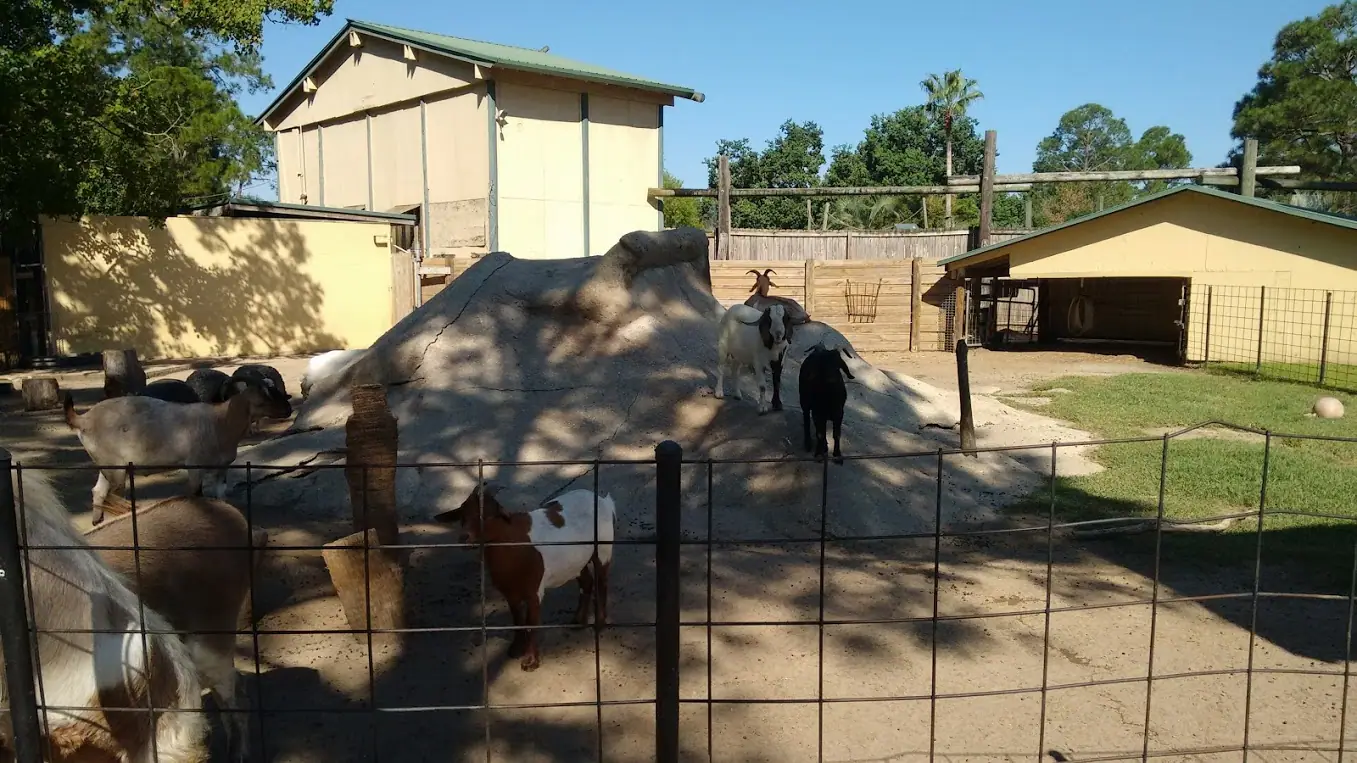
    Alabama Gulf Coast Zoo

    The little zoo that evacuated 265 animals ahead of Hurricane Ivan, then moved two miles inland so it would never have to do it again.

    2–4 hoursPaid admission with lower rates for children and seniors. Animal encounters and feeding experiences are sold separately on top.

  • Two anglers casting from a concrete pier into open water in the last light of the evening
    Landmark

    Fort Morgan Fishing Pier

    A bayside pier at the end of the peninsula, rebuilt with oil-spill restoration money after eight years closed.

    1.5–5 hoursAccess to the pier is managed with the Fort Morgan historic site. An Alabama saltwater fishing licence is required to fish.

  • A sandy shoreline fringed with pines beside flat, still freshwater
    Free
    Water feature

    Lake Shelby

    A coastal dune lake one dune ridge behind the Gulf, holding largemouth bass and redfish in the same water, with a free ramp.

    1–5 hoursFree to visit, fish from the bank and launch a boat. Pavilion reservations and equipment hire cost extra.

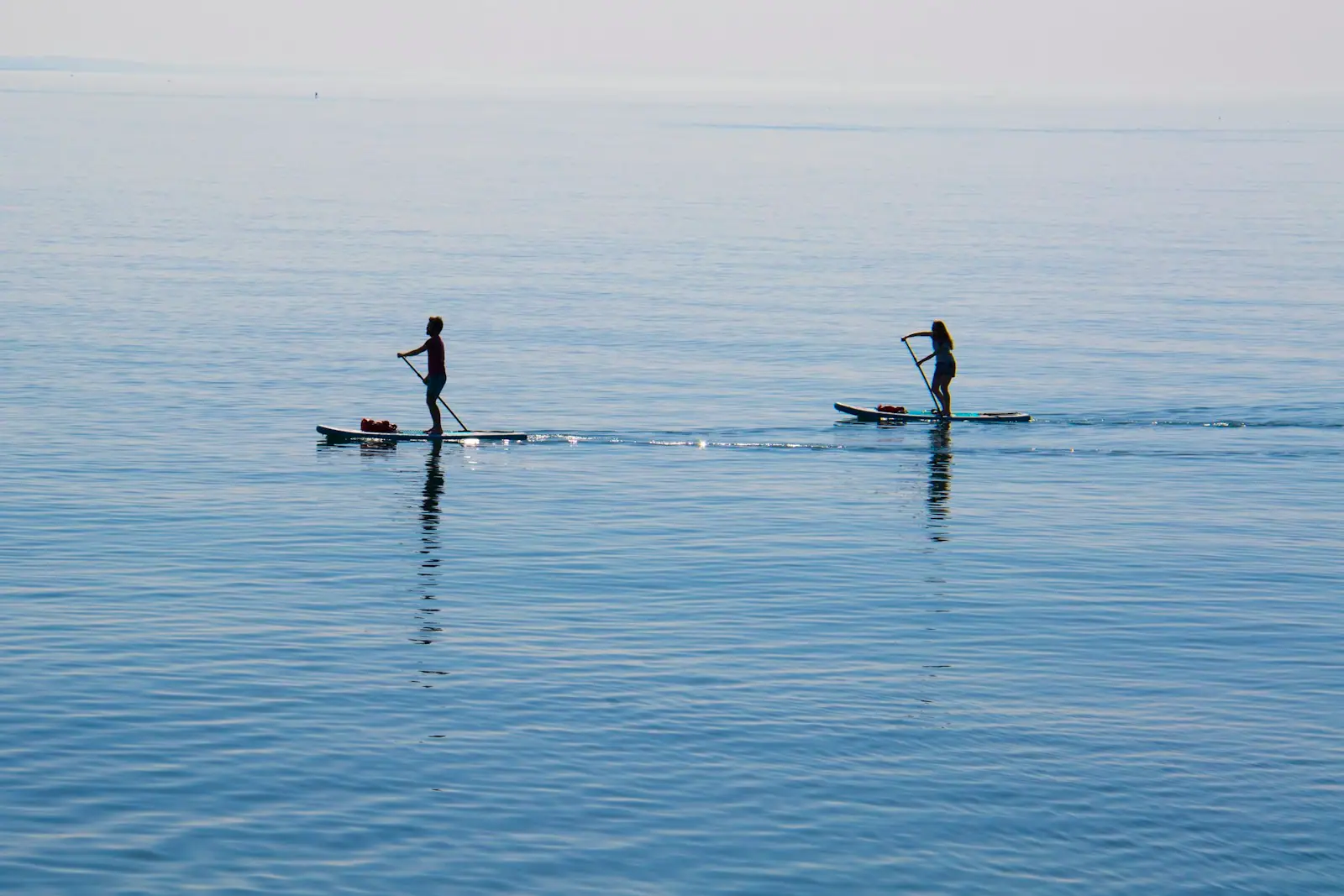
  • Two paddleboarders crossing a wide sheet of flat, pale, mirror-calm water under a soft sky
    Free
    Water feature

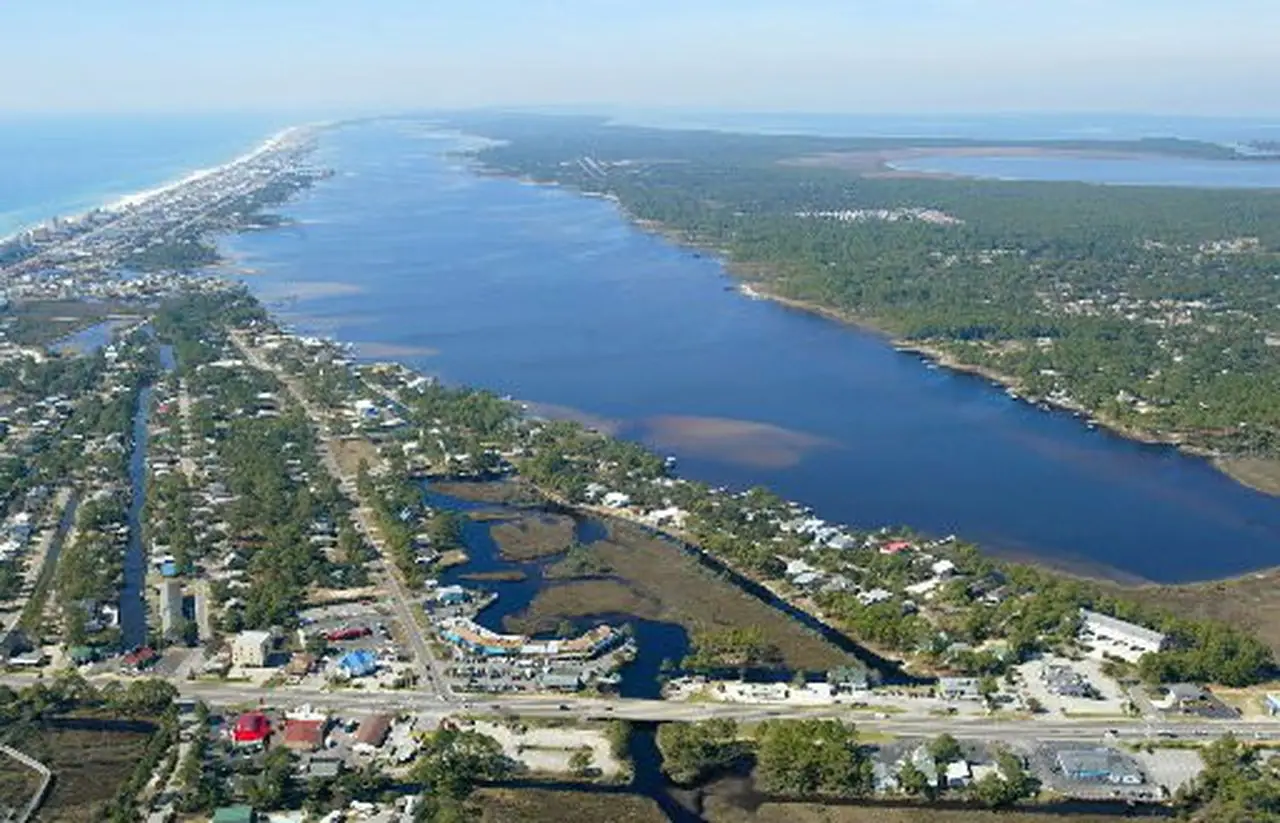
    Little Lagoon

    Ten miles of shallow, warm, brackish water behind West Beach, with one public ramp and a pass that eats propellers.

    1.5–5 hoursThe water is free to use. The city charges for parking at Little Lagoon Pass Park, recently around five dollars for up to four hours and ten for a full day.

  • A wide empty stretch of pale sand running away beside shallow clear water with almost nobody on it
    Free
    Beach

    West Beach

    A ribbon of sand with the Gulf on one side and a ten-mile brackish lagoon on the other, reached by numbered street ends.

    1.5–5 hoursThe beach is free. Designated parking spaces at the street ends and at Lagoon Pass Park are charged by the hour in season.

Straight answers

Questions people actually ask

What wildlife can you see in Gulf Shores?

Alligators in the Gulf State Park lakes, gopher tortoises in the sandy scrub, bottlenose dolphins in Perdido Pass and the back bays, ospreys and bald eagles over the water, herons and egrets in the marsh, armadillos almost everywhere at dusk, and nesting sea turtles on the beach between May and October. Bobcats and coyotes are present but rarely seen. The park alone counts more than 370 species of birds, mammals, reptiles and amphibians.

Is Bon Secour National Wildlife Refuge worth visiting?

Yes, particularly outside summer. It protects roughly seven thousand acres of what is left of Alabama's undeveloped coastal dune system, set aside by Congress in 1980, and it is the only place on this coast where you can walk from maritime forest to an empty Gulf beach without passing a condominium. The Jeff Friend Trail loop takes under an hour. Pine Beach Trail is about two miles each way with no shade or water at the far end.

What is the Alabama beach mouse?

A small, pale, nocturnal subspecies of mouse that lives in the coastal dunes of Alabama and nowhere else on Earth. It caches sea oat seeds in burrows behind the primary dune and was listed as federally endangered in 1985, with development and hurricanes taking most of its range. Bon Secour holds one of the densest remaining populations. It is the reason for the dune fencing, the walkovers and the requests to keep pets leashed.

When is the best time for birdwatching in Gulf Shores?

The second half of April, for trans-Gulf spring migration at Fort Morgan. Songbirds crossing six hundred miles of open water make their first landfall on the peninsula, and when bad weather catches them mid-crossing they drop into the scrub in extraordinary numbers — a fallout. Alabama Audubon runs a public bird banding station there in spring. Autumn migration, roughly August to November, is longer and quieter. Winter brings waterfowl and shorebirds.

Are there alligators in Gulf Shores?

Yes. They live in the freshwater lakes of Gulf State Park, in Little Lagoon, in the back bays and in the refuge's Gator Lake. Sightings are routine rather than remarkable, especially early in the morning along the Lake Shelby shoreline. Do not swim in fresh water here, keep at least thirty feet away, keep dogs leashed and away from the bank, and never feed one — feeding is illegal in Alabama and creates the dangerous animals.

Where can you see dolphins in Gulf Shores without a boat?

Perdido Pass is the most reliable free vantage point, from the bridge or the rocks at Alabama Point, because the current through the pass concentrates bait. The Gulf State Park Pier is the next best, particularly early and late in the day. Behind working shrimp boats, from any beach, dolphins follow the nets. A kayak in Terry Cove or Wolf Bay puts you at water level, which is better still — keep your distance and let them approach you.

Are there guided nature tours in Gulf Shores?

Very few. This destination supports only a small amount of bookable tour inventory overall, and what exists is mostly dolphin and sailing trips out of Orange Beach rather than naturalist-led walks or paddles. Gulf State Park runs its own interpretive programming through the nature and interpretive centres, and Alabama Audubon's spring banding station at Fort Morgan is open to the public. Most wildlife watching here is free and self-guided.

Where can you see pitcher plants near Gulf Shores?

In the wet pine savannas north of the beach. Graham Creek Nature Preserve at Foley has free trails and paddling access through that habitat, and Weeks Bay Reserve north-east of the Fish River protects a well-known pitcher plant bog with boardwalks over it. Spring, roughly March to May, is when the flowers stand above the pitchers. The ground is genuinely wet, so waterproof footwear makes a substantial difference.