Skip to content
Search
Menu

These bookings go through Viator, and we are paid for them. Your price is the same, and the payment had nothing to do with the picks.

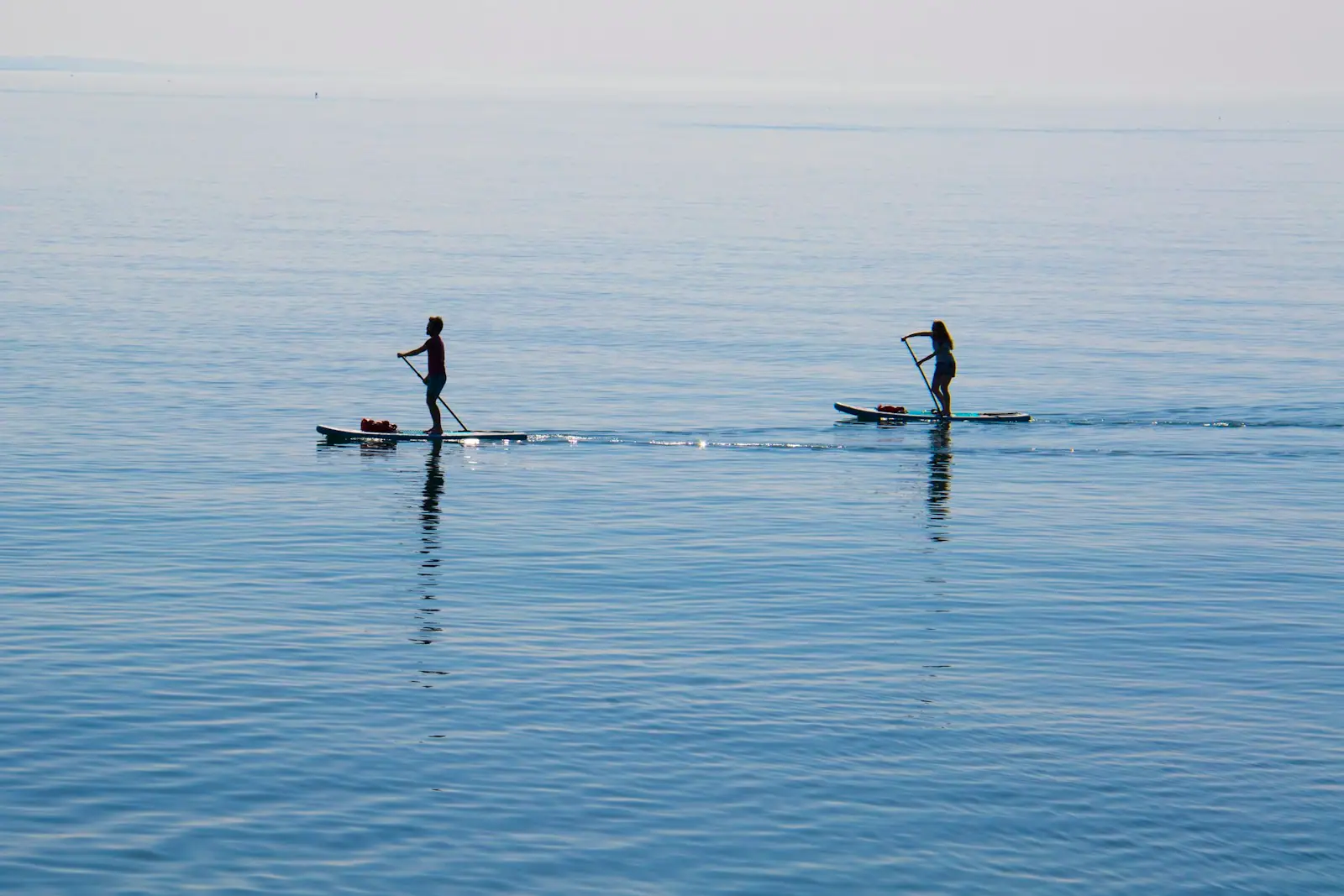
Two paddleboarders crossing a wide sheet of flat, pale, mirror-calm water under a soft sky
NOAA

Water feature

Little Lagoon

Last updated

Ten miles of shallow, warm, brackish water behind West Beach, with one public ramp and a pass that eats propellers.

Photo: NOAAPublic domain

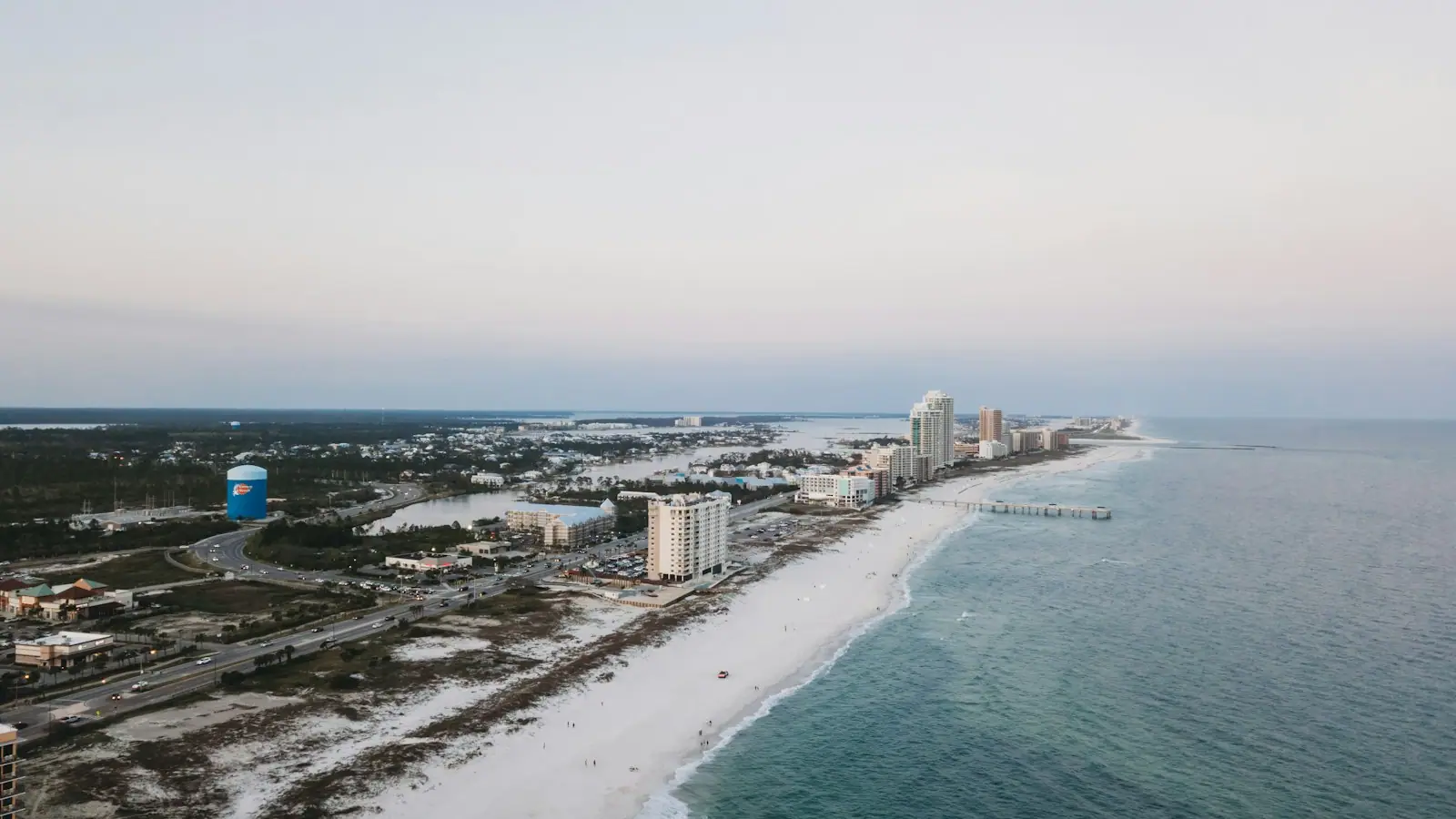
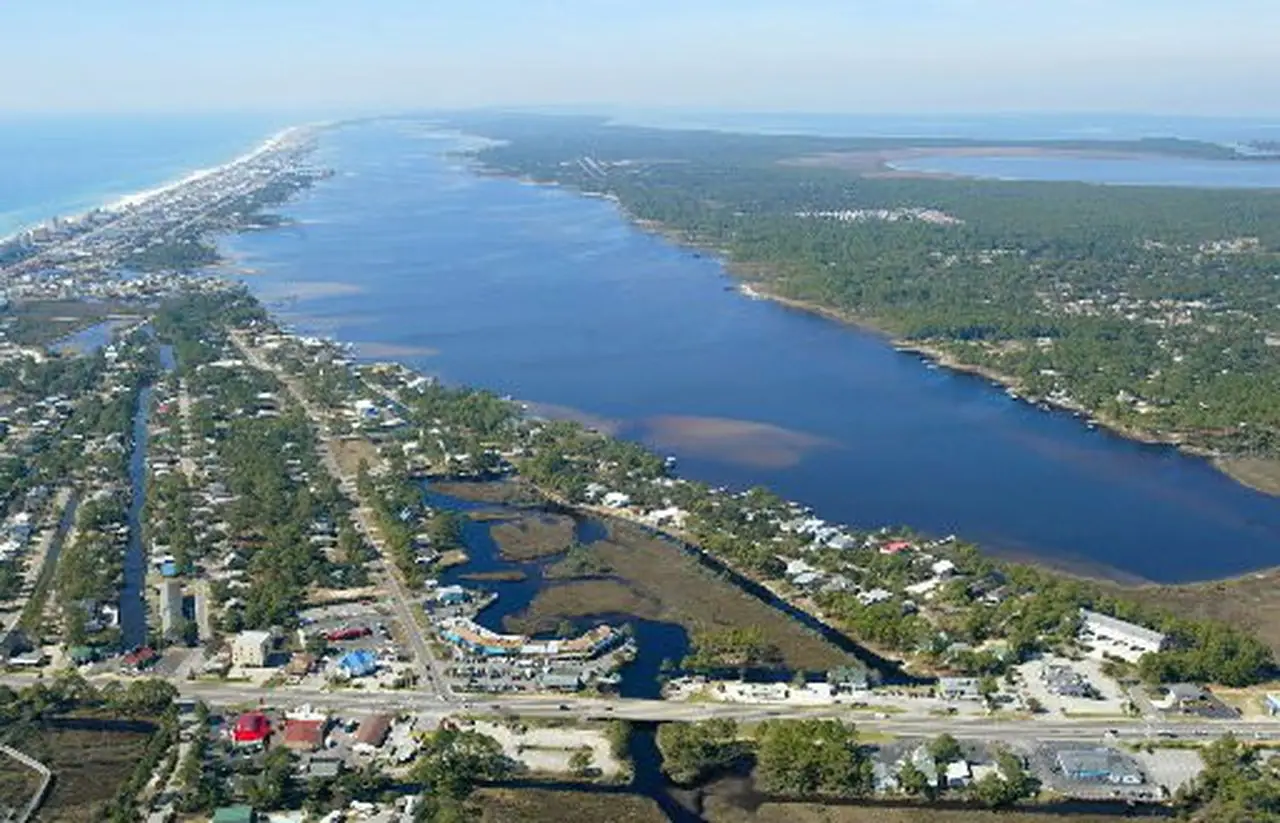
Drive west out of Gulf Shores on West Beach Boulevard and you are on a sandbar. The Gulf is on your left, a few dozen yards away. On your right, for the next several miles, is a long sheet of pale green water that most visitors never register as anything other than scenery. That is Little Lagoon: roughly ten miles end to end, about half a mile across at its widest, and only four to six feet deep on average.

The shallowness is the whole character of the place. It warms early in spring and holds that warmth late into autumn, which makes it the most comfortable water on the Alabama coast for anyone not keen on surf. It also means wind matters more than tide. A stiff southerly will put a short, sharp chop across the whole lagoon within half an hour, and on a paddleboard that is the difference between a pleasant hour and a fight home.

It is brackish rather than fresh or salt, and the mix shifts with rain and with whatever the pass is doing. That variability is why the fishing is good and unpredictable in equal measure. Speckled trout, redfish and flounder all use it, and the flats near the western end hold fish that see very little pressure because there is no easy way to get a boat down there.

Access is the thing to understand before you plan a day. There is exactly one public launch ramp on ten miles of water, Mo's Landing, on Fort Morgan Road opposite the fire station. Everything else is private, belonging to the houses strung along both shores. At the eastern end, Little Lagoon Pass connects to the Gulf under the Lee Callaway Bridge, and while that sounds like a convenient back door to open water it is not one: the pass is shallow, it shoals, and the current through it runs hard enough to be genuinely awkward in a small boat.

Getting there and parking

The lagoon runs parallel to the coast west of Highway 59. To see it, drive west on West Beach Boulevard, Highway 182, and it will be on your right for several miles. To get onto it, you need one of two places.

Mo's Landing is the public ramp, on Fort Morgan Road, Highway 180, opposite the fire station on the lagoon's north side. It has parking, a ramp and restrooms, and it is the only public launch on the whole ten miles.

Little Lagoon Pass Park sits at the eastern end on West Beach Boulevard beside the Lee Callaway Bridge, about three miles west of Highway 59, with paid parking, a fishing pier, restrooms and an outdoor shower.

Rental delivery is the shortcut most visitors miss. Gulf Shores paddle outfitters will drop a kayak or board at a lagoon-front house, which removes the ramp, the trailer and the parking problem entirely.
Paddling: the best flat water in Gulf Shores

If you want calm water in this town, this is it. The Gulf side is exposed, the Intracoastal is a working channel with barge traffic, and the back bays are a drive. Little Lagoon is five minutes from West Beach and lies flat most mornings.

Launch options are limited but adequate. Mo's Landing has a ramp, parking and restrooms and takes kayaks perfectly well. There are small launch points around the pass at the eastern end. If you are renting, most Gulf Shores outfitters will deliver a board or a boat to a rental house on the lagoon shore, which is by far the easiest way to do it and avoids the ramp altogether.

Go early. The lagoon is glass before nine and choppy by noon on most summer days, because the sea breeze builds off the Gulf and comes straight across the sandbar. Afternoon storms in July and August arrive quickly and you are a long way from cover on open water.

What you will see: wading birds along the marsh edges, mullet jumping constantly, stingrays over the sand in the shallows and, at the western end where the houses stop, a shoreline of pine and scrub that looks much as this coast did before anyone built on it.

Fishing the lagoon

Little Lagoon fishes like an estuary rather than like the Gulf, and it rewards people who treat it that way: light tackle, shallow water, early and late.

Speckled trout are the headline. They move in and out with the seasons and concentrate near the pass when water is exchanging. Redfish work the grass edges and the shorelines. Flounder lie on the sand around any structure, and the pass itself is a well-known flounder spot in autumn when fish stage there before moving out.

The western end is the underfished part, simply because getting there means a long run from the only public ramp or a paddle. That is exactly why it is worth the effort.

An Alabama saltwater fishing licence is required here for anyone over the usual age threshold, and it is worth buying online before you travel rather than hunting for a vendor on a Saturday morning.

Two honest caveats. This is a shallow, enclosed, largely residential waterbody, and the fishing swings hard with rainfall, salinity and heat. And in high summer the shallows get genuinely hot, which pushes fish to the deeper channel and the pass. Nobody catches much at two in the afternoon in August.

Little Lagoon Pass, and why it is not a shortcut

The pass sits under the Lee Callaway Bridge on West Beach Boulevard, roughly three miles west of Highway 59, and it is the only connection between the lagoon and the Gulf.

It looks like an exit. It is not a reliable one. The channel is shallow and it shoals with sand that the Gulf keeps putting back, so the depth this week is not the depth last season. Local boaters are consistent on the point: this is not water to take a twenty-five foot boat through. Small craft with a shallow draft and a driver who knows the cut do fine. Everyone else should launch at the marinas on the Intracoastal instead.

The current is the other half of it. A narrow opening draining ten miles of lagoon runs fast on the exchange, and it will move a swimmer, a paddleboard or an inflatable faster than expected. People fish and wade around the pass constantly, which is fine, but treat swimming through the cut the way you would treat swimming through any tidal inlet: don't.

The City of Gulf Shores runs the little park beside it, with restrooms, an outdoor shower, a fishing pier and paid parking that has recently been around five dollars for up to four hours and ten for the day. Residents with window stickers park free. Verify the current rate at the machine.

Who owns the shoreline, and what that means for you

Little Lagoon is almost entirely fringed by private property. Houses line the north shore along Fort Morgan Road and the south shore along West Beach Boulevard, and their lawns, docks and boat lifts run down to the water on both sides for most of its length.

The practical consequence is that this is not a place you visit so much as a place you get onto. There is no public beach on the lagoon, no promenade, nowhere to park and walk to the edge except at Mo's Landing and the pass park. If you are staying in a West Beach rental with lagoon frontage, you effectively have private access to ten miles of flat water, and it is one of the better reasons to choose that side of the road.

The western end is the exception and the reward. Bon Secour National Wildlife Refuge holds the undeveloped land out there, the houses stop, and the shoreline reverts to pine, scrub and dune. That is the piece of the lagoon worth paddling to, and the piece that shows you what the Alabama coast looked like before the condominium wall.

Refuge trails reach the water at that end, though sections of boardwalk have been closed for repair at various times. Check the refuge's own notices rather than assuming.

Near Little Lagoon

Straight-line distances, so allow more on the road — the island is long and has one main parkway.

  • A wide empty stretch of pale sand running away beside shallow clear water with almost nobody on it
    Free
    Beach

    West Beach

    A ribbon of sand with the Gulf on one side and a ten-mile brackish lagoon on the other, reached by numbered street ends.

    1.5–5 hoursThe beach is free. Designated parking spaces at the street ends and at Lagoon Pass Park are charged by the hour in season.1.1 mi away

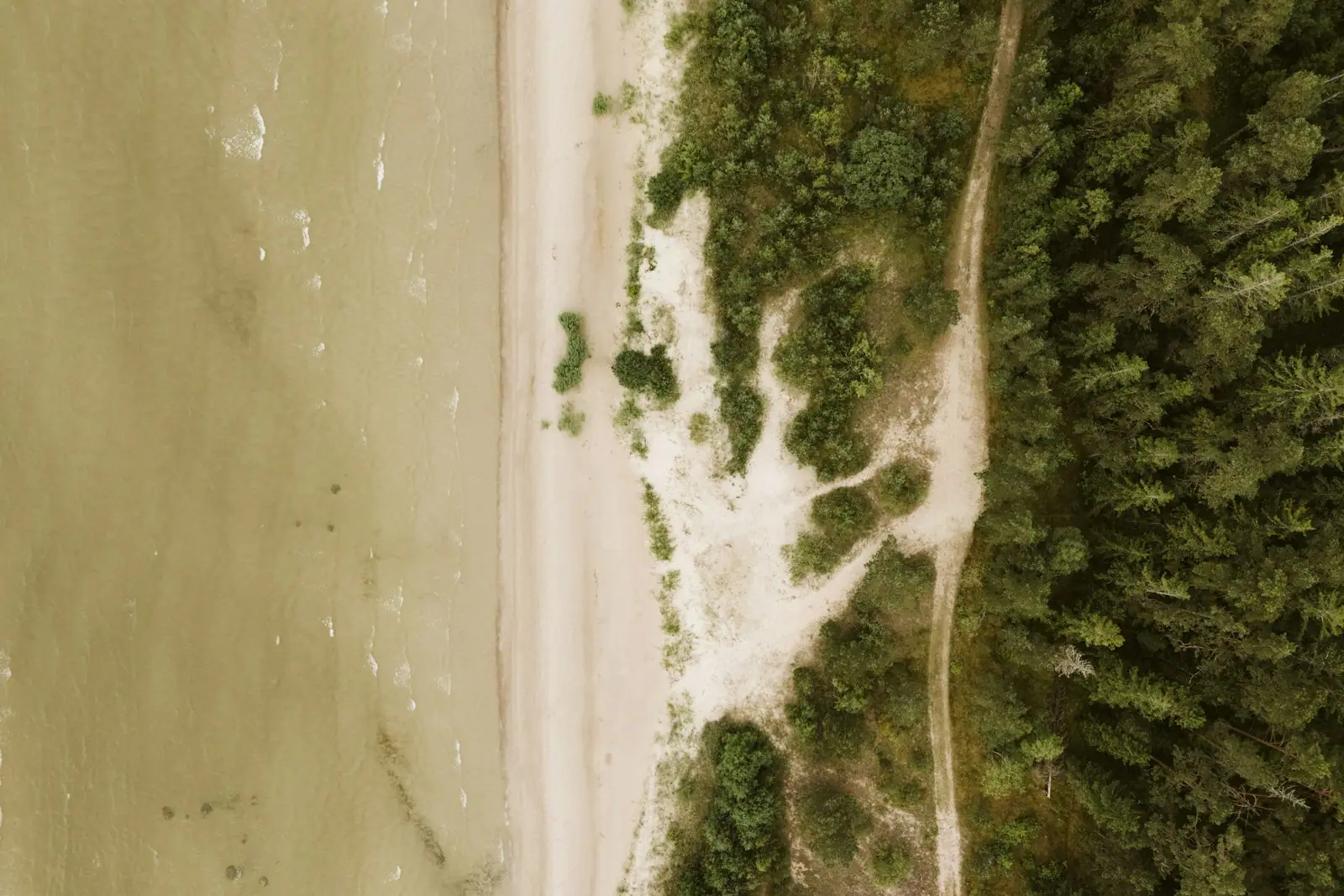
  • An aerial view of an empty pale sand shoreline meeting an unbroken block of dense pine forest
    Free
    Nature preserve

    Bon Secour National Wildlife Refuge

    Alabama's last large stretch of wild coastal dune, walkable on foot only, and protected largely for a nocturnal mouse.

    1–4 hoursFree. There is no entry fee and no parking charge at the refuge trailheads.4.6 mi away

  • Aerial view of bright white sand meeting shallow water that shades from pale green to deep blue
    Free
    Beach

    Gulf Shores Public Beach

    Where Highway 59 runs out of land: pavilions, showers, volleyball nets, The Hangout next door and hourly parking since July 2026.

    2–7 hoursThe beach is free. Parking is not: non-residents pay by the hour through a phone app during the paid season.2.8 mi away

  • Working fishing boats moored along a harbour dock under a heavy overcast sky
    Free
    Neighbourhood

    Bon Secour

    A river village that has processed Alabama's seafood since the 1890s, fifteen minutes from the beach and a century from the condo towers.

    1–2 hoursFree. There is nothing to pay to drive out here; the point is to buy seafood while you are there.5.1 mi away

Little Lagoon: common questions

Where can you launch a kayak on Little Lagoon?

Mo's Landing is the public ramp, on Fort Morgan Road opposite the fire station, and it is the only public launch on roughly ten miles of water. There are smaller launch points around Little Lagoon Pass Park at the eastern end. Most visitors skip both: Gulf Shores paddle outfitters deliver kayaks and boards to rental houses on the lagoon shore, which removes the ramp and the parking problem in one go.

Can you get from Little Lagoon into the Gulf?

Through Little Lagoon Pass, yes, but it is not a dependable route. The cut under the Lee Callaway Bridge is shallow, it shoals with sand that shifts season to season, and the current through it runs hard on the tidal exchange. Local boaters advise against taking anything around twenty-five feet through it. Shallow-draft boats with a driver who knows the channel manage; everyone else should launch on the Intracoastal instead.

What fish are in Little Lagoon?

Speckled trout, redfish and flounder are the three that matter, along with plenty of mullet, ladyfish and small inshore species. It fishes like an estuary rather than like the Gulf, so light tackle in shallow water early and late is the approach. The pass is a known autumn flounder spot. An Alabama saltwater fishing licence is required, and it is easier to buy online before you travel.

Is there a public beach on Little Lagoon?

No. Both shores are almost entirely private, with houses, lawns and docks running to the waterline along Fort Morgan Road and West Beach Boulevard. Public access is limited to Mo's Landing and the pass park. The undeveloped western end belongs to Bon Secour National Wildlife Refuge, which is reachable on foot by refuge trail or by paddling, and is the stretch worth the effort.