Skip to content
Search
Menu

These bookings go through Viator, and we are paid for them. Your price is the same, and the payment had nothing to do with the picks.

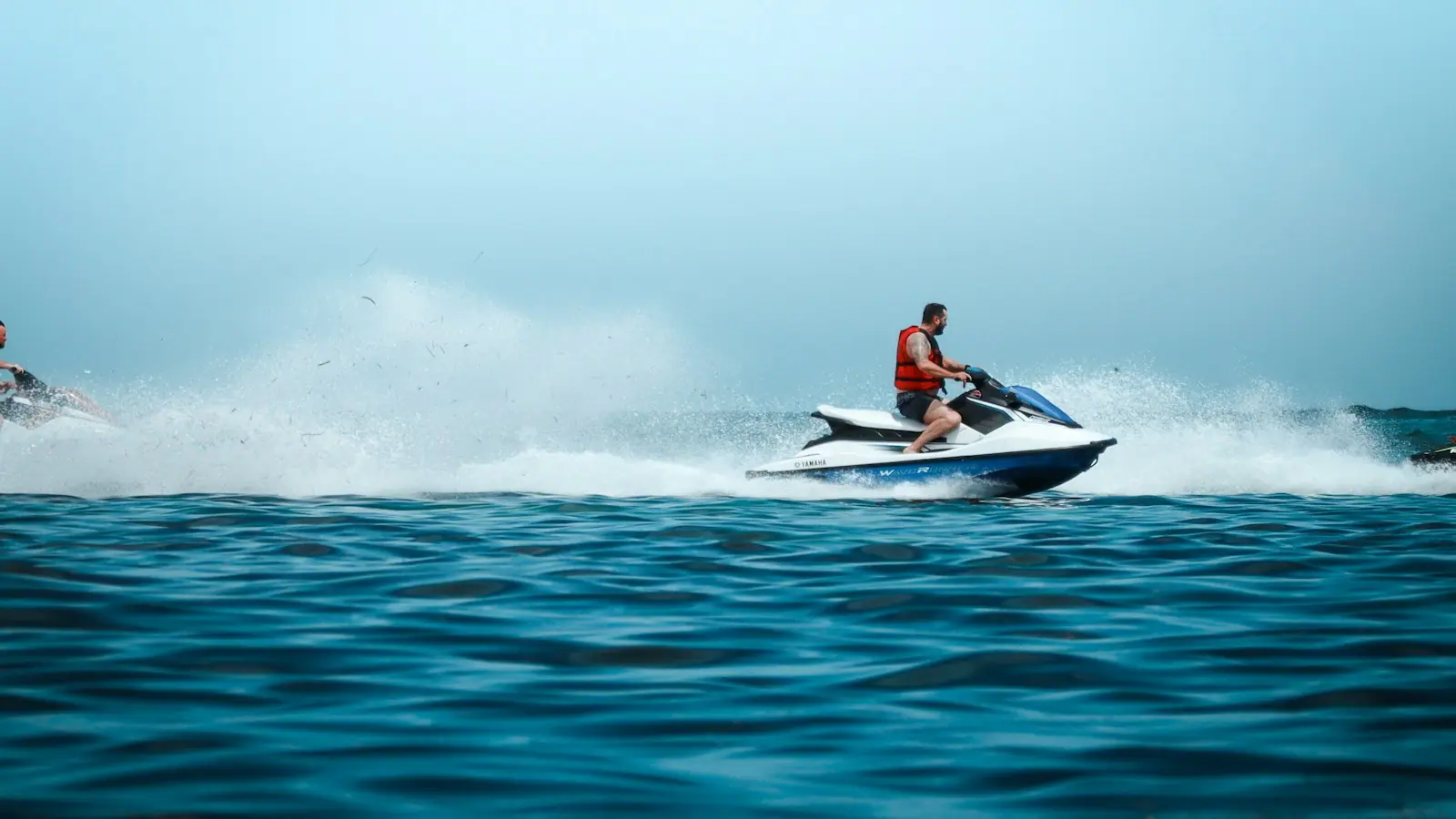
Two people riding personal watercraft across open water
Unsplash

Gulf State Park

Jet Skis and the Rest of the Water

Last updated

Where to ride in Gulf Shores and Orange Beach, Alabama's age and licence rules for jet skis, which bays are off limits, and what an hour actually costs.

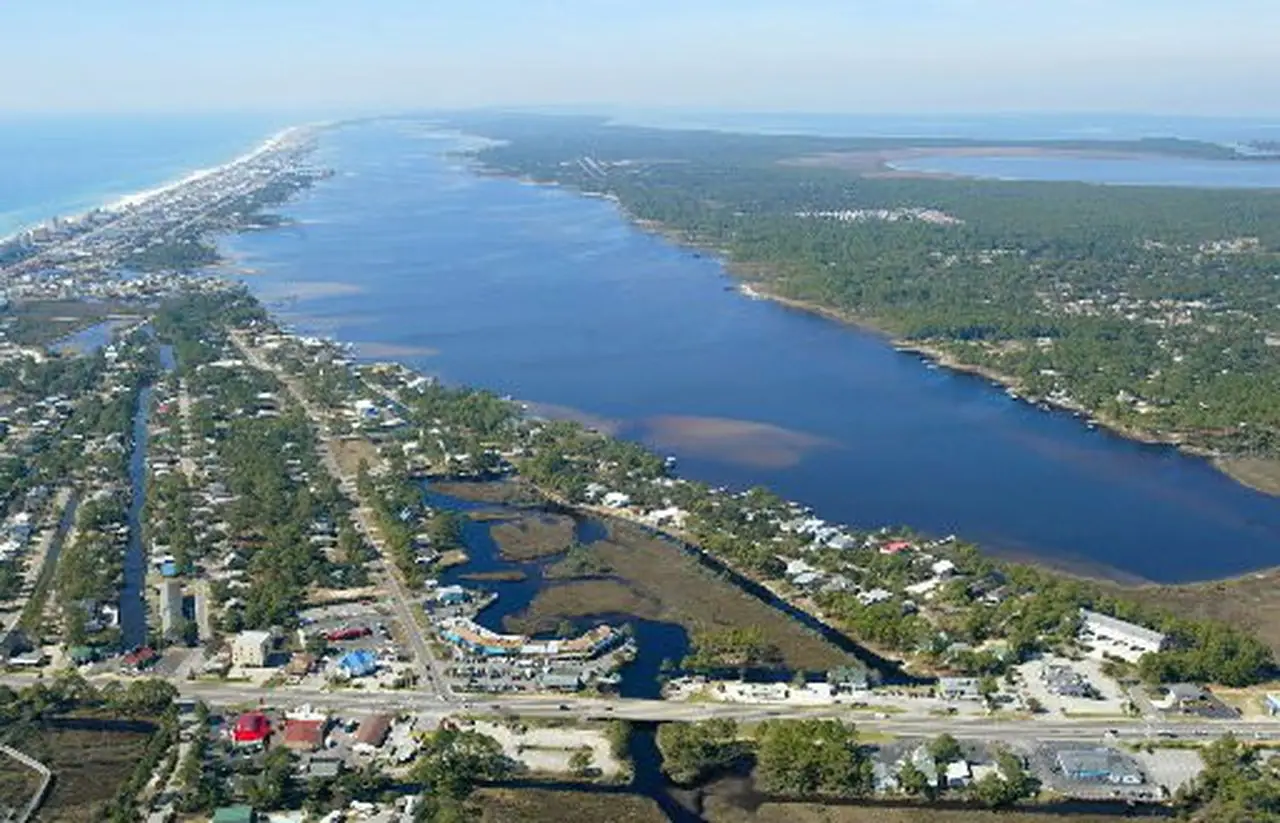
Almost every jet ski hired on this coast is handed over on the sheltered side of the land, not the beach. The liveries sit around Cotton Bayou, Terry Cove and the Intracoastal Waterway in Orange Beach, which means you idle out of a slip into protected water and reach open Gulf only if you choose to run out through Perdido Pass. That is a very different market from the panhandle towns to the east, where the ski is on the sand in front of your hotel and the first thing you do is cross the surf.

It also frames the only question worth asking before you book. This is not a coast with one body of water; it is a coast with a Gulf in front and a linked chain of shallow bays behind, and the two demand different riding. The Gulf gives you space, swell, and a horizon with nothing in it. The back bays give you flat water, shelter when the wind is up, and a considerable number of rules about where the throttle may stay open. Getting that choice right is most of the difference between a good hour and an expensive one.

Some of those bays deserve more respect than a rental brochure gives them. Wolf Bay has been classified an Outstanding Alabama Water by the state's environmental department since April 2007, reportedly the first bay in Alabama to hold that status, which brings tighter discharge and water quality standards with it. Little Lagoon, ten miles of shallow brackish water behind the western beach, averages something like four to six feet deep and functions as a nursery: it is residential, it is grassy, and it is emphatically not a place to ride hard. Terry Cove and the marina approaches are no-wake, and the wake you throw is legally your problem.

Alabama's rules are also not Florida's, and the difference matters because most visitors here have ridden in Florida. Alabama runs an operator certification system through its law enforcement agency, the minimum age is twelve with conditions, a lanyard cut-off switch must be clipped to whoever is driving, and everyone on the craft wears a flotation device, not just the children. Since October 2024 the old allowance that let visitors ride for a few weeks without any certification is gone.

The rest of this page covers what else there is to do on the water. It is a longer list than the jet ski trade suggests, and on the days when the wind makes the Gulf unpleasant it is the more useful one.

A guided run or an hour on your own

Liveries here sell both, and they suit different people more sharply than the price difference suggests.

On your own you get a machine, a briefing, a boundary drawn on a laminated map and a time to be back. It is cheaper per minute and it is the right choice if you have ridden before and you know which bay you want. The failure mode is spending half the hire working out where you are allowed to go.

A guided run puts you in a line behind a leader who knows the channel, the shoals and the no-wake limits, usually for ninety minutes to two hours, often with a stop in the shallows and frequently with dolphins somewhere in the middle. You pay more and you cannot go where you like. What you buy is the local knowledge that turns a nervous first outing into a route.

Two specific cases where guided wins outright. If you want to ride out through Perdido Pass and along the beach, go with somebody who reads that cut daily. And if two of you are sharing one machine with a passenger who has never been on one, the slower pace of a group is considerably more pleasant than a solo hour spent arguing about speed.

One thing to establish at the counter either way: what happens if you damage the ski, what the deductible is, and whether the damage waiver is optional. Sand ingestion in shallow water and impeller damage are the common claims here, and they are not cheap.

Everything else on the water

The jet ski trade is loud, but it is a small part of what this coast actually offers, and most of the rest is cheaper.

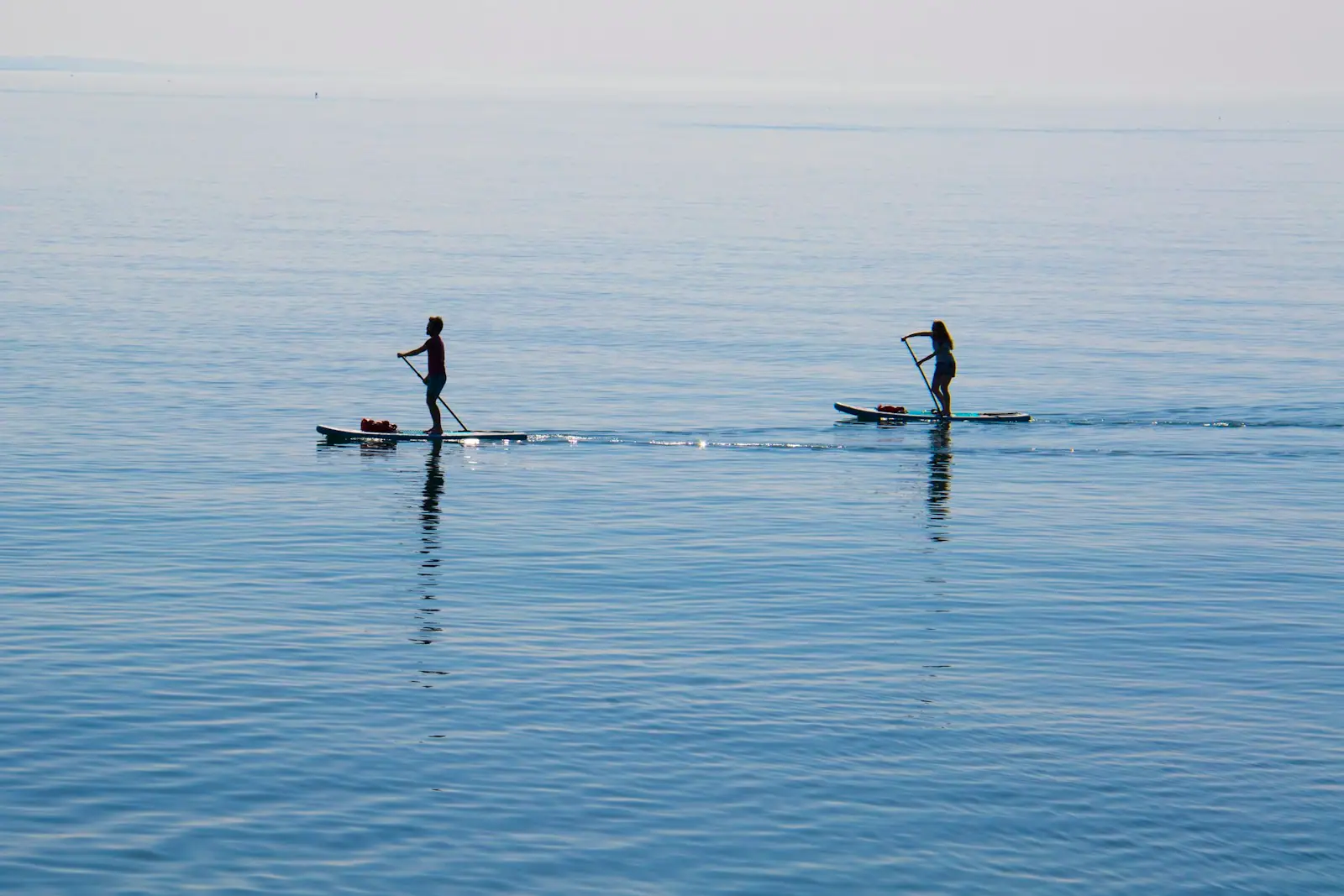
Paddleboard and kayak. The back bays, the bayous and Little Lagoon are made for this: shallow, sheltered, and quiet enough to hear birds. Gulf State Park's lakes give you fresh water with no boat traffic at all, and there are hire points at the park as well as in both towns. Go in the first two hours after sunrise, before the sea breeze fills in.

Sailing and small craft. Lake Shelby inside the park and the sheltered back bays suit small sailing boats and catamarans. Some rentals come with a lesson attached, which is a better use of a windy afternoon than sitting out a cancelled boat trip.

Towables. Banana boat and tube rides run off the beach and out of the marinas in season, priced per person for fifteen to thirty minutes. Cheap, silly, entirely aimed at children and best booked in the morning.

Flyboard and hydrofoil. Sold in Orange Beach in the summer. Genuinely hard for the first fifteen minutes and genuinely good afterwards, and there is usually a minimum age around fifteen or sixteen.

Swimming and surf. The Gulf here is gently shelving and usually calm, which is why the coast is family country. The important exception is the flag system, and double red means the water is closed inside both city limits as a matter of law rather than advice. Surfing exists, mostly as a storm-swell and cold-front activity rather than a reliable one.

Snorkelling. Limited, and better acknowledged than oversold. The water clarity varies, there is no natural reef inshore, and the visibility that makes the offshore artificial reefs interesting requires a boat and usually a tank.
Roughly what it costs, and when to go

What it costs

All bands, not quotes, and all noticeably softer outside June to August.

  • Jet ski, one hour: commonly around $100–$150 a machine, usually for two riders.
  • Jet ski, two hours: often $175–$275, and the better value if the Gulf is your destination.
  • Guided ski tour, ninety minutes to two hours: frequently $150–$250 a machine.
  • Paddleboard or kayak, by the hour: roughly $25–$45; by the day, often $60–$90.
  • Banana boat or tube ride: commonly $25–$40 a person for a short run.
  • Flyboard, thirty minutes: frequently $150–$200 including instruction.

Expect a security deposit or a card authorisation on a ski, expect fuel to be charged on return, and expect the damage waiver conversation.

On timing: the water is glassiest between sunrise and about ten, and the sea breeze puts a chop across the open bays by early afternoon in summer. Thunderstorms build inland and arrive quickly, and liveries pull everyone in when lightning is within range, so a morning booking is far less likely to be cut short. Water temperature is comfortable from roughly May into October; by January you would want a wetsuit, and most of the ski trade has closed for the season anyway.

The things that end a rental early

Local tips

  • Running aground on grass. The back bays are shallow and much of the bottom outside the channels holds seagrass. A ski sucks sand and shell through its impeller and stops, and both the damage and the tow are billed to you. Stay in marked water.
  • The pass on a falling tide with wind against it. Short, steep and confused. It is the one place on this coast that regularly frightens competent riders, and it is why several agreements prohibit leaving the bay at all.
  • Wake damage. Terry Cove, the marina approaches and the residential bayous are no-wake for a reason, and a wake that damages a moored boat is your liability. Idle means idle.
  • Losing the lanyard. If the cut-off switch is not clipped to you it is not doing its job, and a ski that runs off without its rider is both a citation and a genuine hazard.
  • Forgetting the certification. The single most common way a booked morning collapses since the 2024 rule change. Check what your home state issues before you leave home.
  • Riding on a double red flag day. When the Gulf is closed inside the city limits it is closed, and liveries on the bay side will keep you inside regardless.
  • Sunburn and dehydration. Unglamorous and the actual reason most afternoon sessions are cut short. There is no shade on a personal watercraft and the reflection off this sand is fierce.

The four waters, and what each one is good for

How they compare

WaterGetting thereRidingWatch for
Open Gulf, out through Perdido PassTen minutes from most Orange Beach liveriesSpace, swell, the only place worth full throttlePass conditions on an outgoing tide; some agreements forbid it
Terry Cove and Cotton BayouImmediateSheltered, calm, where guided tours startNo-wake through marinas and the residential shoreline
Wolf Bay and Arnica BayFifteen to twenty minutes up the waterwayBig flat open bay, the best back-bay ridingShoaling outside the channel; protected-water status
Little LagoonSeparate launch on the Gulf Shores sidePaddling and small boats, not skisShallow, grassy, residential, one narrow pass

The honest recommendation for a first hour is Terry Cove and the waterway rather than the Gulf, and it is not about nerves. A one-hour rental spent punching out through the pass and back leaves you about twenty minutes of actual riding. Two hours changes the arithmetic completely and is the only way the Gulf run makes sense.

The Intracoastal Waterway itself is a commercial channel with barge traffic in it. It is a route, not a playground: cross it square, stay out of the middle, and do not assume a tow has seen you.

What Alabama actually requires of you

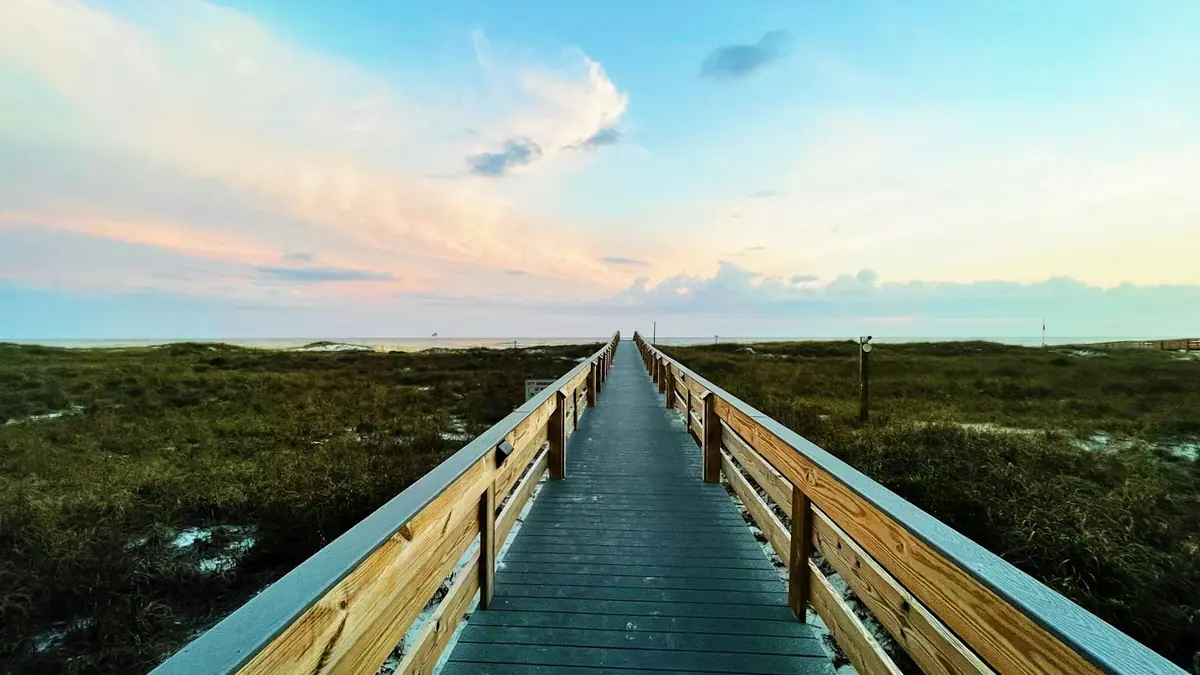
A timber walkway crossing low coastal grass toward open waterUnsplash
A timber walkway crossing low coastal grass toward open water

Before you book

These are state rules enforced by Marine Patrol, not livery policy, and several of them differ from what a visitor who has ridden in Florida expects.

Age. Nobody under twelve may operate a personal watercraft at all. Twelve and thirteen-year-olds may operate only if they hold a vessel operator's licence and a licensed person of at least twenty-one is aboard and able to take control. From fourteen, a licensed operator may ride independently. Rental companies commonly set a higher minimum of their own for whoever signs the contract.

Certification, including for visitors. Since 1 October 2024 a non-resident must hold a valid boater safety certification from their home state or country, or take Alabama's own non-resident examination. The previous grace period for short visits no longer applies. Bring the physical card and photo identification.

Flotation devices. Every person aboard a personal watercraft must wear a properly secured Coast Guard-approved wearable device. Not carried, worn, and not only by children. The stated minimum penalty is $100 plus court costs.

The lanyard. Unless the craft self-circles, a lanyard-type engine cut-off switch must be attached to the operator. Clip it. Same minimum penalty.

Manoeuvring. Alabama does not set a numeric stand-off distance; it prohibits operating a personal watercraft in a way that endangers life, limb or property, and specifically names cutting between a towing boat and the person it is towing, and steering at an object or a person then turning sharply away. Wake jumping close behind another vessel falls squarely inside that.

After dark. There is no blanket night ban, but navigation lights are required away from the dock between sunset and sunrise and a rental ski does not carry them. In practice the riding day ends at sunset, and the return time on your agreement will say so.

On the ground

Where to go

Every place below has its own page — hours, parking, what it costs and what to expect when you get there.

  • Aerial view of dozens of small boats anchored together over a pale shallow sandbar
    Free
    Nature preserve

    Robinson Island

    A twelve-acre island the city bought to stop anyone building on it, reachable only by boat and now closed in the middle for nesting birds.

    2–6 hoursFree to land on. Getting there is the cost: a boat rental, a charter seat or your own trailer.

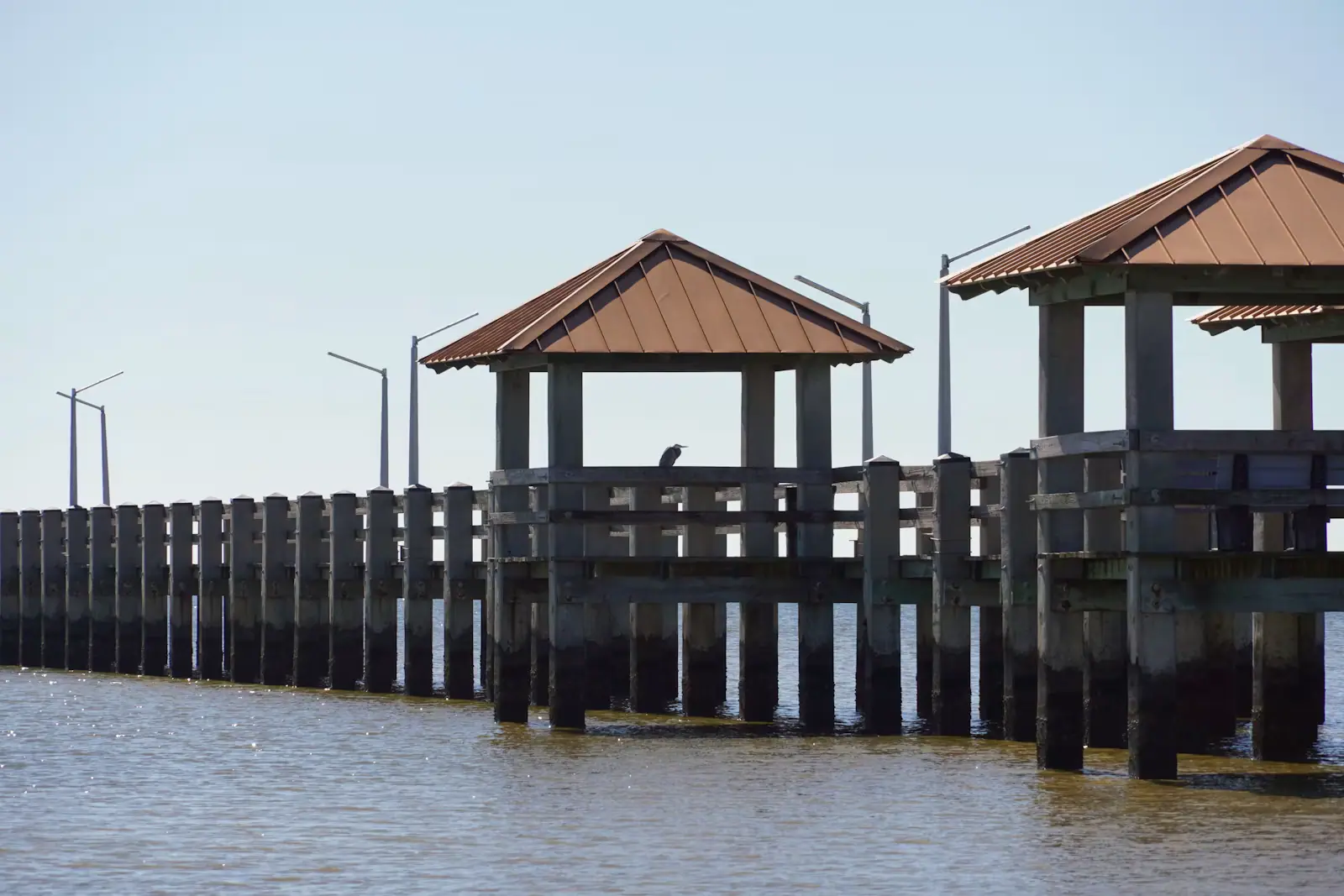
  • A long low fishing pier with covered shelters running out over still bay water
    Free
    Park

    Orange Beach Waterfront Park

    A free bayside park with a four-hundred-foot fishing pier, seven picnic shelters and the best playground on the Alabama coast.

    1–4 hoursFree. No entry charge, no parking charge, no kiosk.

  • Aerial view of a narrow tidal pass cut between two low sandy shorelines
    Free
    Water feature

    Perdido Pass

    The only gap in thirty-two miles of Alabama barrier coast, armoured with granite, and the wrong place to let anyone swim.

    1–3 hoursFree to visit. Parking at the adjoining Gulf State Park beach accesses is charged per vehicle per day.

  • Sea oats on a low dune with a strip of white sand and bright turquoise water behind
    Free
    Beach

    Cotton Bayou Beach

    The Orange Beach access at the foot of Highway 161, with dune boardwalks, a state-park pay kiosk and no view of the bayou it is named for.

    2–6 hoursFree to walk on. Parking is charged by Gulf State Park: fifteen dollars a day for a car in 2026, with an annual pass sold separately.

  • A sandy shoreline fringed with pines beside flat, still freshwater
    Free
    Water feature

    Lake Shelby

    A coastal dune lake one dune ridge behind the Gulf, holding largemouth bass and redfish in the same water, with a free ramp.

    1–5 hoursFree to visit, fish from the bank and launch a boat. Pavilion reservations and equipment hire cost extra.

  • Two paddleboarders crossing a wide sheet of flat, pale, mirror-calm water under a soft sky
    Free
    Water feature

    Little Lagoon

    Ten miles of shallow, warm, brackish water behind West Beach, with one public ramp and a pass that eats propellers.

    1.5–5 hoursThe water is free to use. The city charges for parking at Little Lagoon Pass Park, recently around five dollars for up to four hours and ten for a full day.

Straight answers

Questions people actually ask

How old do you have to be to drive a jet ski in Alabama?

Twelve is the floor, and it comes with conditions. Nobody under twelve may operate a personal watercraft at all. Twelve and thirteen-year-olds need a vessel operator's licence and a licensed adult of at least twenty-one aboard who can take control. From fourteen, a certified operator may ride alone. Rental companies usually require the person signing the contract to be older still, often eighteen or twenty-one.

Do you need a licence to rent a jet ski in Gulf Shores?

Yes, in effect. Alabama requires operator certification, and since 1 October 2024 non-residents must hold a valid boater safety certification issued by their home state or country, or sit Alabama's non-resident examination. The old allowance letting visitors ride for a short period without certification has been withdrawn. Bring the physical card and photo identification, and check what your own state issues before you travel.

How much does a jet ski rental cost in Orange Beach?

Advertised bands run roughly $100 to $150 an hour for a machine carrying two riders, and about $175 to $275 for two hours. A guided tour of ninety minutes to two hours is commonly $150 to $250 a machine. Add fuel on return and expect a deposit or card hold, plus an optional damage waiver. Rates ease noticeably outside the June to August peak. Confirm current pricing when you book.

Where can you ride a jet ski in Gulf Shores and Orange Beach?

Most liveries are on the sheltered side around Cotton Bayou, Terry Cove and the Intracoastal Waterway, so you start on calm water. Terry Cove and the waterway suit a first hour; Wolf Bay and Arnica Bay give you open flat water twenty minutes up the system; and the Gulf is reached by running out through Perdido Pass, which some rental agreements prohibit. Little Lagoon is shallow, grassy and not ski water.

Do you have to wear a life jacket on a jet ski in Alabama?

Everybody aboard, every time. Alabama requires each person on a personal watercraft to wear a properly secured Coast Guard-approved wearable flotation device while under way, with a stated minimum penalty of $100 plus court costs. The lanyard rule sits alongside it: unless the craft self-circles, the engine cut-off switch must be clipped to the operator, carrying the same minimum penalty.

Can you ride a jet ski at night in Alabama?

Not realistically. Alabama does not impose a blanket night ban, but navigation lights are required on any vessel away from the dock between sunset and sunrise, and rental personal watercraft are not fitted with them. Every livery on this coast sets a return time before dark for exactly that reason. Plan on the riding day finishing at sunset, and read the return time on your agreement.

What else is there to do on the water besides jet skis?

A good deal, and most of it costs less. Paddleboarding and kayaking on the back bays, the bayous and Little Lagoon, or on the freshwater lakes inside Gulf State Park where there is no boat traffic at all. Small sailing craft on Lake Shelby and the sheltered bays. Banana boat and tube rides in season. Flyboarding in Orange Beach in summer. And swimming off a gently shelving beach, subject to the flags.

Is the water calm enough for beginners here?

Usually, if you pick the right side and the right hour. The back bays behind the beach are sheltered and shallow, and between sunrise and about ten in the morning they are close to flat. The sea breeze fills in from the south later and puts a chop across the open bays by early afternoon. Perdido Pass is the exception at any hour and deserves a guide the first time.