Skip to content
Search
Menu

These bookings go through Viator, and we are paid for them. Your price is the same, and the payment had nothing to do with the picks.

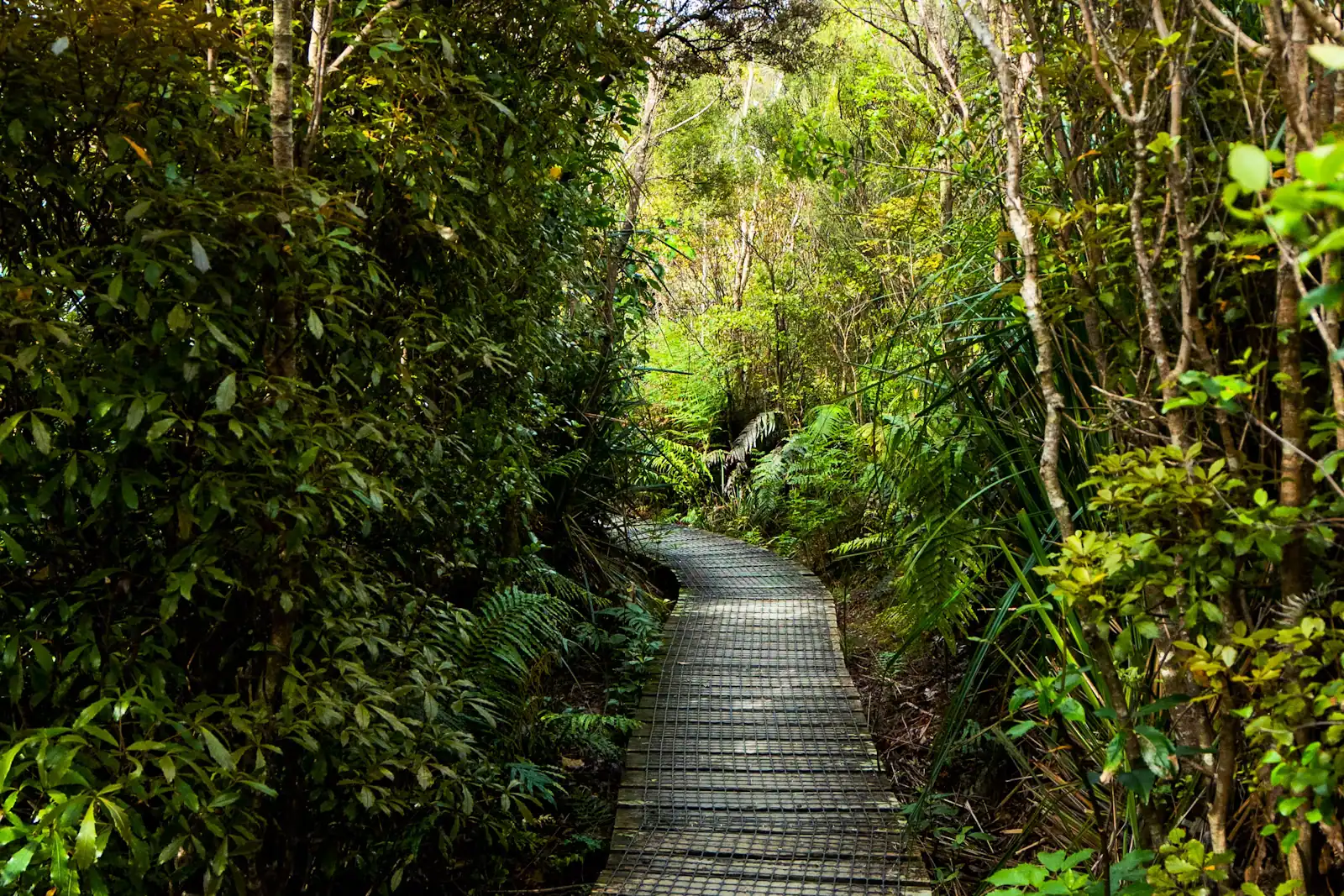
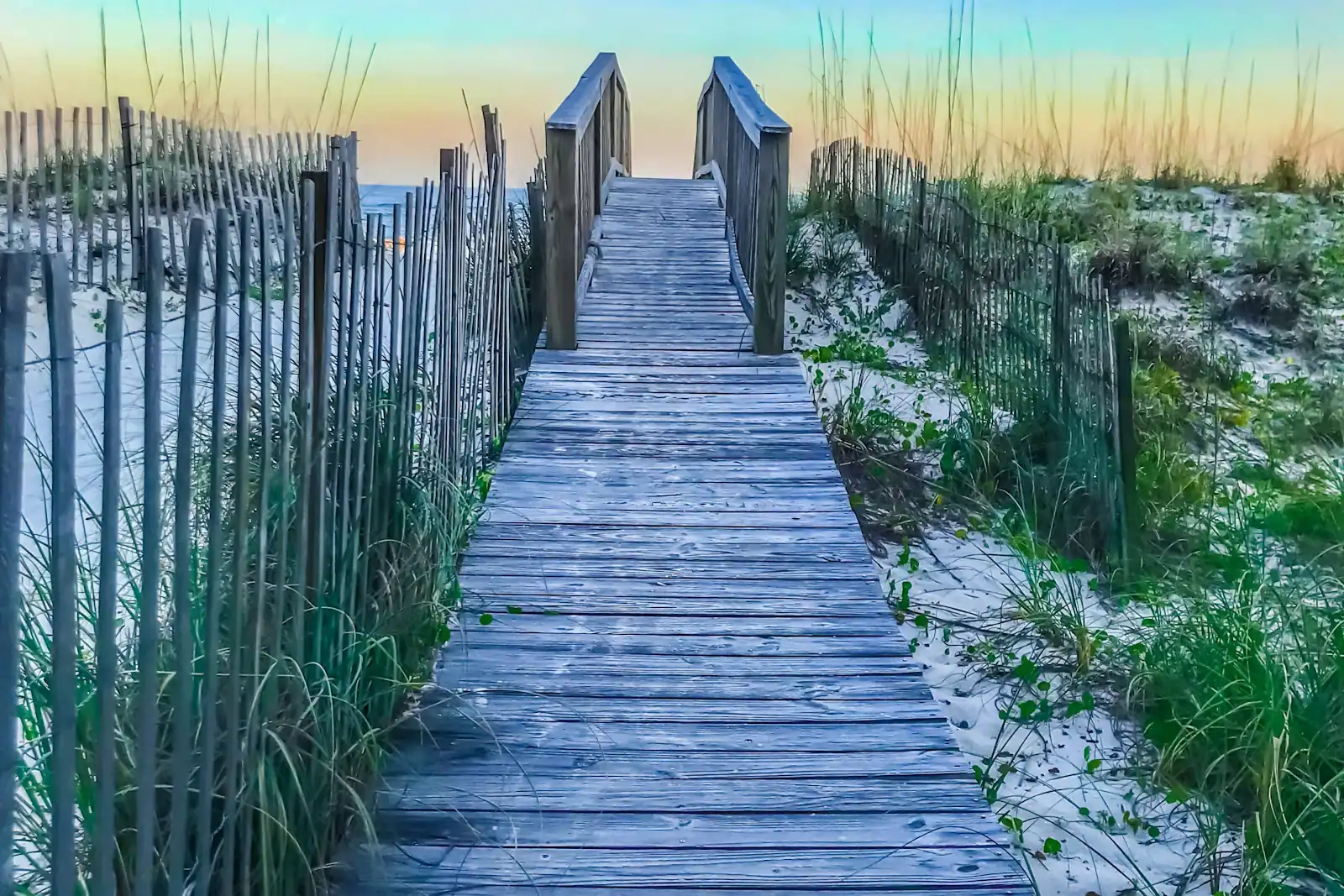
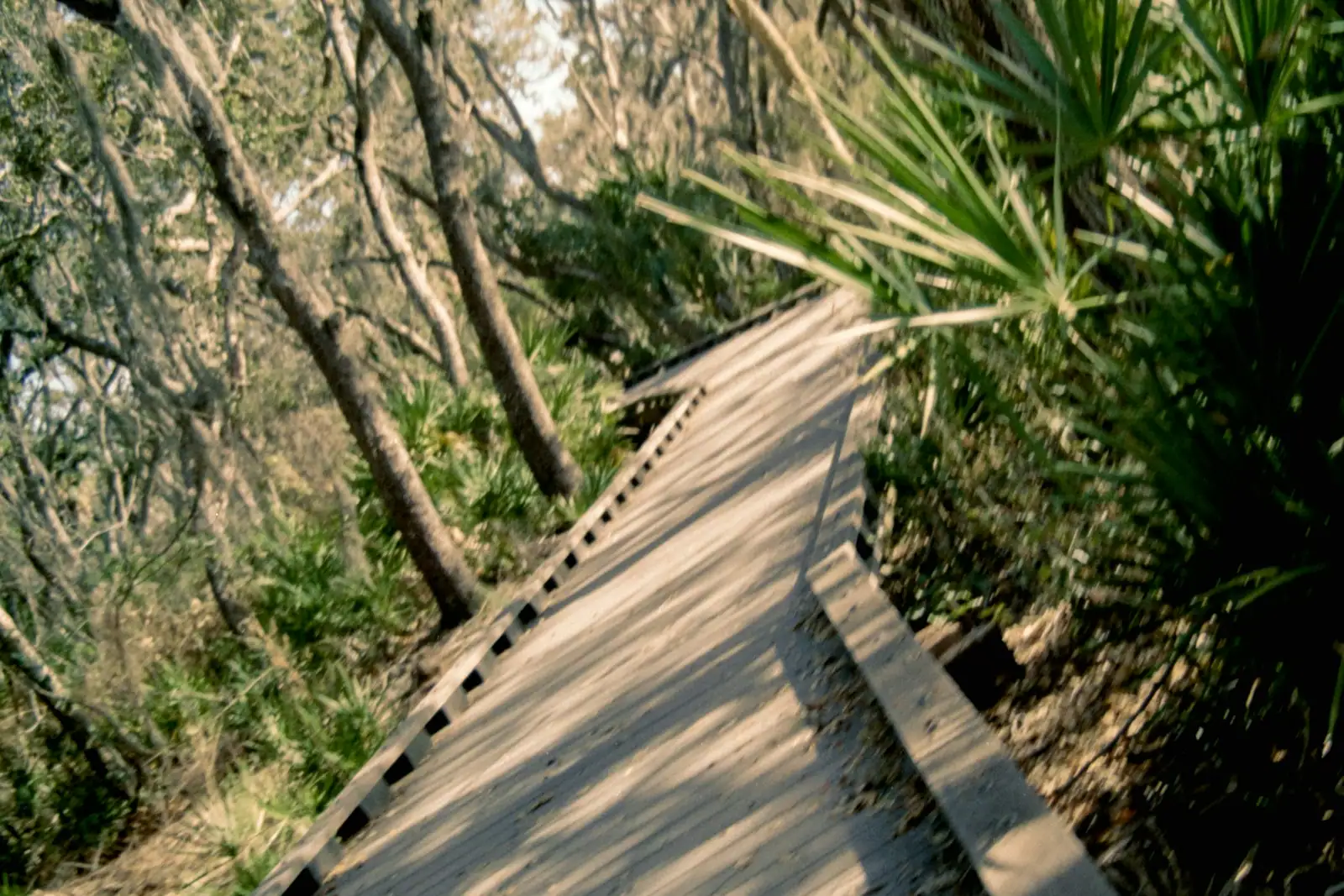
A raised timber boardwalk curving through coastal woodland of leaning oaks and saw palmetto
Unsplash

Things to Do

Gulf State Park: 6,150 Acres in the Middle of the Beach

Last updated

Gulf State Park in Gulf Shores covers 6,150 acres with 28 miles of paved trail, three lakes and the longest pier on the Gulf. Fees, trails and timing.

Alabama owns about thirty-two miles of coastline, less than any other Gulf state, and six thousand one hundred and fifty acres of it are a state park. Hold those two numbers next to each other and you have the argument for this page. Gulf State Park is not a patch of green at the edge of town that you keep in reserve for a rainy afternoon. It occupies the middle of the strip, from the Gulf back across Highway 182 and the lakes almost to the Intracoastal Waterway, and it is large enough that most people staying in Gulf Shores are within cycling distance of a boundary without ever noticing they are.

What sits inside that boundary is unusual for a state park anywhere in the country. Two miles of public beach with a pavilion on it. Three connected freshwater lakes, the largest of them around nine hundred acres. Twenty-eight miles of paved, flat, wheelchair-passable trail. A 496-site campground with its own lake frontage. Twenty cabins, a row of cottages, and a 350-room lodge with a conference centre attached, which is not a sentence you write about many state parks. A fishing pier reaching 1,540 feet out over the water, which by most reckonings makes it the longest on the Gulf. An interpretive centre that generates more power than it uses. A nature centre, a swimming pool, a set of tennis courts and a golf course that the park has leased out and back over the years.

The reason it looks so new is that most of it is. Hurricane Ivan came ashore here on 16 September 2004 and destroyed the park's original beachfront lodge. Sixteen years later to the day, on 16 September 2020, Hurricane Sally landed in almost the same place. In between, Alabama put roughly $135 million of Deepwater Horizon natural-resource damage money into rebuilding the park to a master plan rather than simply replacing what had blown down. That is why the trail network is paved and continuous, why the interpretive centre is built 225 feet back from the water behind a rebuilt dune line, and why the whole place feels more deliberate than the resort towers either side of it.

For a visitor, the practical value is that this is the cheap half of a Gulf Shores holiday. Almost everything on this coast that costs money is a boat. The park is a car park fee, a bicycle and a water bottle. A family that spends the morning riding Gopher Tortoise Trail looking for alligators, eats lunch at the campground, and walks the pier at five o'clock for two dollars a head has had a full day for less than the price of one seat on a dolphin cruise.

It is also the answer to the two questions this destination most often defeats. What do we do when the Gulf is flying double red flags and nobody is allowed in the water? Go inland; the lakes and the trails do not care about surf. And what do we do with a teenager who has run out of patience with the beach by Wednesday? Put them on a bike on Rosemary Dunes at seven in the morning and let them find a bobcat.

One caution before you plan a week around it. The park is not a wilderness and does not pretend to be. Highway 59 and Highway 182 run through it, the trails cross roads, and on a July Saturday the beach pavilion car park fills before ten. Come early, and treat the middle of the day in summer as the park's off hours rather than its peak.
What is actually inside the boundary

The park runs roughly east to west along the coast between Gulf Shores and Orange Beach, and it is split by two highways into pieces that do not feel like one place until you have ridden between them.

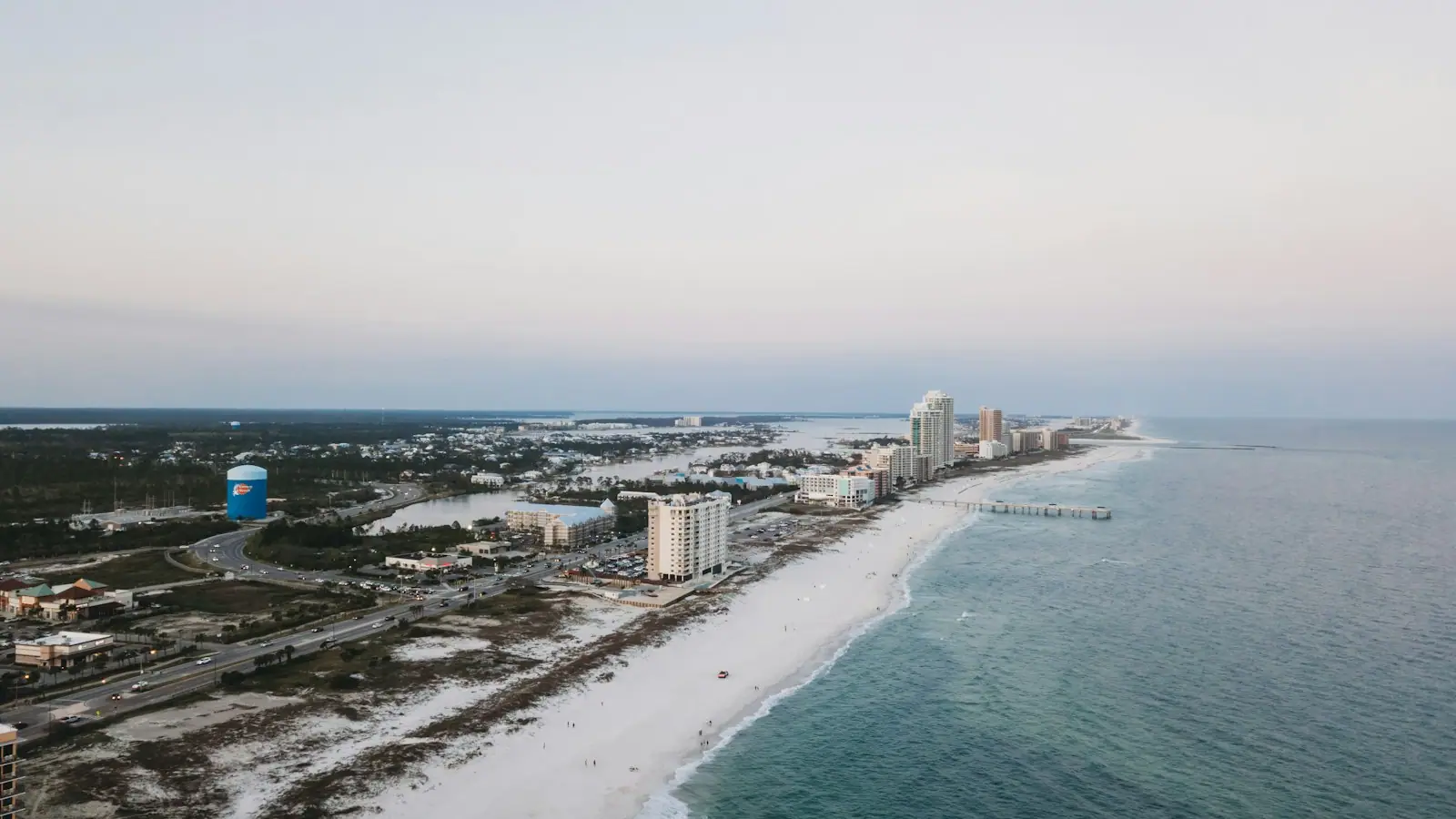
South of Highway 182 is the beach: about two miles of it in public hands, with the pavilion, the day-use car park, the interpretive centre and the pier. This is the only stretch of Alabama's Gulf front where you can stand with no condominium tower behind you.

Between the two highways are the lakes. Lake Shelby is the big one, Middle Lake and Little Lake sit behind it, and a dug canal links all three so a paddler can cross between them without portaging. The campground, the cabins and the day-use area are strung around this water.

North and east is the backcountry: pine flatwoods, oak ridges, freshwater marsh and coastal swamp, laced with the trail system and reaching into Orange Beach.

Two things surprise people. The first is that the lodge, the cottages and the campground are inside the park rather than at its edge, which means you can book a bed a hundred yards from a trailhead. The second is how much of the park is water you cannot see from the road. The lakes are screened by pine almost everywhere except at the day-use area and the overlooks, which is why most visitors drive past them for a week without registering that they are there.

Twenty-eight miles of pavement, and the man it is named for

A paved path running between grass and low trees under a soft overcast skyUnsplash
A paved path running between grass and low trees under a soft overcast sky

The Hugh S. Branyon Backcountry Trail is the park's headline asset and the reason to give this destination a week rather than a long weekend. Its first section opened in 2003 and it carries the name of the superintendent who ran Gulf State Park from 1970 to 2009. It now runs to more than 28 miles of interconnected trail reaching out of the park into both Gulf Shores and Orange Beach, and readers of USA Today voted it the best recreational trail in the country three years running, in 2023, 2024 and 2025.

The important detail is the surface. Most of it is asphalt or boardwalk, flat, and built to be passable in a wheelchair and comfortable on a bike with a trailer behind it. A grandparent, a four-year-old on a balance bike and a serious cyclist can all use the same path at once.

Useful segments, with the lengths the park publishes:

TrailLengthWhy ride it
Gopher Tortoise1.5 miRuns the Lake Shelby shore; the most reliable alligator viewing in the park
Gulf Oak Ridge3.0 miLive oaks hung with Spanish moss; the shadiest stretch on a hot morning
Rosemary Dunes2.1 miScrub and dune ridge, and the segment where bobcats are most often seen
Catman2.7 miThe long connector that stitches the eastern half together
Campground2.2 miPaved and boardwalk; the obvious loop if you are sleeping in the park
Beach Mouse Bypass1.1 miBoardwalk over dune habitat, with benches in the shade
Twin Bridges0.8 miShort, and it passes the parkour frames teenagers actually stop for

Hire a bicycle rather than walking it. The distances are the point.

The ecosystem count, and what actually crosses the path

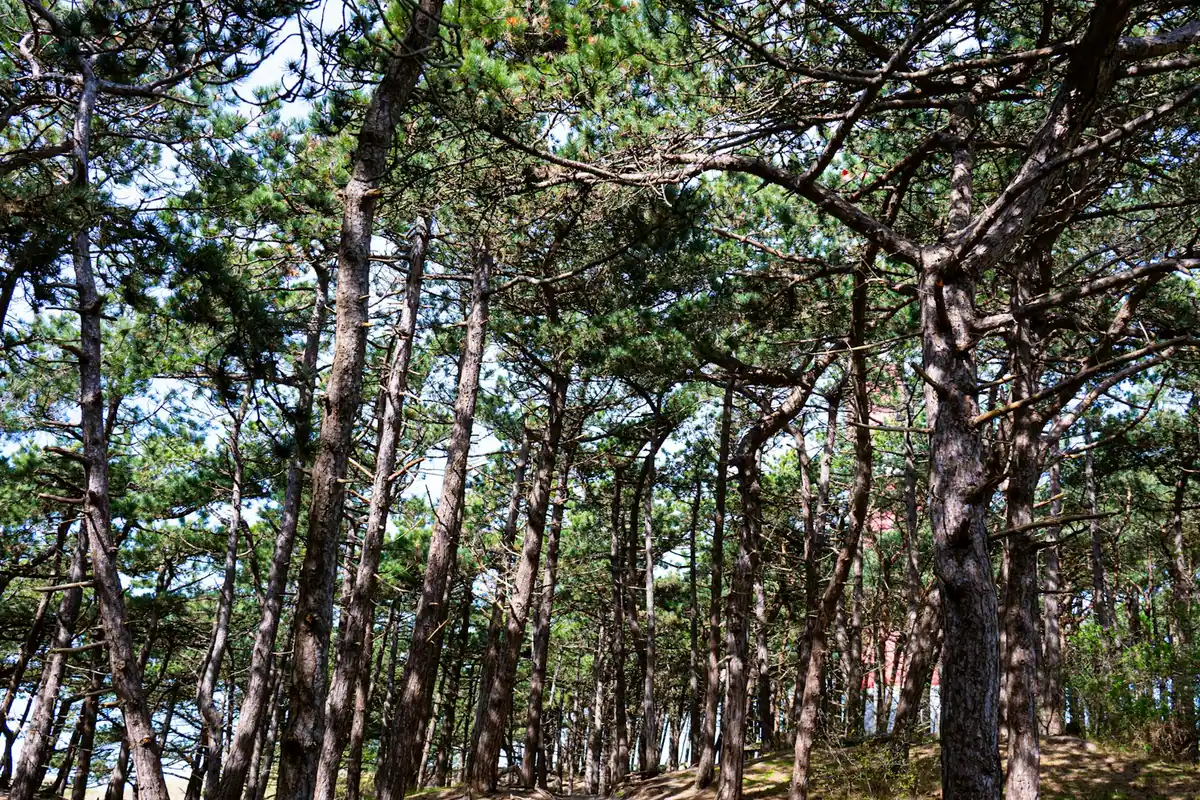
Tall pine trunks and open understorey in a sunlit stretch of sandhill forestUnsplash
Tall pine trunks and open understorey in a sunlit stretch of sandhill forest

You will see the park described as crossing nine distinct ecosystems. The trail system's own material says seven. Neither is wrong so much as differently drawn, because the boundary between a wet pine savanna and a freshwater marsh is a judgement call rather than a fence, and this page would rather tell you that than pick a number and sound certain.

What matters is that the change is visible from a bicycle. Within about twenty minutes of riding you pass from open sandhill pine, where the trunks are widely spaced and the floor is bare needles, into oak ridge thick enough to feel ten degrees cooler, then out over marsh on a boardwalk, then into dune scrub with rosemary and low palmetto. Very few coastal parks compress that much variety into that little distance, and the reason is the same geology that made the beach: old dune ridges lying parallel to the coast, with wet swales trapped between them.

The park counts more than 370 species of birds, mammals, reptiles and amphibians. In practice, what a visitor sees on an ordinary morning is alligators along the Lake Shelby shoreline, ospreys over the water, herons and egrets in the marsh, gopher tortoise burrows in the sandy verges, and armadillos rooting in the leaf litter with no apparent interest in you at all. Bobcats and coyotes are present and mostly not seen; if you want a chance at either, you need to be moving quietly at first light on Rosemary Dunes or Bobcat Branch, not at eleven with a group.

The pier: 1,540 feet, and what it costs to walk it

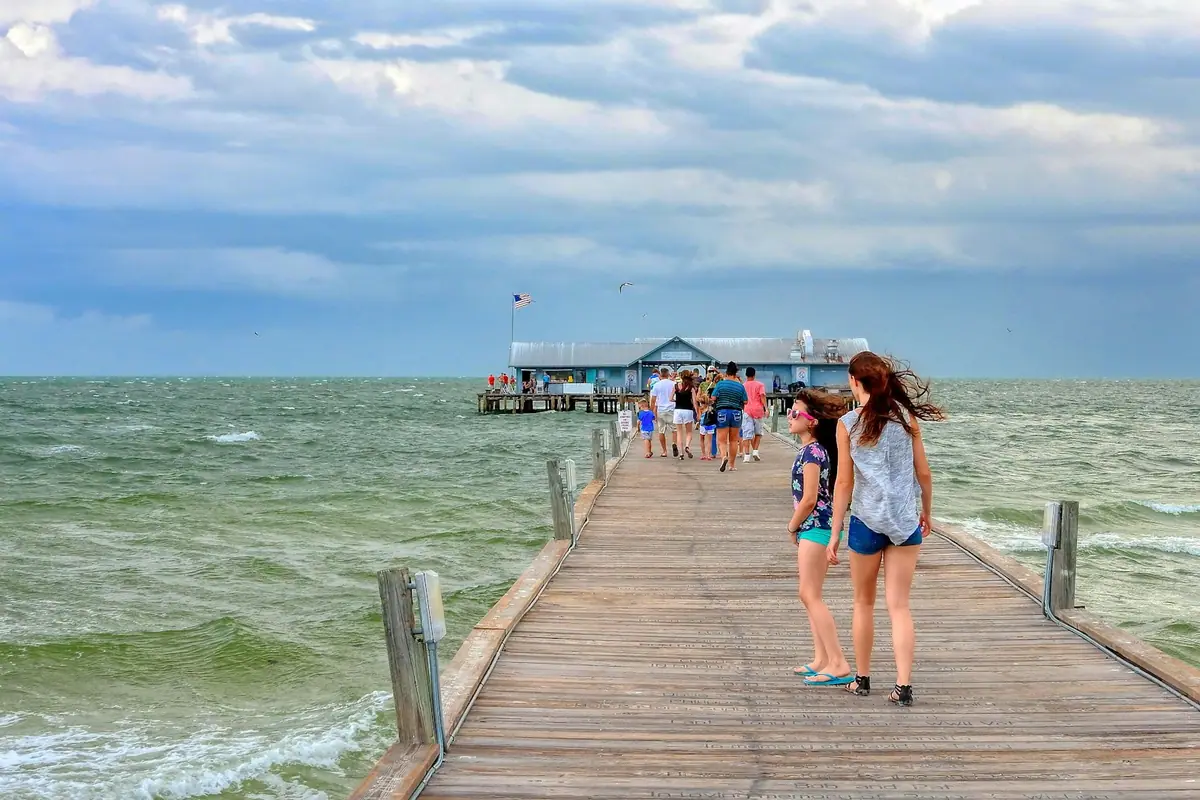
People walking out along a long timber pier over clear green water towards the open seaUnsplash
People walking out along a long timber pier over clear green water towards the open sea

What it costs

The Gulf State Park Pier reaches 1,540 feet into the Gulf and is usually described as the longest on it. It is also, for the money, the single best thing to do in Gulf Shores after dark.

Sally took roughly two hundred feet off the end in September 2020, weeks before it was due to reopen from an earlier round of work. The repair ran to something near $14 million, the pier came back into use in 2023, and the observation deck at the far end finally opened in May 2026, which completed the job.

Two tickets, and the distinction catches people out:

  • Sightseeing, at around two dollars for the day at the time of writing. You walk out, you look, you come back as often as you like. Under-12s, veterans and guests of the park campground and lodge generally go free.
  • Fishing, at around ten dollars for an adult day permit, less for veterans and park guests, with children under twelve usually free. Weekly, monthly and annual permits exist for anyone staying longer. If you have paid the day-use parking fee as an angler, ask at the gate: the parking receipt has carried a fishing permit with it.

Alabama's saltwater licence rules are handled at the pier rather than by you in advance, which is one reason pier fishing is the easiest way to fish this coast without booking a charter.

Go at dusk. The pier lights draw bait, the bait draws everything else, and on a good evening you can watch king mackerel worked off the end by people who have been doing it for thirty years. Rates and permit types change; check at the gate house before you plan around them.

Sleeping inside the park

Four quite different propositions share one gate, and choosing between them decides what your week feels like.

The campground is the big one: 496 improved sites including full-hookup RV pitches, waterfront sites, accessible sites, a primitive area and some glamping units, with eleven modern bathhouses and a separate 104-site RV resort. It runs at very high occupancy from February through to autumn, and snowbirds book long stays months out. This is the cheapest bed on the Alabama coast in February and it is not close.

The cabins and cottages. Twenty cabins, most of them on the lake, plus the Eagle Cottages, which sit nearer the beach and are the upscale end of the park's own accommodation. Small inventory, long lead times.

The Lodge at Gulf State Park is a 350-room hotel with a conference centre, opened in 2018 on the footprint of the lodge Ivan destroyed. It is inside the park and on the beach, which no condominium tower can say, and it is priced accordingly.

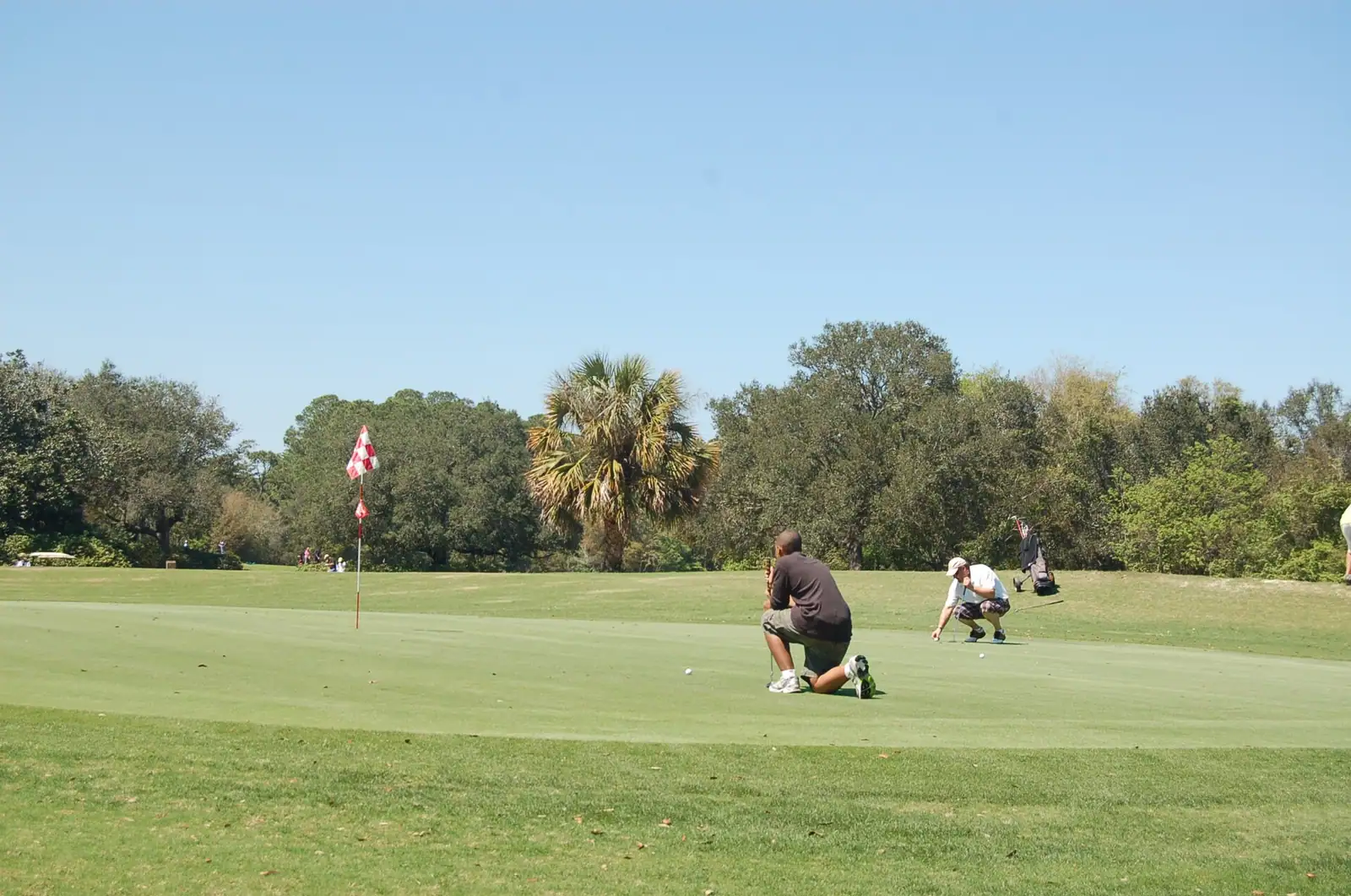
A condo two miles away, which is what most visitors actually do, and there is nothing wrong with it. A rental on West Beach or in Orange Beach puts you ten minutes from a trailhead by car and rather less by bike.

Rates move with the season by a wide margin here, so this page does not quote them. Check directly, and book the campground far earlier than feels reasonable.

Fees, hours and the 2026 parking change

What it costs

Gulf State Park charges for parking rather than for entry, and the rate went up at the start of 2026.

  • Day-use parking has been $15 for a car and $35 for anything towing a trailer, or for a bus or large RV, from 1 January 2026. Annual beach parking passes are sold and are worth the arithmetic if you are here a fortnight or more.
  • Trails and picnic areas open at sunrise and close at sunset. That is a real closing time, not a suggestion, and it is enforced at the trailhead car parks.
  • Park headquarters keeps ordinary weekday office hours; the interpretive and nature centres keep their own, which shift with the season.
  • The pier sells its own tickets separately from parking, as above.
  • Trail access itself is free if you arrive on foot or by bicycle from outside, which is why so many rental bikes on this coast are pointed at the park in the morning.

Two practical notes. The day-use car park by the pavilion fills earliest in summer, and the trailhead car parks scattered around the north of the park almost never do, so start from one of those and ride in. And the fee is per vehicle rather than per person, which makes the park dramatically cheaper for a family of five than for a couple.

Fees are reviewed and this page will lag them. Confirm at the gate before you build a budget on these figures.

Why a state park looks this new

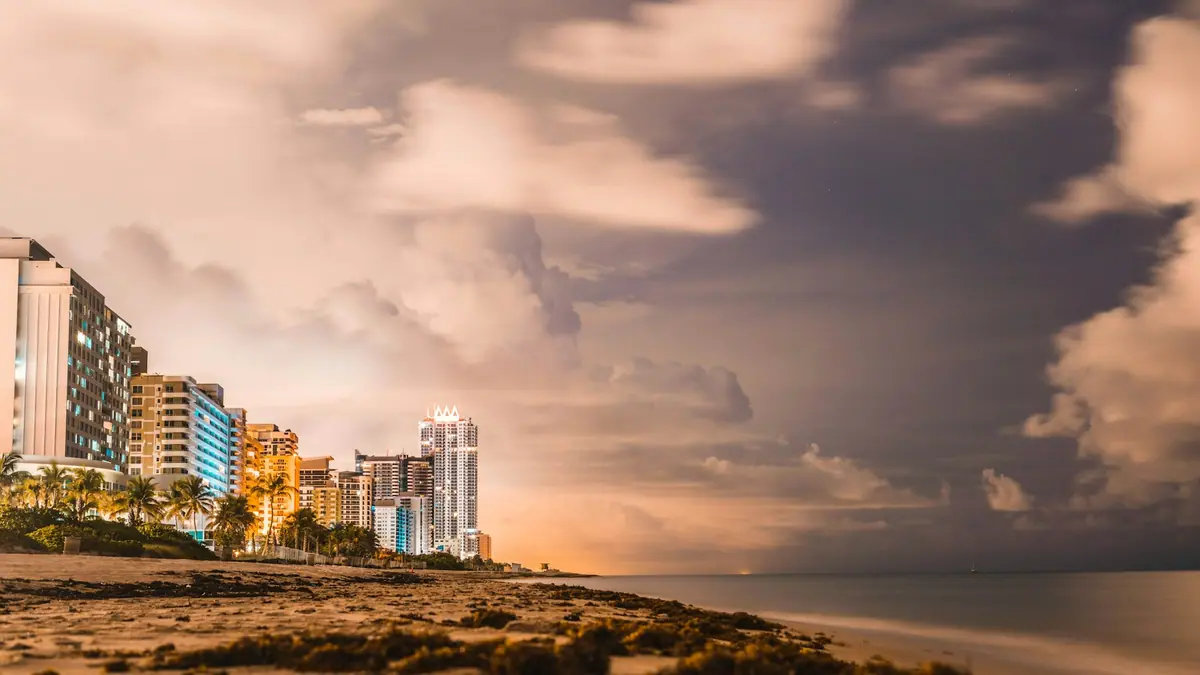
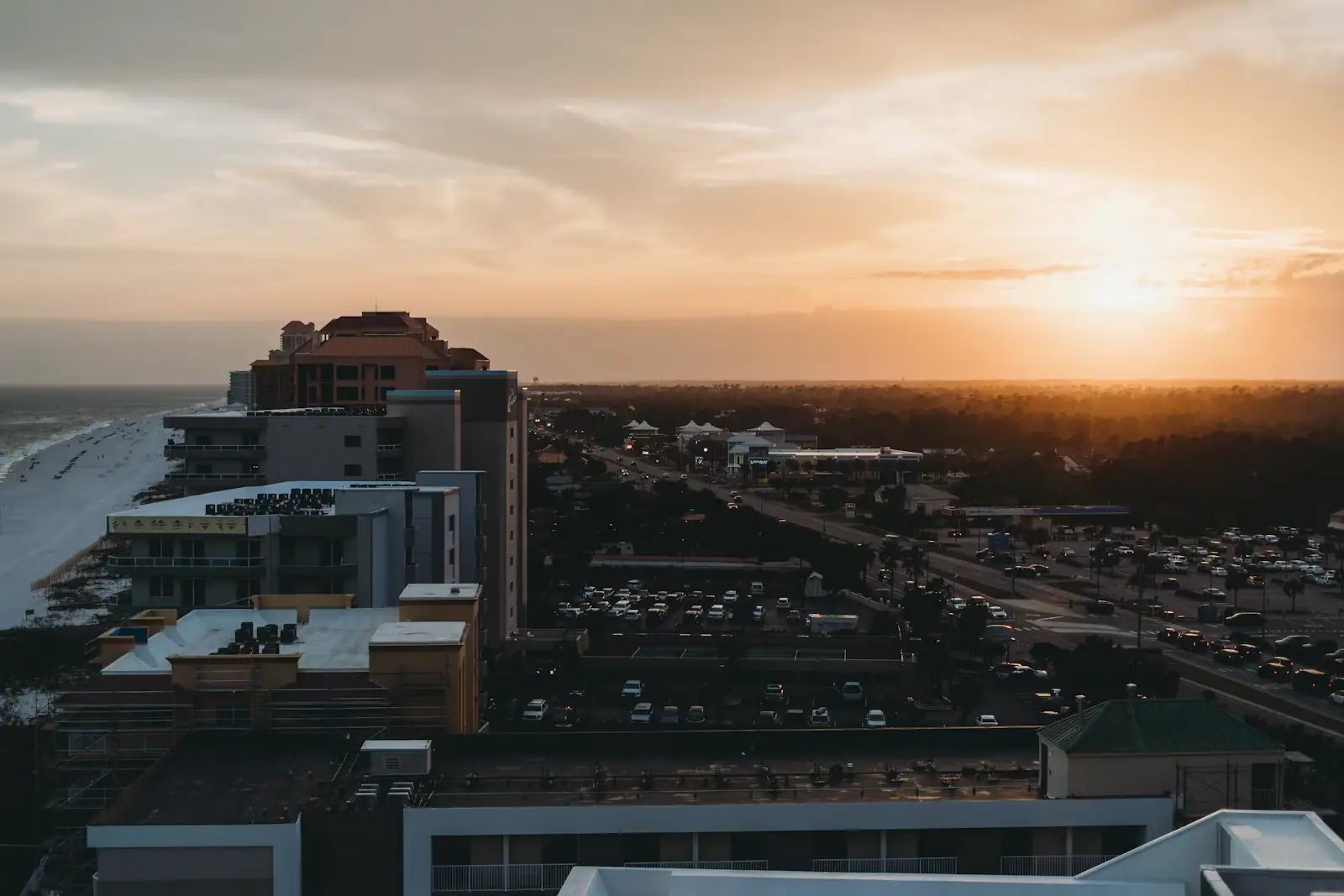
A storm cloud building over a Gulf beach at dusk with lit condominium towers along the shorelineUnsplash
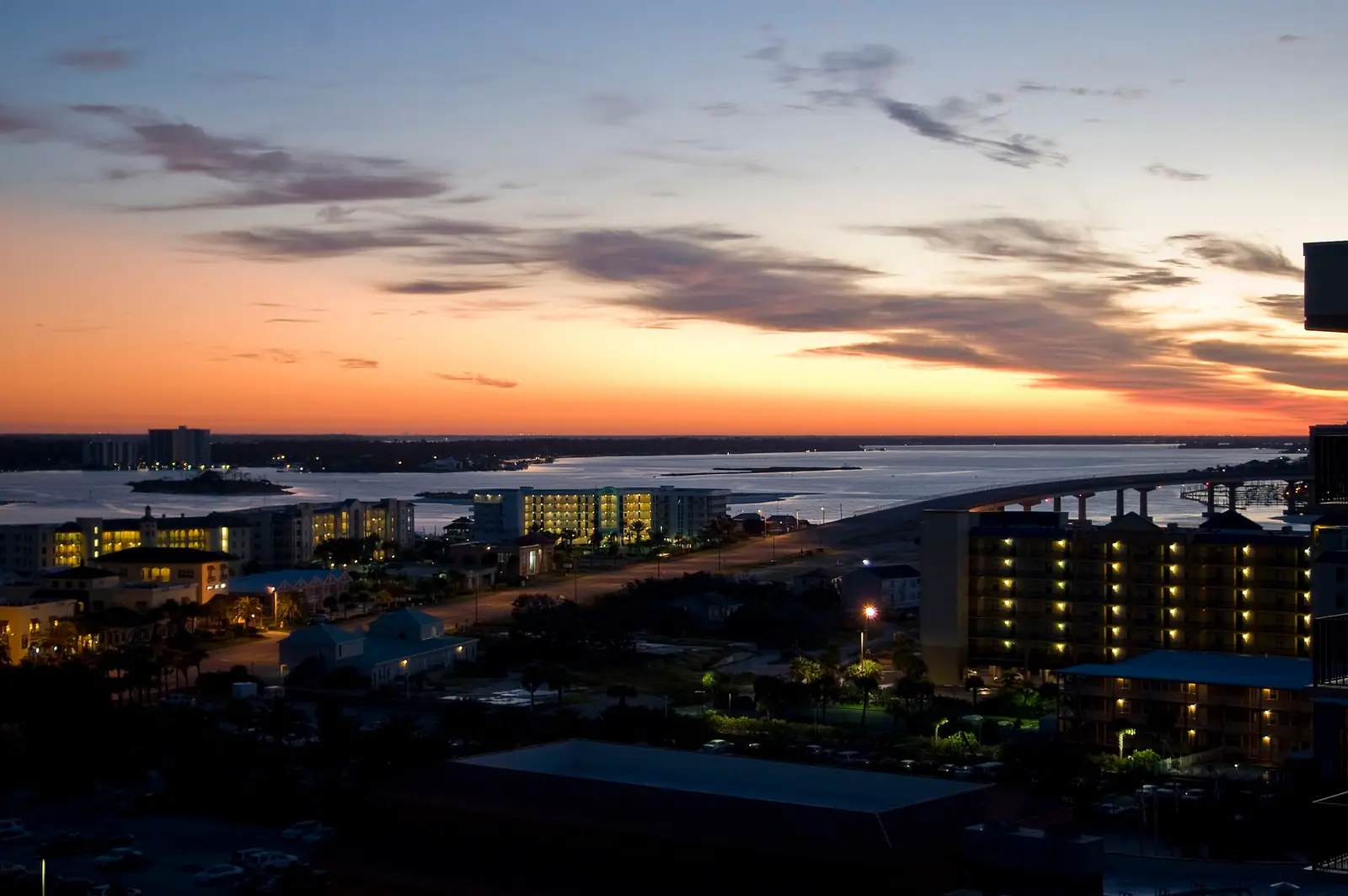
A storm cloud building over a Gulf beach at dusk with lit condominium towers along the shoreline

Two storms and an oil spill explain almost everything a visitor notices here.

Ivan came ashore on 16 September 2004 as a major hurricane and took out the park's beachfront lodge along with a great deal else. Sally arrived on 16 September 2020 — the same calendar day, sixteen years later — as a Category 2 with winds around 105 mph, and put the Gulf State Park Pier out of use for three more years.

Between those two dates, the Deepwater Horizon settlement paid for a rebuild rather than a repair. Roughly $135 million of natural-resource damage funding went into a master plan with five parts: the lodge and conference centre, an off-grid interpretive centre, a learning campus, the restored 28-mile trail system, and about fifty acres of re-established coastal dune.

The interpretive centre is the piece worth going to look at even if you have no interest in architecture. It was deliberately set 225 feet back from the water so a secondary dune could be grown in front of it, partly with discarded Christmas trees staked into the sand to catch blowing grains, and it is certified under the Living Building Challenge — one of a very small number of buildings worldwide to hold that standard, and the first in the Southeast. It has to generate more energy than it consumes and treat its own water to keep the certificate.

When Sally hit two years after it opened, the new buildings held. The Lodge came through with minor damage and sheltered staff and their families for weeks afterwards. On a coast where the honest advice about hurricane season is to buy the insurance and watch the forecast, that is not a small thing.

How to actually spend a day here

When to go

First light to nine. The only sensible time to ride in summer. The trail is cool, the wildlife is moving, and you will meet a dozen people rather than a hundred. Start at a northern trailhead, ride Gopher Tortoise along the lake, loop back through Gulf Oak Ridge for shade.

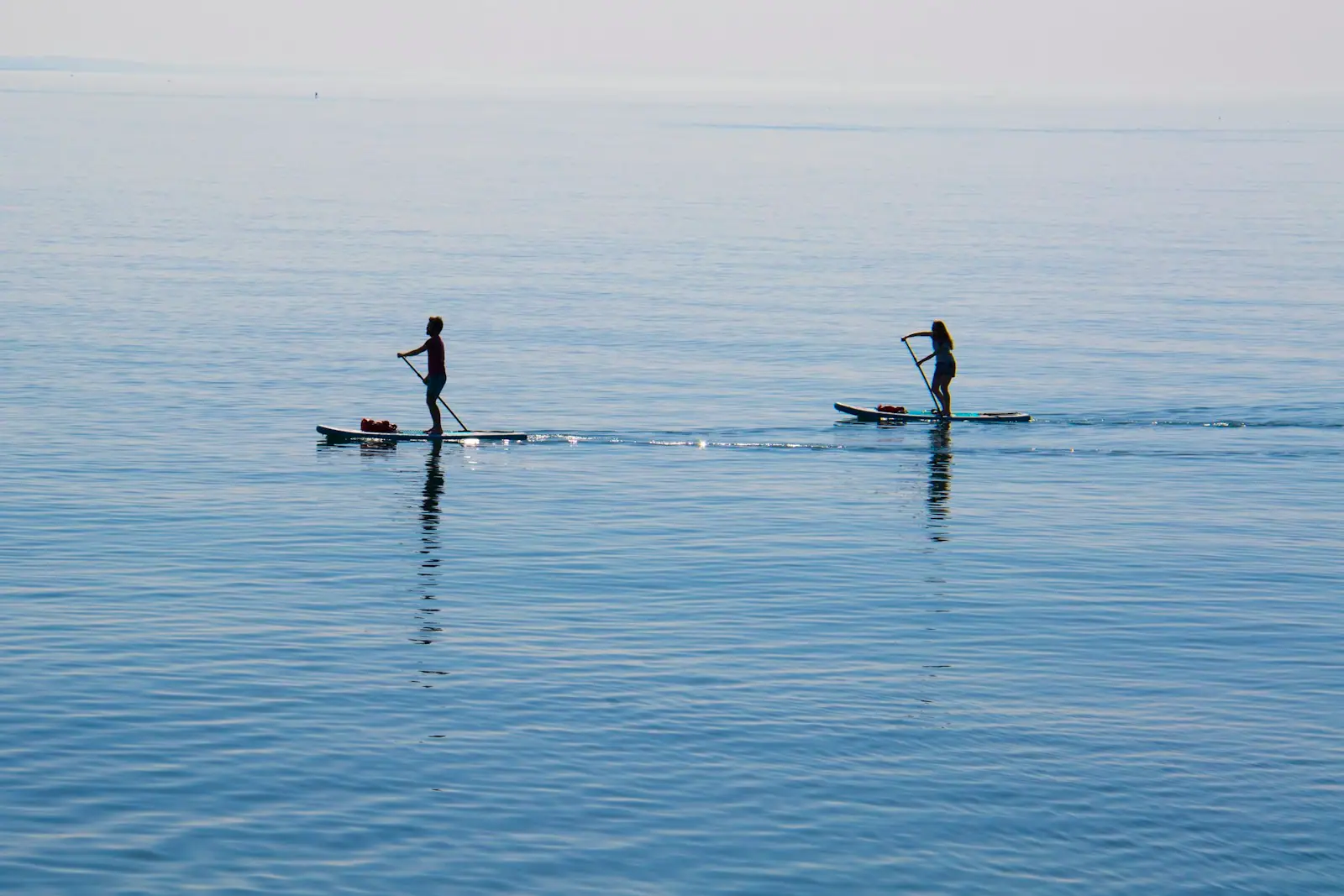
Nine to eleven. Lake Shelby day-use area. Get a kayak or a board out on flat water before the sea breeze fills in. The hire counter operates seasonally and typically wants boats back well before the end of the afternoon, so ask about the return time when you pay rather than after.

Eleven to four. In June, July and August, this is not park time. It is thirty-three degrees with ninety per cent humidity and thunderstorms building inland. Go to the beach, go to the pool, go to an air-conditioned lunch. In October, March and April, ignore this paragraph entirely — the middle of the day is the best part of it.

Four to sunset. The interpretive centre, the nature centre, then the pier. Buy the sightseeing ticket, walk the full 1,540 feet, and stay for the light going down behind the towers to the west.

After dark. The trails close at sunset and the park means it. The pier does not, and that is where the evening is.

Rain. A wet day here is better than most. The oak stretches are sheltered, the interpretive centre is indoors, and summer rain on this coast is usually a violent forty minutes rather than a day.

Three lakes, one canal, and the alligators in them

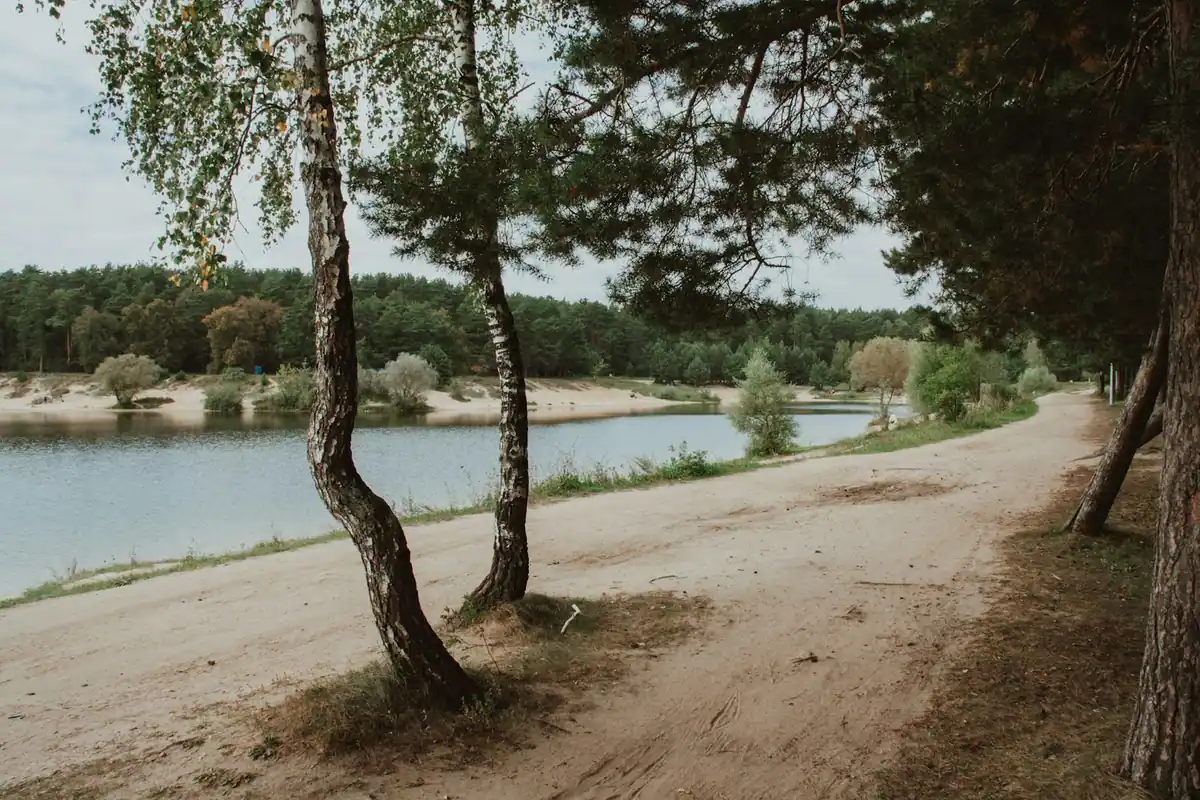
A sandy shoreline fringed with pines beside flat, still freshwaterUnsplash
A sandy shoreline fringed with pines beside flat, still freshwater

Before you book

Lake Shelby covers something in the order of nine hundred acres, Middle Lake and Little Lake sit behind it, and a cut canal joins all three so you can paddle the system without lifting a boat out. The day-use area on Lake Shelby has the launch, the picnic shelters and the seasonal hire counter for kayaks, canoes and paddleboards.

This is freshwater a few hundred yards from the Gulf, which is a genuinely odd piece of geography and the reason the park can offer a flat-water morning on a day the surf is closed.

It is also alligator water. Not occasionally, not in theory. American alligators live in all three lakes and along the marsh edges of the trail system, and the population is neither fed nor fenced.

The rules are short and they are not negotiable. Do not swim in the lakes. Keep dogs leashed and away from the bank, because a dog at the water's edge is the single most common way this goes wrong. Never feed an alligator, which is illegal in Alabama and is what turns a shy animal into a dangerous one. Keep thirty feet or more between you and any alligator you can see, give a much wider berth to one on a bank in spring, and if you are paddling, stay off the shoreline vegetation rather than hugging it for shade.

Handled properly this is a feature rather than a hazard. Riding Gopher Tortoise Trail at eight in the morning and counting eyes along the far bank is the thing children remember from a week here.

On the ground

Where to go

Every place below has its own page — hours, parking, what it costs and what to expect when you get there.

  • A raised timber boardwalk curving through dense green woodland and palmetto
    Park

    Gulf State Park

    Six thousand acres of dune, lake and pine between two beach towns, with 28 miles of paved trail and a village-sized campground.

    2–8 hoursTrails and the Nature Center are free. Parking at the Gulf beach and pier lots is a flat daily rate per vehicle, recently around $15.

  • Two anglers casting from a concrete pier into open water in the last light of the evening
    Landmark

    Gulf State Park Pier

    1,540 feet of concrete over the Gulf, rebuilt twice after hurricanes, with a three-dollar walking ticket most visitors never notice.

    1–5 hoursTwo tickets: all-day fishing around $10 for an adult, and all-day sightseeing around $3. Children 11 and under are free for both.

  • A narrow walkway running through thick forest with light coming through the canopy above
    Free
    Trail

    Hugh S. Branyon Backcountry Trail

    More than 28 miles of paved trail through swamp, pine ridge and dune, ridden by road bikes, wheelchairs and three-year-olds alike.

    1–5 hoursFree. There is no charge to use any part of the trail network.

  • Rows of boats moored in a marina basin on flat water in early morning light
    Free
    Neighbourhood

    Orange Beach

    Alabama's other beach city: nine thousand people, a maze of back bays and the only cut from those bays to open Gulf water.

    3–10 hoursFree to visit. Beach parking is charged at both city and state park accesses.

  • Aerial view of bright white sand meeting shallow water that shades from pale green to deep blue
    Free
    Beach

    Gulf Shores Public Beach

    Where Highway 59 runs out of land: pavilions, showers, volleyball nets, The Hangout next door and hourly parking since July 2026.

    2–7 hoursThe beach is free. Parking is not: non-residents pay by the hour through a phone app during the paid season.

  • A sandy shoreline fringed with pines beside flat, still freshwater
    Free
    Water feature

    Lake Shelby

    A coastal dune lake one dune ridge behind the Gulf, holding largemouth bass and redfish in the same water, with a free ramp.

    1–5 hoursFree to visit, fish from the bank and launch a boat. Pavilion reservations and equipment hire cost extra.

  • Gentle surf running onto pale sand with turquoise water beyond
    Beach

    Romar Beach

    A state park beach access with an Orange Beach address, which means state parking rules, not city ones, and a 1920s name nobody explains.

    1.5–5 hoursFree to walk on. Parking is the Gulf State Park flat daily vehicle rate, recently around $15.

Straight answers

Questions people actually ask

How much does it cost to get into Gulf State Park?

There is no admission charge as such — the park charges for parking. From 1 January 2026 the day-use rate has been around $15 for a car and about $35 for anything towing a trailer, a bus or a large RV, and annual beach parking passes are sold for longer stays. Arriving on foot or by bicycle costs nothing, which is why so many visitors ride in from a rental nearby. The pier is ticketed separately.

How big is Gulf State Park?

About 6,150 acres, which is a striking share of a state with only around 32 miles of coastline in total. Inside the boundary are roughly two miles of public Gulf beach, three connected freshwater lakes, more than 28 miles of paved trail, a 496-site campground, cabins and cottages, a 350-room lodge and a 1,540-foot fishing pier. It is large enough that you cannot see one end from the other and most visitors only ever use a corner of it.

Is the Hugh S. Branyon Backcountry Trail paved?

Most of it, yes. The network runs to more than 28 miles of interconnected trail and the great majority is asphalt or boardwalk, flat and built to be passable in a wheelchair. A handful of short segments are unpaved sand. That surface is the whole point: a toddler on a balance bike, a grandparent on an adaptive cycle and a road rider can all use the same path. USA Today readers voted it the country's best recreational trail in 2023, 2024 and 2025.

Are there alligators in Gulf State Park?

Yes, in all three lakes and along the marsh edges beside the trails. The most reliable place to see one is the Lake Shelby shoreline from Gopher Tortoise Trail early in the morning. Do not swim in the lakes, keep dogs leashed and well back from the bank, stay at least thirty feet away from any alligator you spot, and never feed one — feeding is illegal in Alabama and is what makes an alligator dangerous to the next person along.

How long is the Gulf State Park Pier and what does it cost?

At 1,540 feet it is the longest structure of its kind on the Gulf by most accounts, and walking to the end of it takes a good ten minutes. Walking out to sightsee has cost about two dollars for the day, with under-12s, veterans and park campground or lodge guests free. A day fishing permit has run to roughly ten dollars for an adult, less for veterans and park guests, with young children free. Weekly and annual permits exist. Check current rates at the gate house.

Is the Gulf State Park Pier open after Hurricane Sally?

Yes. Sally destroyed roughly a two-hundred-foot section in September 2020, weeks before the pier was due back in service from earlier work. After something close to $14 million of repairs it reopened in 2023, and the observation deck at the far end opened in May 2026, completing the restoration. Storm damage on this coast is a recurring event, so it is still worth confirming the pier is open before you drive out to it.

Can you camp in Gulf State Park?

Yes, and it is one of the busiest campgrounds in the Southeast. There are 496 improved sites including full-hookup RV pitches, waterfront and accessible sites, a primitive area and some glamping units, served by eleven bathhouses, plus a separate 104-site RV resort. Snowbirds book long winter stays months ahead and the family season fills too, so reserve far earlier than you would for most state parks. Twenty cabins and the Eagle Cottages are the alternative.

Can you swim at Gulf State Park?

In the Gulf, yes — the park has about two miles of public beach with a pavilion, restrooms and seasonal lifeguard cover, and the same flag warning system applies there as everywhere else on this coast. In the lakes, no. Lake Shelby, Middle Lake and Little Lake all hold alligators and swimming is not permitted. The lakes are for paddling and fishing; the pool at the lodge and the park's own pool are the alternatives on a red-flag day.

What is the best time of day to visit Gulf State Park?

First light until about nine in the morning, especially between June and September. The trail is cool then, alligators and wading birds are active, and the car parks are empty. From late morning to mid-afternoon in summer the heat and humidity make the open stretches genuinely unpleasant and thunderstorms build inland. Late afternoon into dusk is the second window, and the pier is best in the hour after sunset.

Do you need a bike to see Gulf State Park?

Not strictly, but it changes the trip. The trail network is more than 28 miles long and the distances between the good bits are cycling distances rather than walking ones — the Lake Shelby shoreline, the oak ridge and the dune scrub are several miles apart. Rental bikes are widely available in Gulf Shores and Orange Beach and some park accommodation lends them. On foot, pick one trailhead and one loop rather than trying to cover ground.

Is Gulf State Park good on a rainy day?

Better than most of this coast. Summer rain here tends to be a violent forty minutes rather than a washed-out day, the oak-shaded trail segments stay usable through light rain, and the interpretive centre and nature centre are indoors. The park is also the obvious answer when the Gulf is flying double red flags and swimming is prohibited, because the lakes and trails are unaffected by surf conditions.