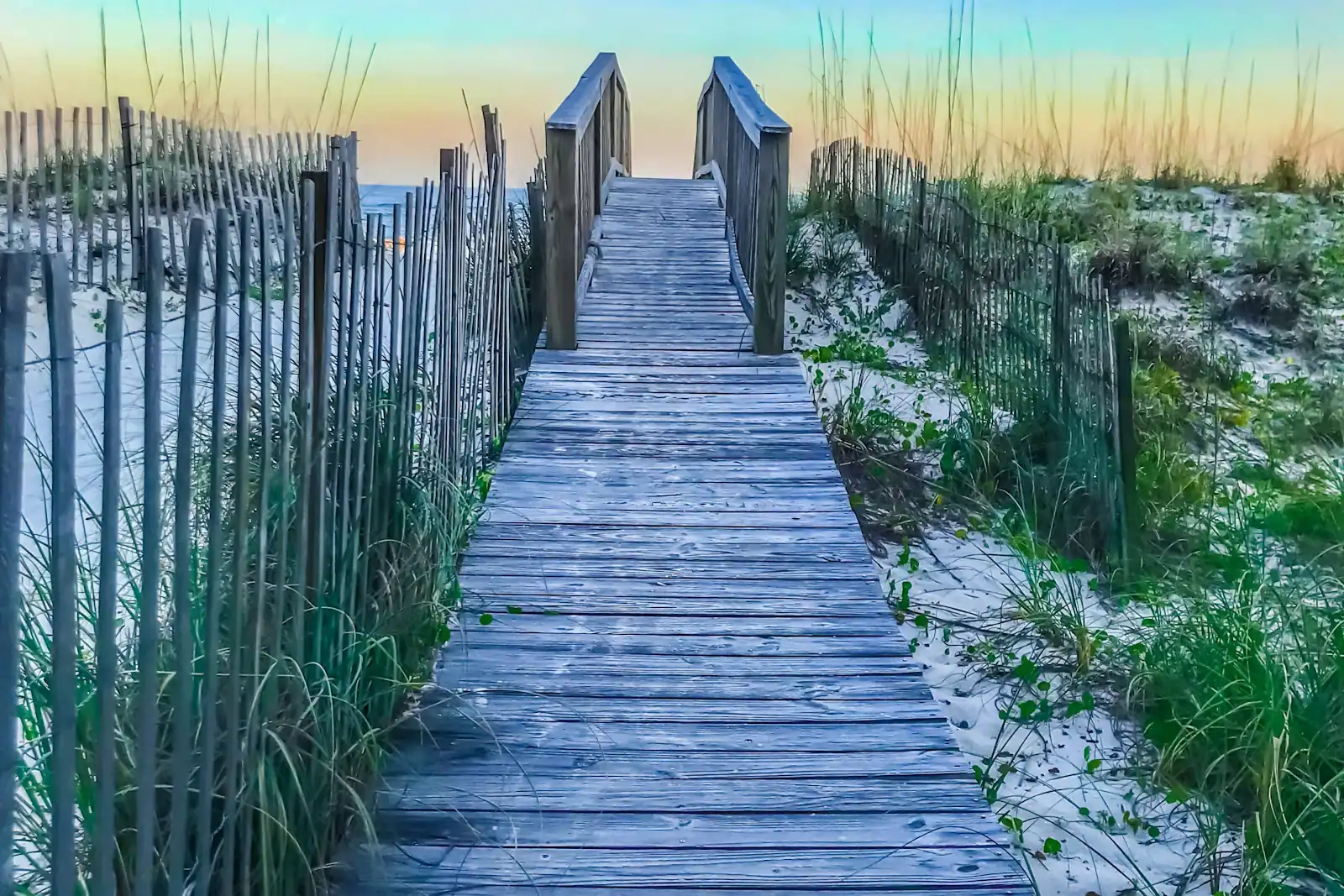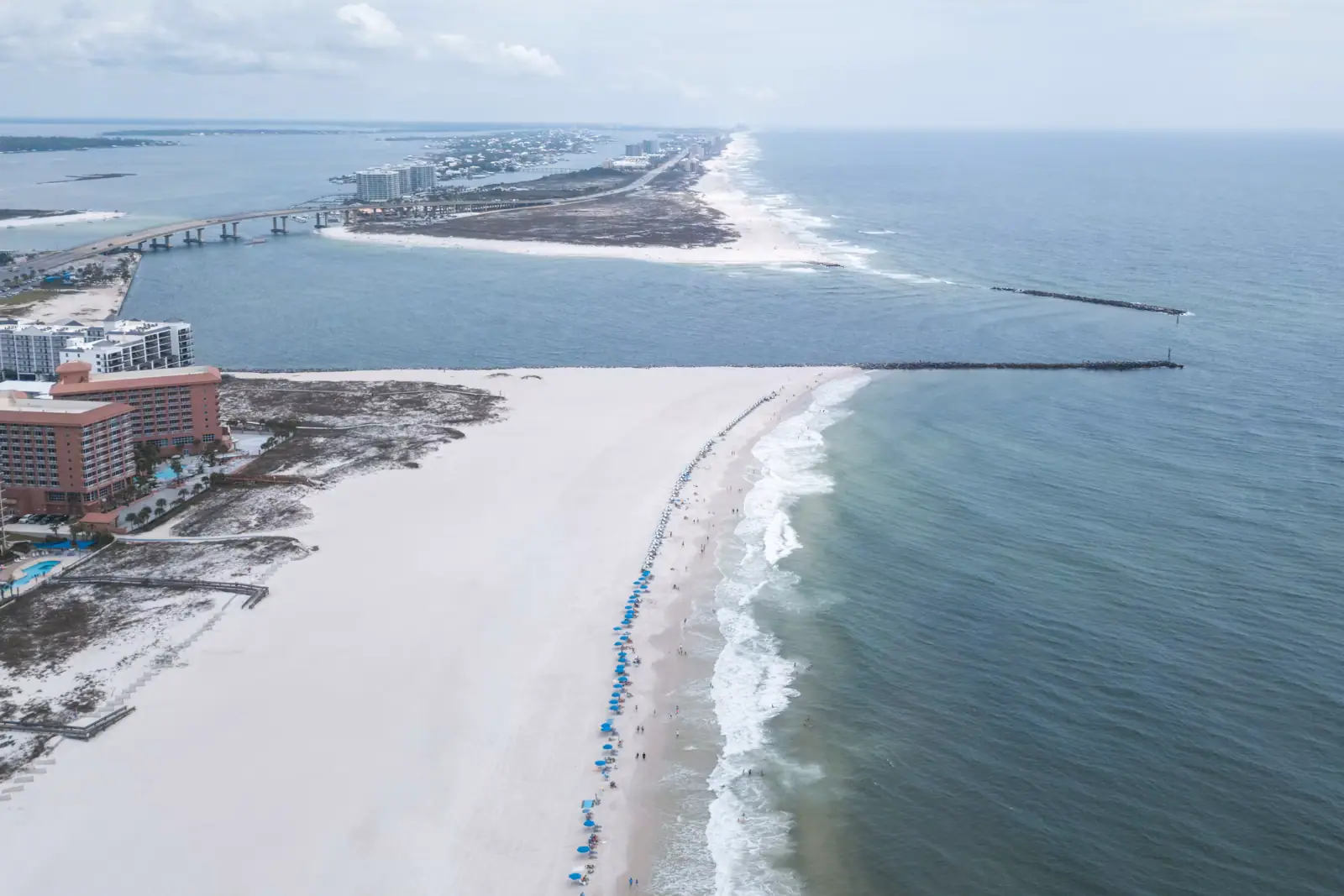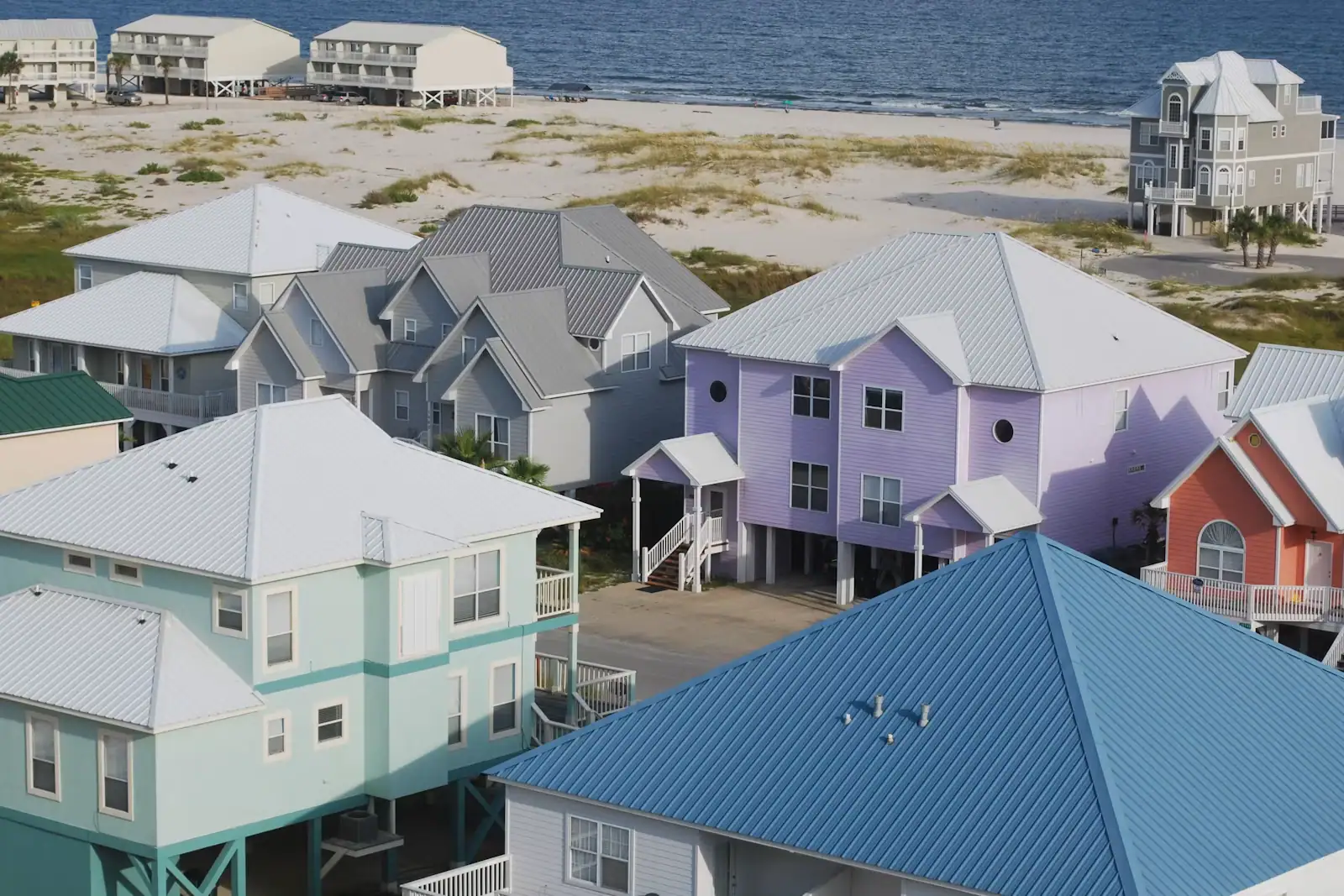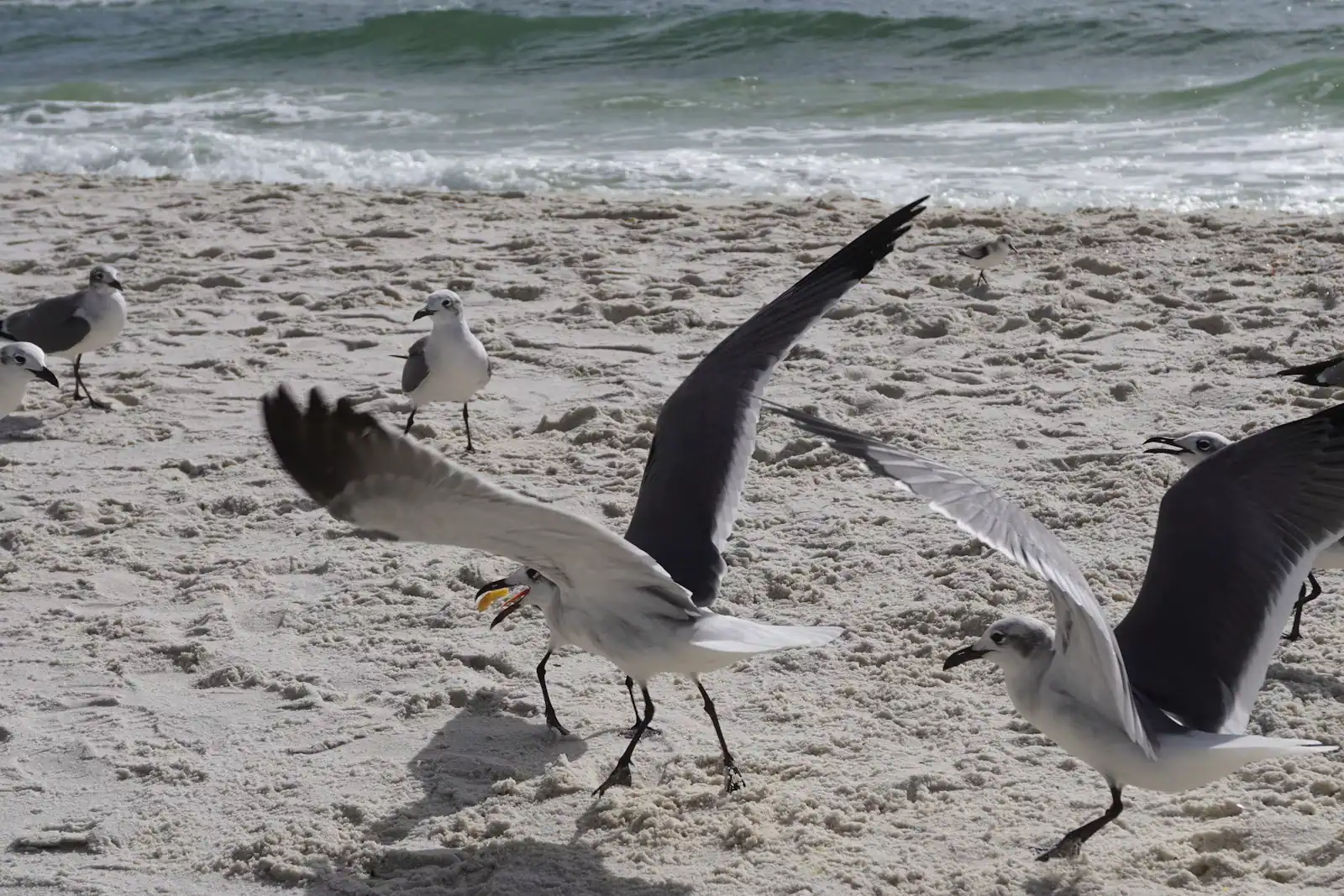
Every list of free things to do on a beach coast starts with the beach, and every one of them is quietly lying. The sand here genuinely costs nothing to walk on. Leaving a car near it does not.
Gulf Shores charges non-residents to park at its public beach areas, and since 1 July 2026 that has been hourly rather than a flat day rate — somewhere around two dollars an hour north of Beach Boulevard and three south of it. Over a week, a family driving to the sand every morning spends real money on nothing but a parking space.
So the first genuinely free thing to do here is to remove that cost: stay within walking distance of an access, or hire bikes for the week. Everything below assumes you have solved the parking problem one way or another.
| Free thing | Where | Good for | How long |
|---|---|---|---|
| Backcountry Trail | Gulf State Park, both towns | Any weather but storms | 1-4 hours |
| Jeff Friend Trail | Bon Secour refuge | Birds, an easy loop | 45 minutes |
| Pine Beach Trail | Bon Secour refuge | Solitude, an empty beach | 2-3 hours |
| Gulf Shores Museum | Central Gulf Shores | Rain, and local history | 1 hour |
| The Hot Shop, to watch | Coastal Arts Center, Orange Beach | Rain, and children over about six | 20-40 minutes |
| Orange Beach Waterfront Park | Wolf Bay | Toddlers, fishing, picnics | Half a day |
| Little Lagoon Pass | West Beach | Watching the tide run out | 30 minutes |
| National Shrimp Festival | Gulf Shores, October | Crowds, food stalls, music | An evening |
| Mardi Gras parades | Both towns, Fat Tuesday | Families, in February | 90 minutes |
The trail is the best free thing on the Alabama coast
The Hugh S. Branyon Backcountry Trail runs more than 28 miles through Gulf State Park in twenty-six named segments, crossing nine distinct ecosystems, and it costs nothing to walk or ride. It is paved the whole way, which makes it usable with a pushchair, a wheelchair or a five-year-old on a bike.
Go early. Take water. The shade is better on the Gulf Oak Ridge segment than anywhere else in the system, and the Lake Shelby Overlook is where you are likeliest to see an alligator, a heron rookery's worth of birds, or both.
The refuge, which almost nobody uses
Bon Secour National Wildlife Refuge protects around seven thousand acres of coastal dune, scrub, marsh and maritime forest west of Gulf Shores. Congress established it in 1980 specifically to preserve what was left of this dune system, and it holds one of the densest populations of the Alabama beach mouse — a federally endangered animal that lives nowhere but this stretch of coast.
Two walks, both free:
The Jeff Friend Trail is a one-mile loop through maritime forest along the edge of Little Lagoon, level and easy, with boardwalk sections. It takes about forty-five minutes at a stroll and is the better option with small children or in heat.
The Pine Beach Trail is a four-mile round trip that runs between Gator Lake on one side and Little Lagoon on the other and comes out on an undeveloped Gulf beach with nothing built on it in either direction. There is an observation point around the first mile with a view over the lake. The last stretch is soft sand and there is no shade, no water and no facilities at the far end. Go in the morning, take more water than you think you need, and go in cooler months if you can.
Both are wildlife refuge land rather than a park, which means no dogs, no bikes on the trails and no collecting anything.
Free indoors, for the afternoon it rains
The Gulf Shores Museum charges nothing and sits in a beach cottage that predates the Second World War, moved from West Beach to its present site. Its permanent exhibits cover the fishing families who settled along the north shore of Little Lagoon in the nineteenth century, and a hurricane exhibit that reads differently when you are staying in a rebuilt building.
The Coastal Arts Center of Orange Beach has a gallery of Gulf Coast artists that costs nothing to walk round, and a Hot Shop where glassblowers work in front of you. Watching is free. Making something yourself is a booked class with a fee, and children have to be eight or older to handle glass.
Free outdoors, away from the Gulf
Orange Beach Waterfront Park on Wolf Bay has a 400-foot pier, seven picnic pavilions, a sandy swimming beach, a renovated children's playground and walking paths, and none of it costs anything. The pier was destroyed by Hurricane Sally in September 2020 and rebuilt, reopening in late December 2022. It is the single best free half-day in the destination for anyone with a toddler.
Little Lagoon Pass on West Beach is where a ten-mile lagoon empties into the Gulf through a narrow cut. On a running tide it moves fast, and watching it — with fishermen on the rocks and birds working the outflow — is a better twenty minutes than it sounds. Do not swim in it.
Fort Morgan's beaches cost nothing to reach even though the fort itself charges admission. The far end of the peninsula has the emptiest sand in Alabama and the darkest sky.
Free events worth timing a trip around
The National Shrimp Festival takes over the beachfront at the foot of Highway 59 for four days in October — the second weekend, by long habit; it ran 8 to 11 October in 2026. Entry to the festival grounds is free. You pay for what you eat, and the crowds are considerable.
Mardi Gras is not only a New Orleans and Mobile affair. Gulf Shores runs a parade on Fat Tuesday morning, led by the oldest parading order in Baldwin County, and Orange Beach runs its own in the afternoon along Perdido Beach Boulevard. Both are free, both throw generously, and both are markedly more child-friendly than their big-city equivalents.
Spring bird migration at Fort Morgan, in late March and April, is a free spectacle if you know what you are looking at. Trans-Gulf migrants — warblers, tanagers, buntings, thrushes — make landfall here after a flight of roughly six hundred miles from the Yucatán, and the peninsula is their first solid ground. Banding work has been carried out here for decades.
The parking charge, and four ways round it
This is the cost that turns a free beach day into a paid one, so it is worth being precise about how to avoid it.
Walk or ride. A rental within a few minutes' walk of an access removes the charge entirely, and bikes hired by the week cost less than a few days of parking.
Use the trail as transport. The Backcountry Trail links a large part of the destination on paved, traffic-free path, and it reaches within striking distance of the state park beach.
Park once. Shifting from one access to another through the day means paying again. Pick one, stay put, and bring a cool box.
Check who is exempt. Residents with a hurricane re-entry decal park free, and some areas are resident-only, so read the signs before joining a queue you cannot use.
Rates and enforcement windows are set by city ordinance and have changed more than once in recent years, including the move to hourly pricing in mid-2026. Check the City of Gulf Shores' own parking page before you rely on any figure here.
Free, with conditions attached
- The Gulf State Park Pier. Walking out is a paid pass, and a much cheaper one than the fishing pass. Watching from the beach beside it costs nothing.
- The Hot Shop. Free to watch, paid to do, minimum age eight to handle glass.
- Fort Morgan. The beaches and the drive are free; the fort charges admission, in the region of single-figure dollars per adult with concessions for children and seniors. Verify before you go.
- Ranger programmes at the Gulf State Park Nature Center are often free or low-cost, and the schedule changes with the season.
- The refuge trails are free but come with rules: no dogs, no bicycles, nothing collected or removed.
- Beach access itself is free everywhere on this coast. It is only ever the car that costs money.
One honest warning about the free beaches at the far ends: Fort Morgan and the refuge have no lifeguards, no showers and, in places, no restrooms. That is the trade you are making for having the sand to yourself.
Last updated
Opening hours, ordinances and prices move with the season. We re-check this guide rather than rewrite it, and the date above is the last time someone did. How we research and correct.