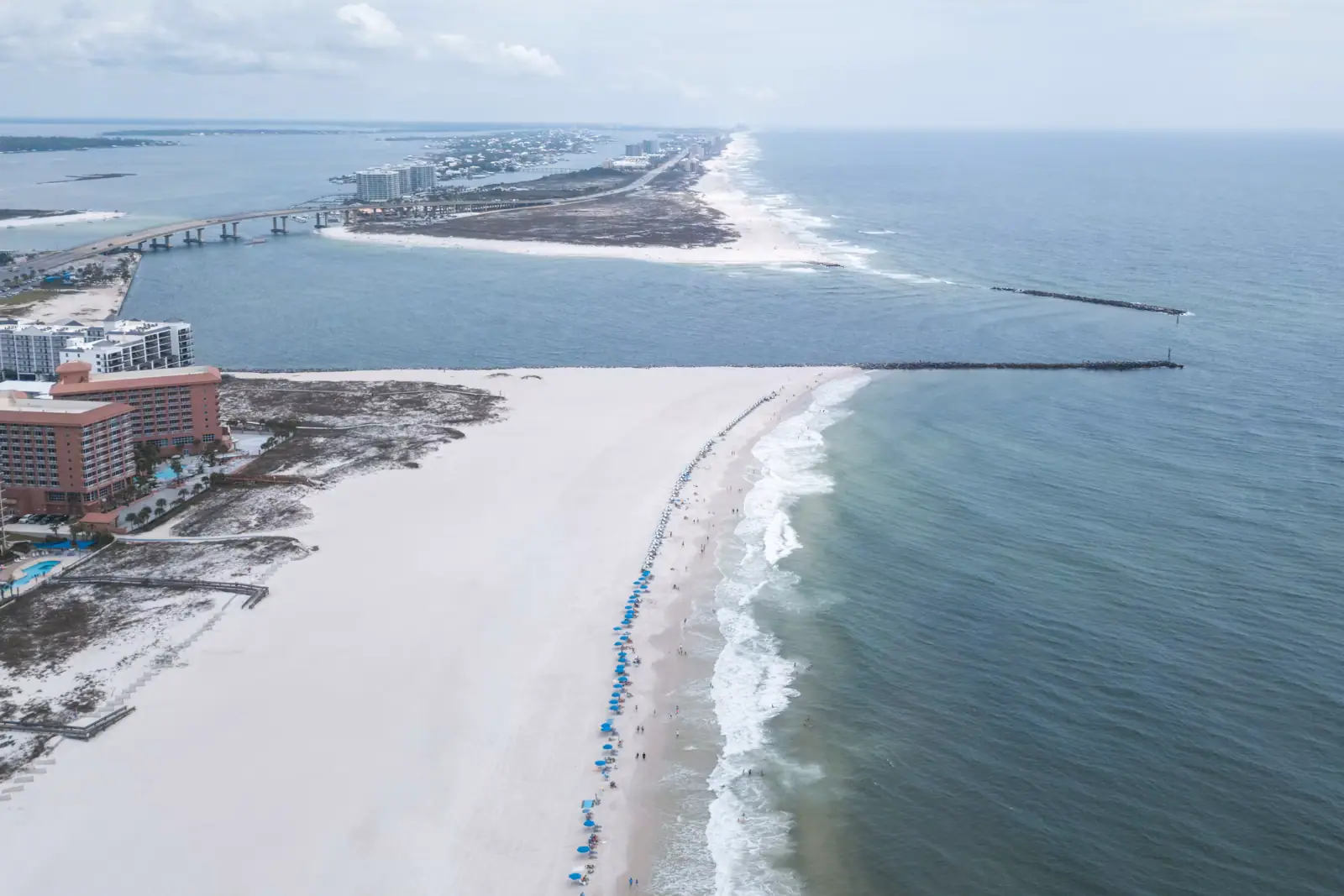
There is one beach in Alabama. It runs about thirty-two miles from the tip of the Fort Morgan peninsula to the Florida state line, it is made of the same near-white quartz the whole way, and the water shelves gently off it everywhere. Anybody who tells you one stretch of it has better sand than another is selling something.
What genuinely differs is access: whether you can park, what it costs, whether there is a restroom and a shower, how far the nearest food is, and how many people are already there. That is what this page is about.
The public accesses, west to east
| Beach | Where | Parking | Facilities | Best for |
|---|---|---|---|---|
| Fort Morgan beaches | Far west, off Highway 180 | Small lots, usually free | Minimal | Space, dark skies, birds |
| Bon Secour / Pine Beach | Refuge land, west Gulf Shores | Free trailhead lot | None at the beach | A two-mile walk to empty sand |
| Little Lagoon Pass | West Beach, at the pass | Small lot, fills fast | Basic | Watching the pass run, fishing |
| West Beach accesses | W 5th, 6th, 10th, 13th | Paid, non-resident | Varies by access | Walk-to beach from West Beach rentals |
| Gulf Place (Gulf Shores Public Beach) | Foot of Highway 59 | Paid, the largest lot | Restrooms, showers, food nearby | The default first-day beach |
| Gulf State Park pavilion | Inside the park | Paid park lot | Restrooms, showers, picnic pavilion | Two miles of beach and no towers |
| Romar Beach | West Orange Beach | Small paid lots | Limited | Quieter Gulf sand |
| Cotton Bayou | Orange Beach, at Highway 161 | Paid lot | Restrooms | Orange Beach's main family access |
| Alabama Point East | Perdido Pass, east side | Paid lot | Restrooms, loaner life jackets | Watching boats; swimming carefully |
A note on the ones that surprise people. Gulf State Park's two miles of beach are public and no more expensive to reach than the town's own lots, and because the park bans building behind them you get an uninterrupted dune line instead of a wall of balconies. Pine Beach in the Bon Secour National Wildlife Refuge is the only genuinely remote beach on this coast, reached by a four-mile round-trip walk between Gator Lake and Little Lagoon, with no facilities and no shade at the far end.
Parking is the real cost of a beach day here
Gulf Shores charges non-residents to park at its public beach areas, and the system changed on 1 July 2026. What was a flat rate — something in the region of five dollars for five hours or fifteen for the day — became hourly pricing, running at roughly two dollars an hour north of Beach Boulevard and three dollars an hour south of it, paid through the ParkMobile app, at pay stations, or by scanning the posted codes.
Three practical consequences:
- A long beach day now costs more than a short one, which it did not before. If you want to be on the sand from nine until five, the maths has changed.
- Residents park free with a hurricane re-entry decal, and East Gulf Place is resident-only, so do not queue for a space you cannot use.
- Paid enforcement is seasonal. It resumes in late winter — around the start of March in recent years — and runs through the season.
All of which is the argument for choosing a rental within walking distance of an access, or hiring bikes for the week. Both cost less than seven days of parking meters.
Rates here are set by city ordinance and have been revised more than once. Check the City of Gulf Shores' own parking page before you budget.
Leave Only Footprints, which is a wildlife rule wearing a tidiness costume
Both cities have required since 2016 that everything personal comes off the sand within an hour of sunset. Chairs, umbrellas, tents, toys, coolers, the lot. Anything still out after that can be removed and disposed of by beach patrol, and permitted vendor equipment is the only exception.
There is a second rule people trip over: tents or shelters bigger than roughly seven feet wide or four feet high must be set north of the marker posts, back towards the dune, rather than down by the water.
The reason is not neatness. Between May and October this beach is a nesting ground, and a hatchling working its way down to the water at two in the morning cannot climb over a cool box or out of a hole. Filling in the holes you dug and flattening the castle is part of the same rule, and it is the part most visitors forget.
The two places where the water is genuinely dangerous
Perdido Pass, where the back bays empty into the Gulf between the two jetties at Alabama Point, moves an enormous volume of water on a running tide. People on inflatables have been carried out through it. The area under the bridge also carries heavy boat traffic all summer, and the city has closed it to the public during the spring break weeks in recent years. Alabama Point East keeps free loaner life jackets on a board by the access, which tells you what the local view is.
The jetty rocks on either side of the pass are wet, sloping and covered in barnacles below the tide line. People walk out on them to fish and people come back off them bleeding. Wear shoes, and do not do it with a swell running.
Beyond those two, the ordinary Gulf hazard is a rip current pulling out through a break in the sandbar, and the flag pole is how you find out whether today is one of those days. The full flag system is set out in the first-time guide; the short version is that two red flags close the water by ordinance in both cities.
What the water is doing, month by month
The Gulf here is at its coldest in February, around sixty degrees, and at its warmest in August, up around the mid-eighties — bath-warm, and warm enough that it stops being refreshing. The practical swimming season runs roughly March to November, when the water stays above the high sixties.
Jellyfish arrive on an onshore wind, usually in the warmer months, and when they do the purple flag goes up. They come and go within days rather than settling in for a season. Stingrays sit in the shallows in warm water: shuffle your feet as you go in rather than stepping, which is the entire trick.
Which access suits which group
First day, no plan, want a restroom and lunch nearby. Gulf Place at the foot of Highway 59. It is the busiest and it is the one everybody defaults to for good reasons.
Small children. Gulf State Park pavilion. Showers and restrooms, a lifeguarded stretch in season, shade under the pavilion for the middle of the day, and no road to cross with a toddler.
You want the beach to yourself. Fort Morgan, or the Pine Beach walk in the refuge. Both require commitment; both deliver.
Teenagers. Alabama Point East for the boat traffic and the pass, or Cotton Bayou for the easier crowd. Neither is a swimming recommendation for the pass itself.
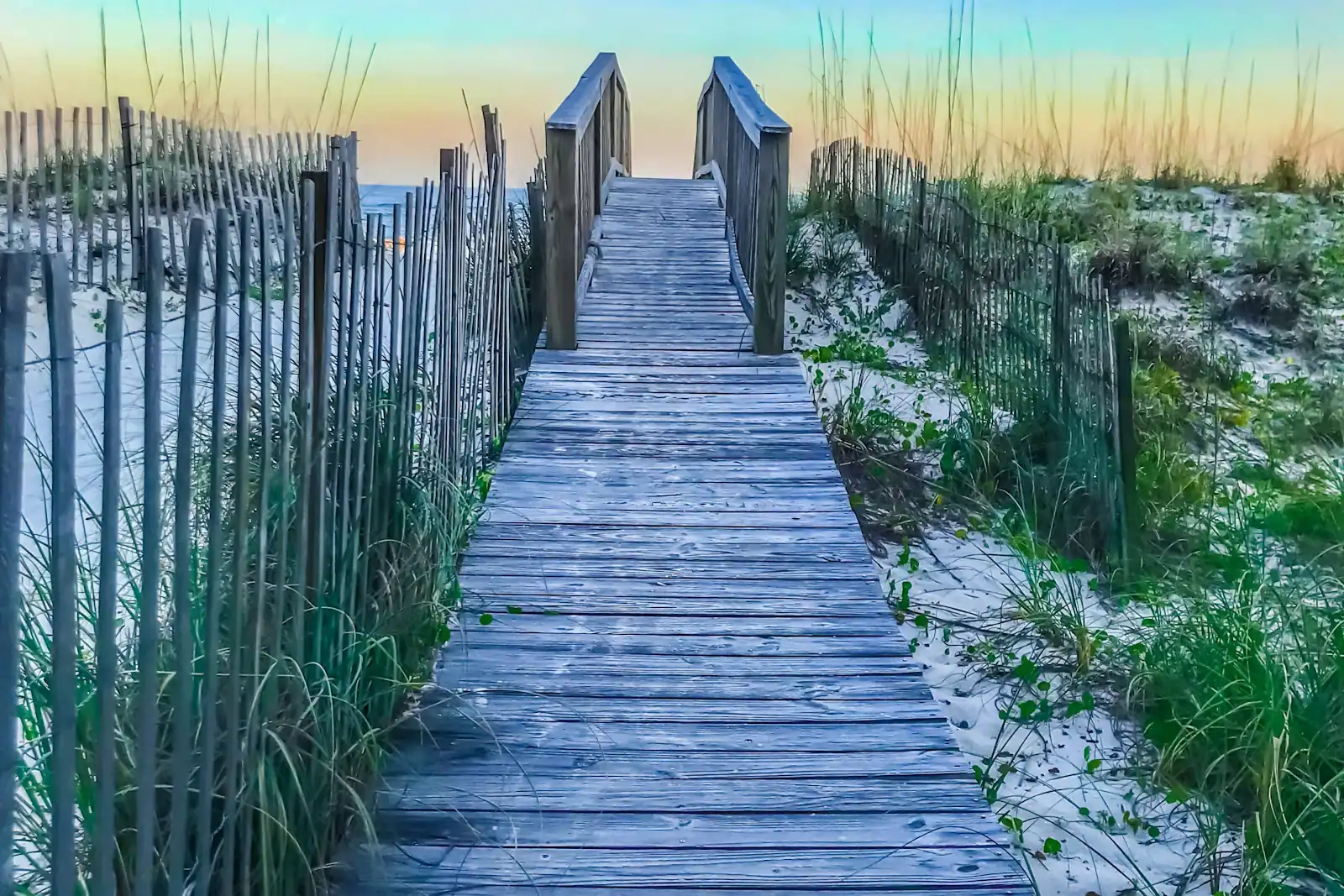
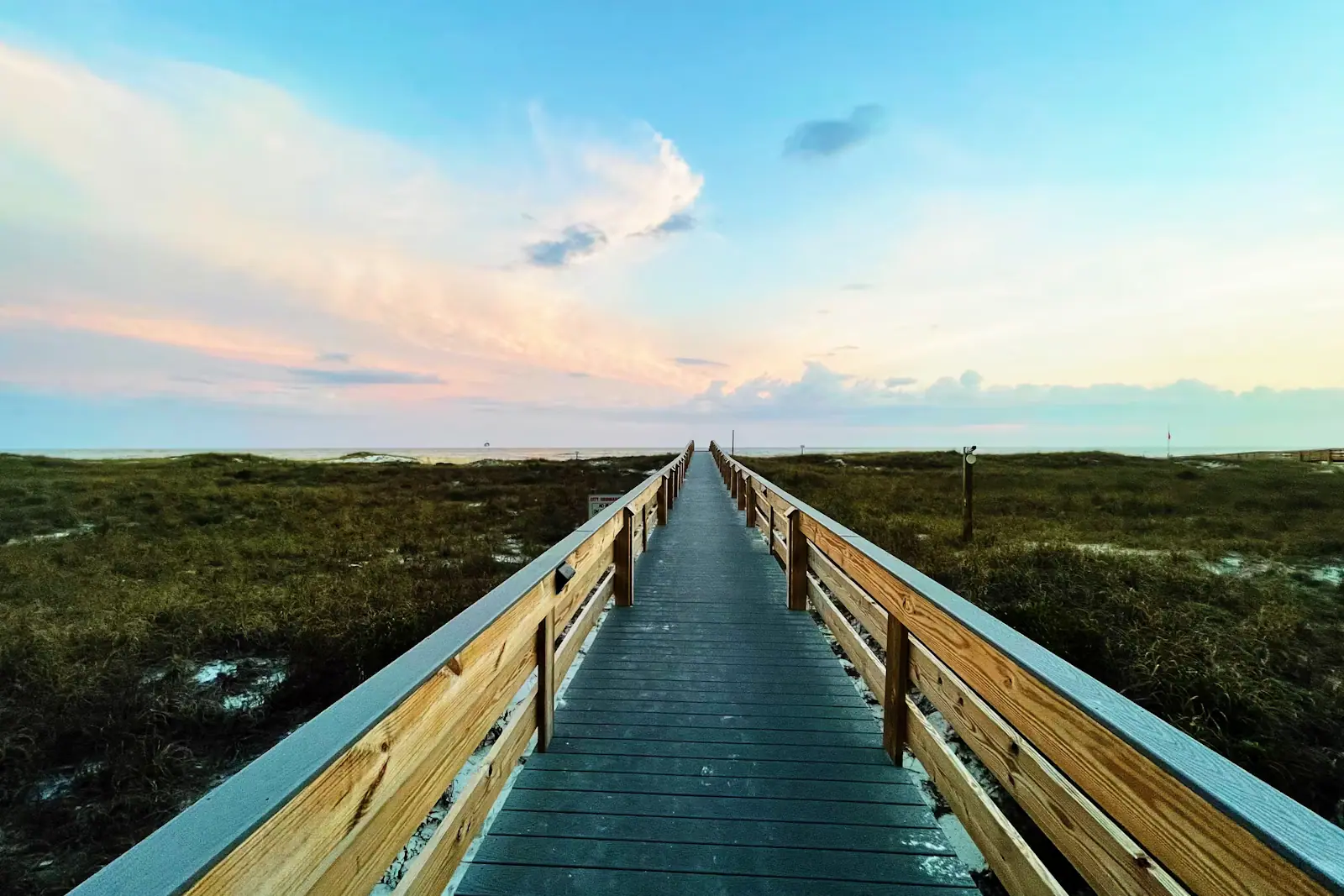
You are staying on West Beach. Use the numbered street accesses rather than driving to Gulf Place. They are smaller, the walk is shorter, and you will spend less time looking for a space than you would in the queue at the main lot.
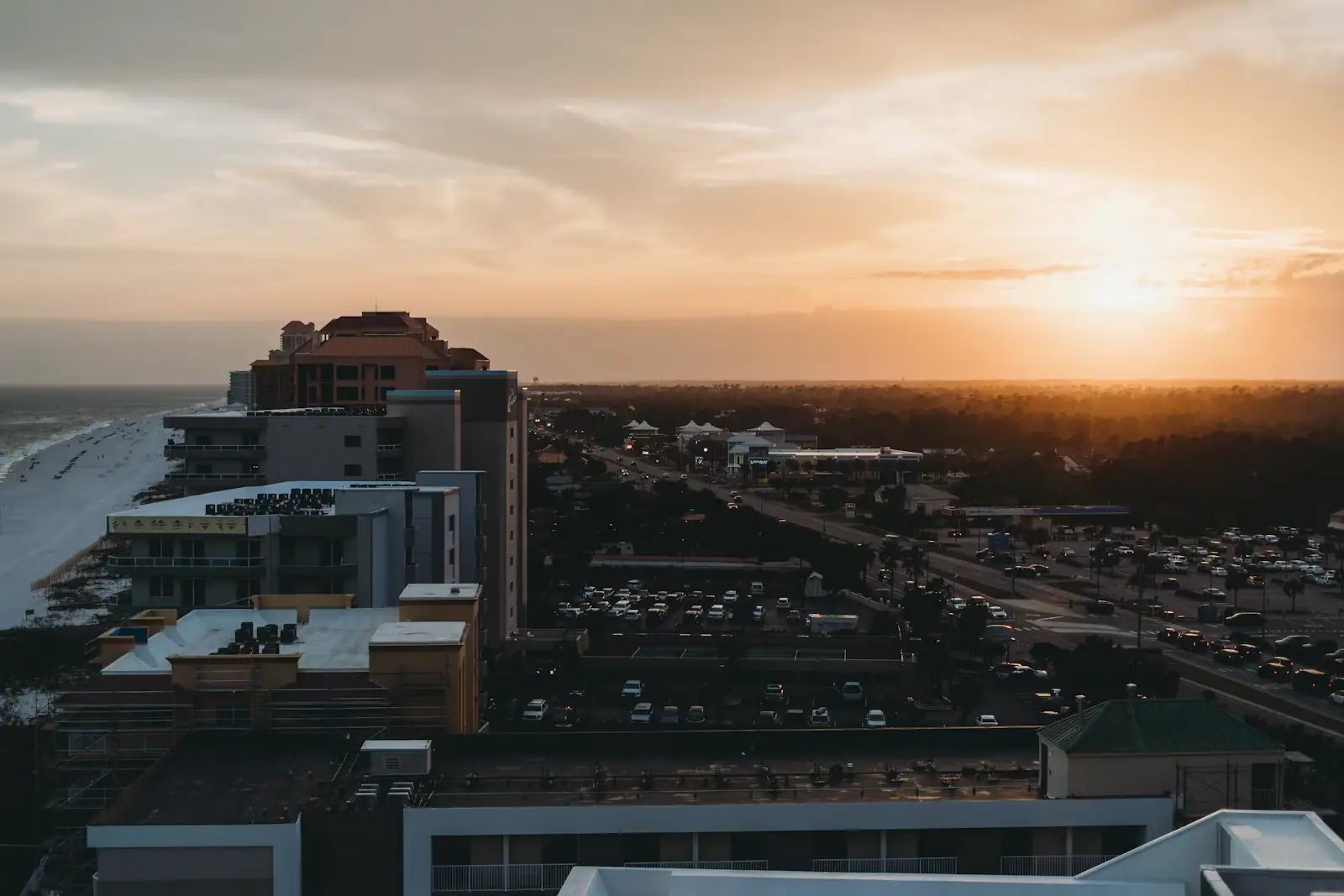
Sunset. Anywhere, honestly. The Alabama coast faces almost due south, which means you get sunrise and sunset over water from the same towel. That is unusual on the Gulf and it is one of the quiet pleasures of the place.
The rules that get enforced
- No glass on the sand, anywhere, in either city.
- Everything off the beach within an hour of sunset, and large tents kept north of the marker line.
- Fill your holes in. An open hole is a hazard for people and a trap for hatchlings.
- Dogs are restricted on the Gulf beaches in both cities. Rules differ between Gulf Shores, Orange Beach and the state park, and between seasons, so check the specific beach rather than assuming.
- No fires on the beach.
- Drone flying over the beach is restricted in season in both cities.
- Do not touch a marked nest, and do not shine a light near one after dark.
- Alcohol rules differ between city beaches and state park land. Where it is permitted it is still not unlimited, and the sand is not exempt from disorderly conduct law.
None of this is unusual for a Gulf beach town. The two that catch visitors out every summer are the glass rule and the sunset clear-off.
Last updated
Opening hours, ordinances and prices move with the season. We re-check this guide rather than rewrite it, and the date above is the last time someone did. How we research and correct.