Skip to content
Search
Menu

These bookings go through Viator, and we are paid for them. Your price is the same, and the payment had nothing to do with the picks.

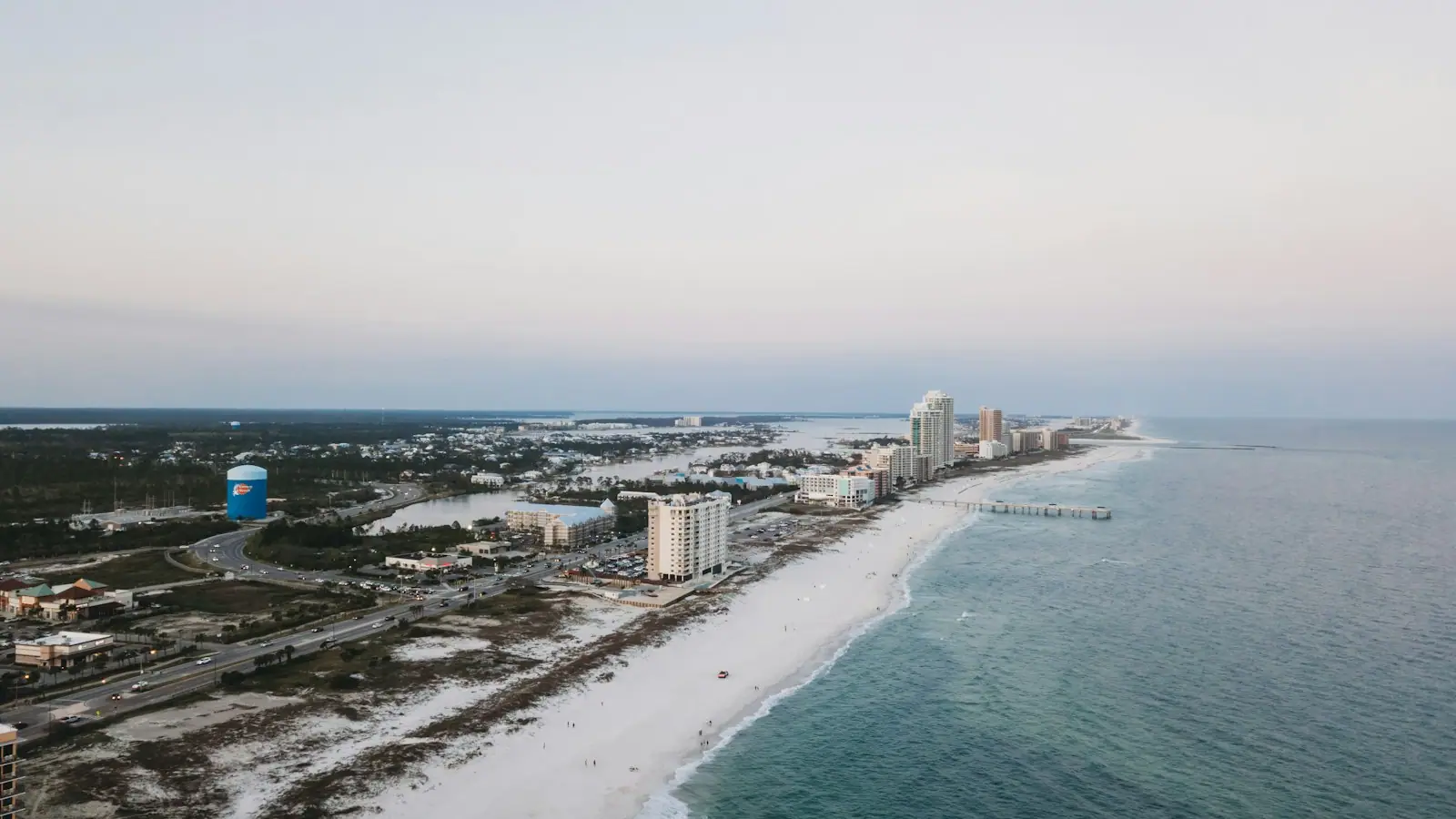
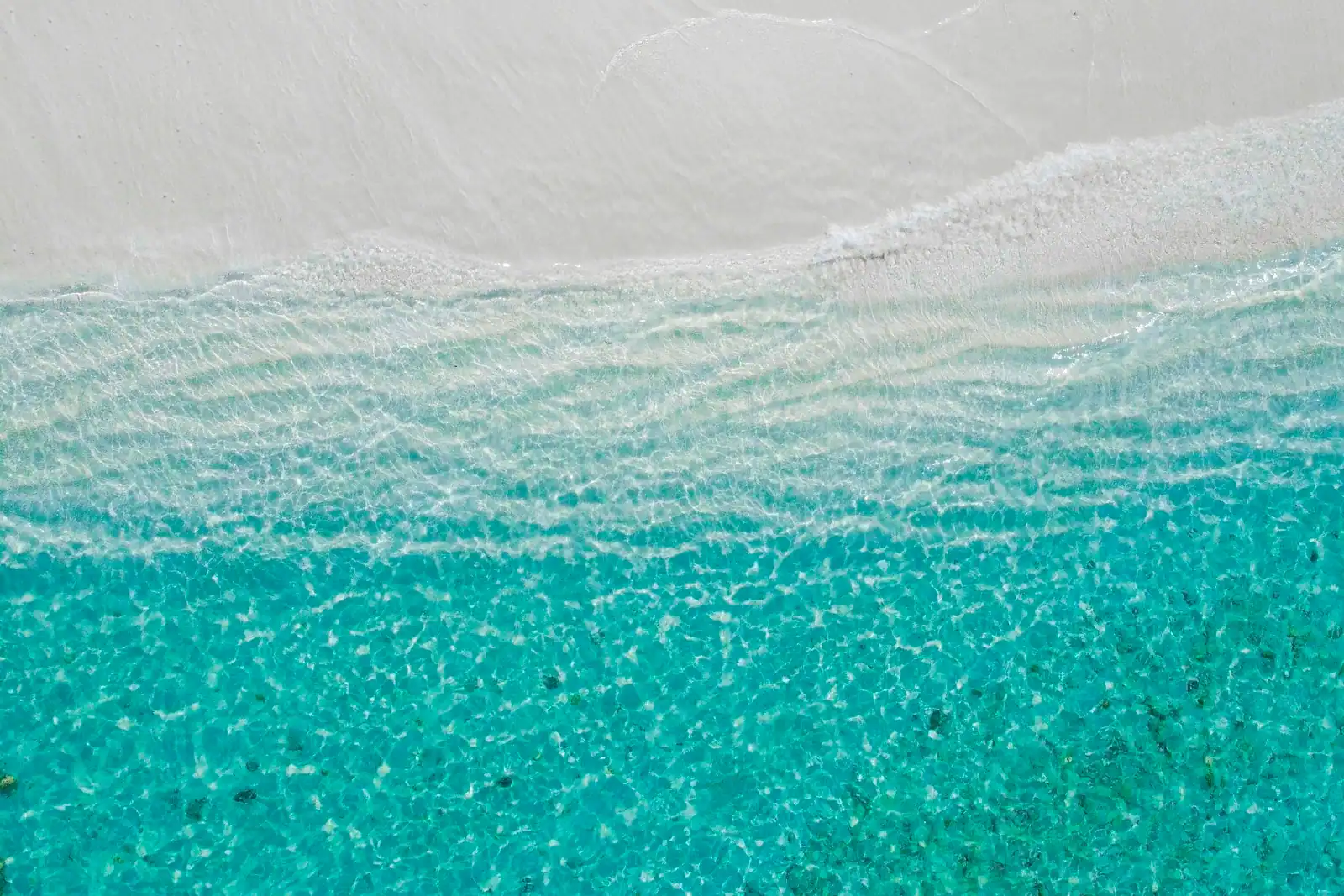
Aerial view of bright white sand meeting shallow water that shades from pale green to deep blue
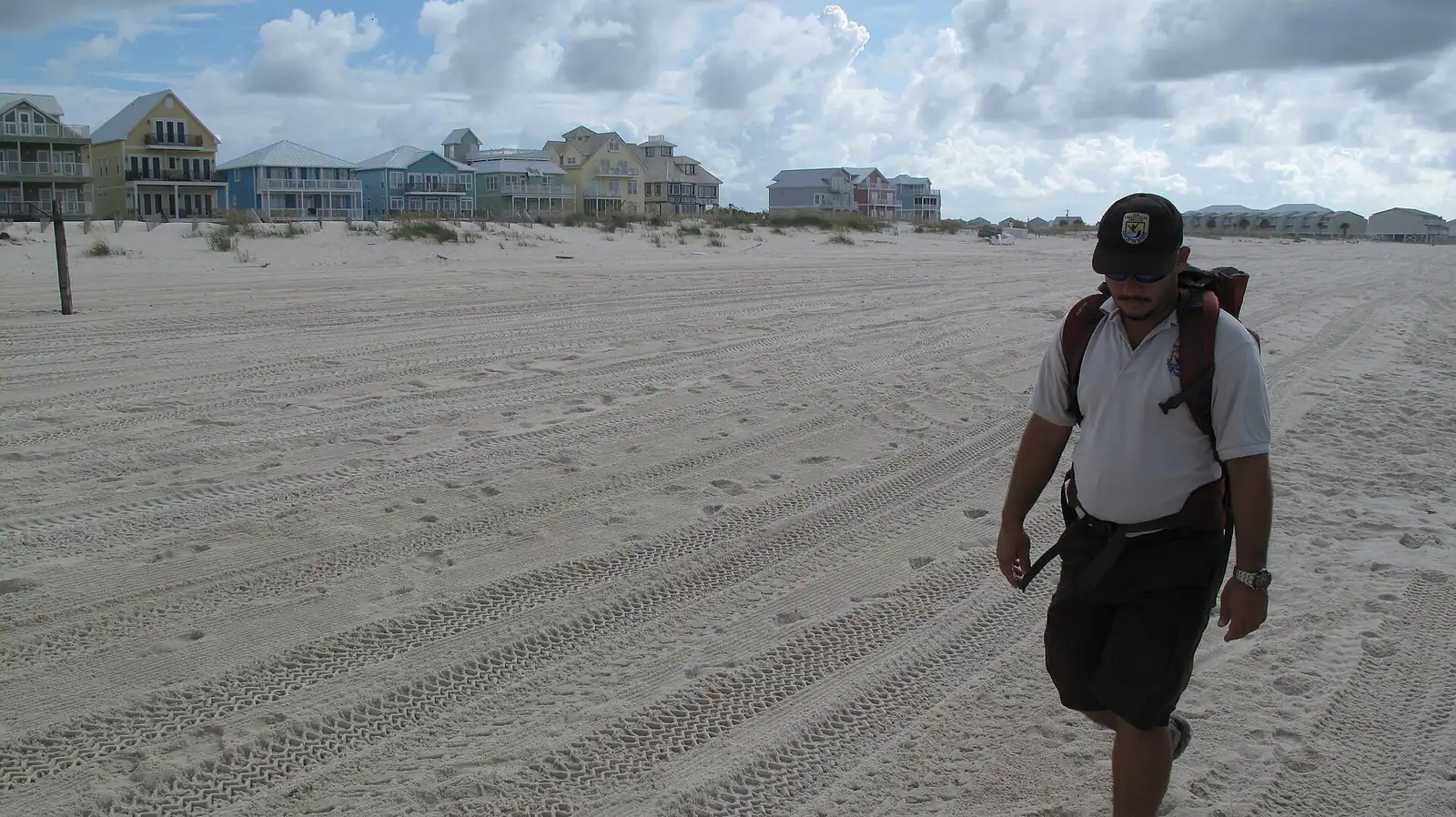
U.S. Fish and Wildlife Service Southeast Region

Beach

Gulf Shores Public Beach

Last updated

Where Highway 59 runs out of land: pavilions, showers, volleyball nets, The Hangout next door and hourly parking since July 2026.

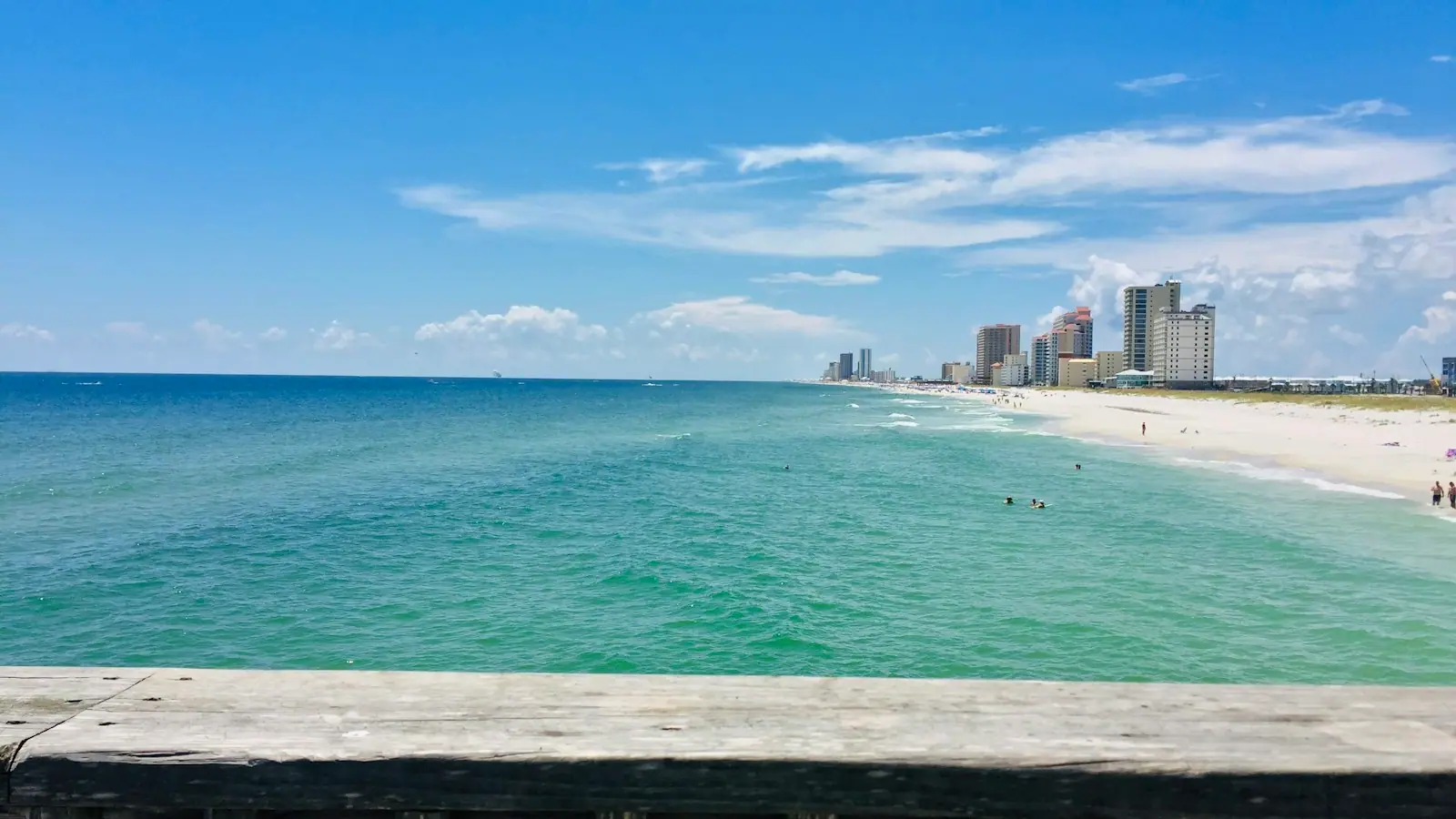
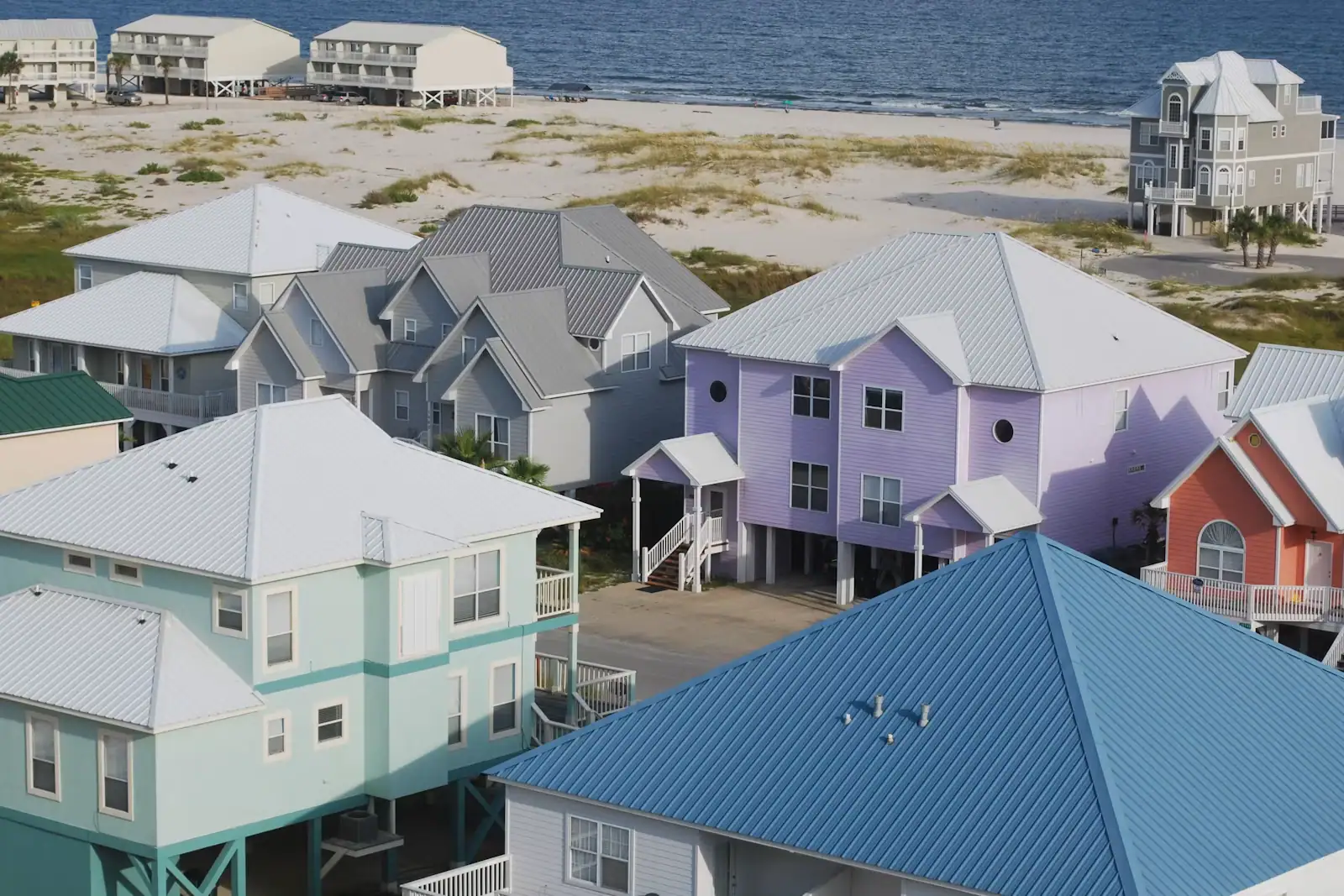
Alabama owns about thirty-two miles of Gulf coastline, and this is the point where a state highway runs out of land roughly in the middle of it. Highway 59 comes down through Foley, lifts over the Intracoastal Waterway, passes the water tower and the daiquiri windows, and simply stops at the beach. Everything either side of that junction is Gulf Place, the city's main public beach: open-air pavilions, a playground, volleyball nets at the western end, restrooms, rinse showers and seasonal lifeguards.

The sand earns its own paragraph because every visitor asks. It is close to pure quartz, ground off the southern Appalachians across an unimaginable stretch of time and carried south by river systems into the Gulf. That is why it is bone white rather than tan, why it reflects enough light to stay walkable at midday when a darker beach would not, and why dry grains of this size and shape squeak underfoot. Children work this out within about four minutes of arriving and then do nothing else for twenty.

What changed here in 2026 was parking, and it changed the shape of a visit. Until the first of July the city sold a flat rate: a few dollars for a five-hour block, around fifteen for the whole day. Since then non-residents pay by the hour through a phone app, at a lower rate for the lots north of Beach Boulevard and a higher one on the Gulf side. A two-hour swim became cheap and an eight-hour encampment became expensive, which is more or less what the council had in mind.

The rest is expectation management. This is the loud end of Alabama's coast, the beach the day visitors from Mobile and Pensacola aim their cars at, with live music carrying over from The Hangout's courtyard and a sand pile full of other people's children. If you have a week in a rental and want the same quartz without the noise, it runs uninterrupted for miles in both directions. Come here for the facilities. Go west for the quiet.

Getting there and parking

Follow Highway 59 south until it ends. That is the whole direction. From Foley the run is about twenty minutes; from Mobile allow an hour and a half via I-10 and Highway 59, and from Pensacola about an hour and a quarter along the Perdido Key road and Highway 182.

The public lots sit either side of the junction, signed as Gulf Place and West Gulf Place, with further metered spaces on the numbered side streets running north off Beach Boulevard. East Gulf Place is for residents with a city decal and nobody else.

On a summer Saturday the Highway 59 bridge over the Intracoastal Waterway is the pinch point for the entire city, because every arriving and departing rental crosses it. Coming from Orange Beach, the Canal Road route west avoids the worst of it.

The Backcountry Trail network reaches the beach road, so a bike from a rental east of town is a serious option rather than a novelty, and it sidesteps the parking question entirely.

What the hourly parking actually costs you

The council adopted controlled beach parking that took effect on 1 July 2026, replacing a single flat day rate with metered hours. Non-residents pay roughly two dollars an hour in the lots north of Beach Boulevard, around three an hour on the Gulf side of it, and more again for the overnight window in the few places where overnight is permitted at all. Payment is by phone app, by text or by toll-free call, using the zone number printed on the sign in front of you. There is no attendant and no ticket machine to queue at.

The paid season runs from the beginning of March to the end of November, roughly seven in the morning until two the following morning. Outside that window the lots are free, which is the single best-kept fact about a January walk here.

Two practical consequences. First, work out your stay before you pay: a family that genuinely wants six hours on the sand is now better off in the state park's day lots, where a flat daily rate still applies and includes a pier permit. Second, East Gulf Place is reserved for residents year-round and is not a mistake you want to make twice. Citations run to seventy-five dollars, and a further seventy-five for each additional day a vehicle sits there.

Rates and boundaries are set by ordinance and can be amended, so confirm the current figures on the sign rather than trusting a number from a blog, this one included.

The pavilions, the playground and the thing most people miss

  • Open-air pavilions with benches, which matter because there is no natural shade anywhere on this coastline. The dune line is sea oats and sand, not trees.
  • Restrooms and rinse showers at the beach rather than a single cold tap, plus a playground and picnic tables on the landward side of the road.
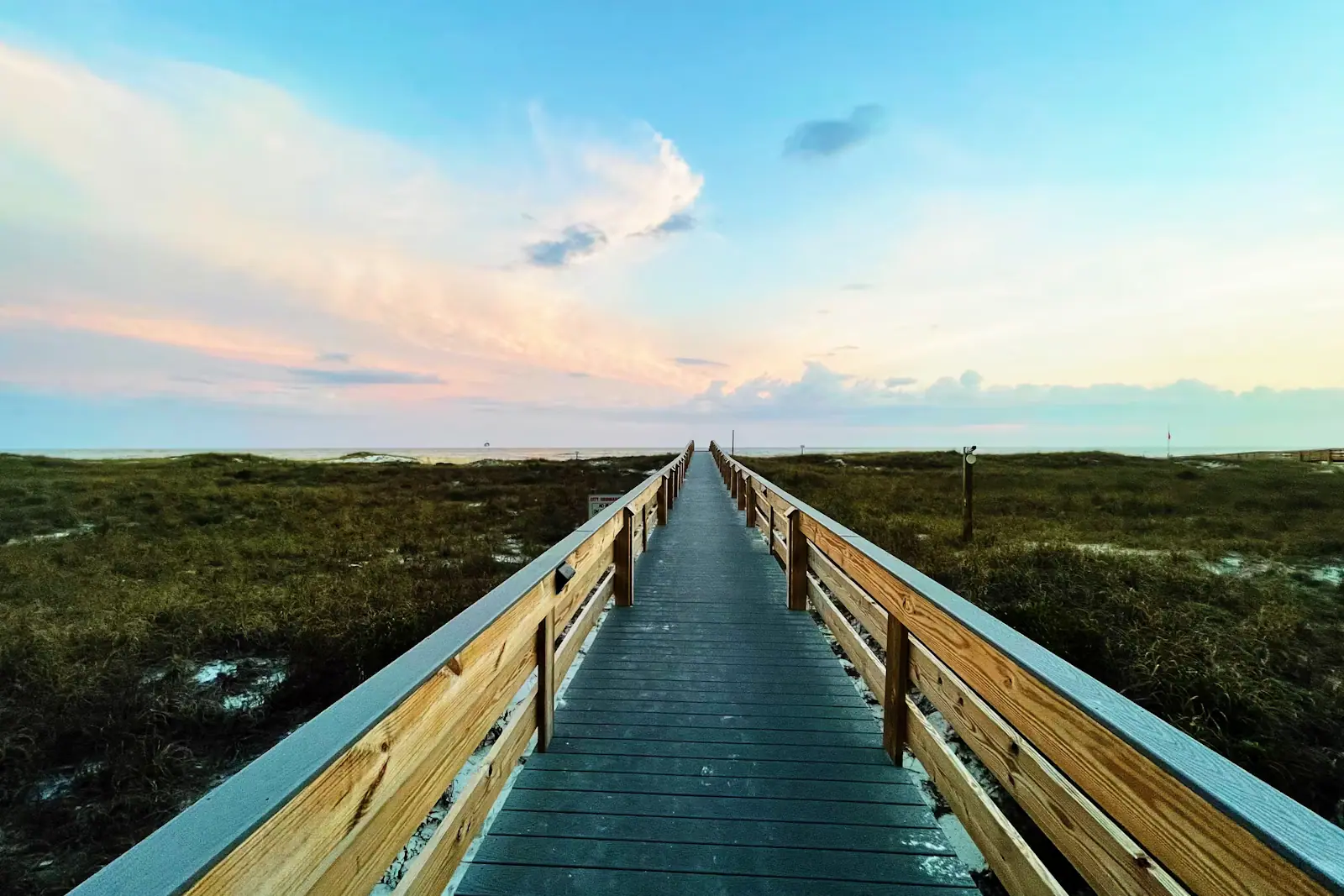
  • Beach access matting rolled out from the parking area over the soft sand, which is what makes this the most usable public access in the city for a wheelchair, a walker or a loaded beach cart.
  • Volleyball at the western end of the complex, where a pick-up game is genuinely findable most summer evenings.
  • Seasonal lifeguards and the flag pole, which is the first thing to look at before anyone gets wet.

The thing most people miss is the geography of the crowd. Almost everybody walks straight down from the highway junction and stops within about a hundred yards of it, because that is where the pavilions and the music are. Walk five minutes west past the volleyball courts, or east towards the state park boundary, and the density drops by half without costing you the facilities you just paid to park beside.

Gear rental operates on the sand in season through concessions rather than the city. Rates move around and nothing here is guaranteed to be trading on a given day in February, so treat chairs and umbrellas as a summer convenience rather than a plan.

Turnover Saturday, and the hours worth having

Gulf Shores runs on a weekly rental rhythm. Condominium and beach-house lets here overwhelmingly change over on a Saturday, which means Saturday morning is thousands of families packing cars and Saturday afternoon is thousands more checking in, unpacking and going to the supermarket. The beach itself is noticeably thinner on a Saturday than on a Tuesday. It is the most reliable local trick on this coast and almost nobody who visits knows it.

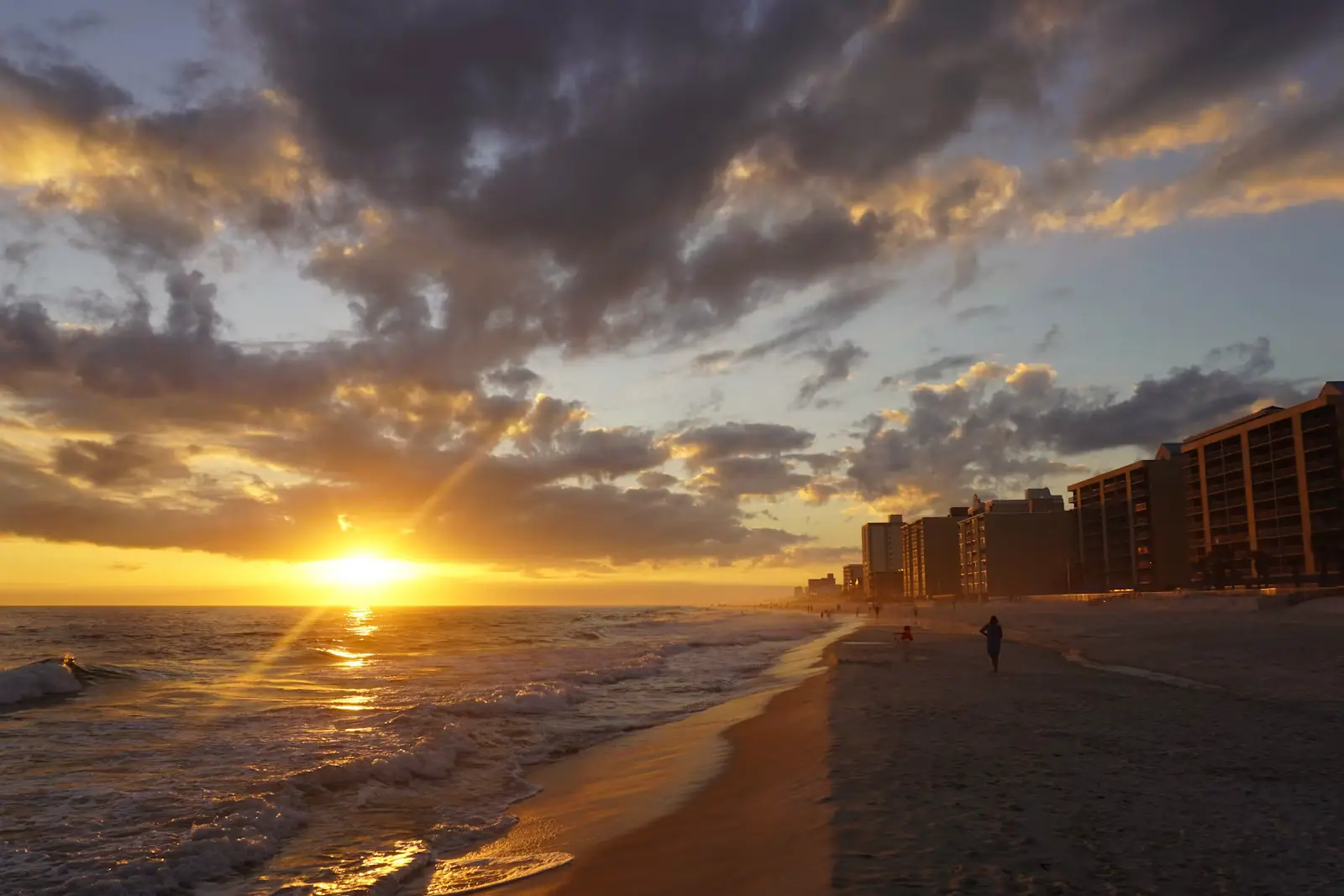
Within a day, the useful hours are early and late. Before nine the light is flat and lovely, the parking is easy and the water is at its calmest. Between eleven and three in July the sand is at capacity and the heat index is doing real work. After five the day visitors start leaving, the metered hours get cheaper by simple arithmetic, and the sunset over the water at the western end of the beach is the best free thing in town.

By season: March brings spring break and a young crowd, which the city polices closely. June through early August is the family peak and the most crowded. The last two weeks of August thin out sharply once Alabama and Florida schools go back. September and October are the locals' answer — warm Gulf water, long light, hurricane risk that has to be watched rather than ignored. December and January are cold enough for a jacket and empty enough to see the point.

The flags, and the one that is not advice

Both cities fly the standard Gulf Coast flag system, and it is posted at the access rather than buried on a website. Purple warns of dangerous marine life, which here usually means a jellyfish bloom. Yellow is moderate surf or a moderate pull. One red flag is a high hazard. Two red flags together mean the water is shut. Green, which visitors see rather less often than they expect, means conditions are calm.

The double red is the one visitors misread. On this stretch of Alabama coast it is not a strong recommendation, it is a closure, and entering the Gulf while it is flying has been treated as a citable offence in recent years rather than a matter for a lifeguard's judgement. Penalties are set by municipal ordinance and have been revised more than once, so check the current position with the city, but plan your week on the assumption that a double red means the beach day becomes a lake day or a trail day.

The reason is structural rather than fussy. The bar-and-trough profile off this shore builds rip currents that run seaward through gaps in the sandbar, and they are strongest on exactly the days when the surf looks most fun. If you are caught in one, do not swim towards the beach. Swim parallel to it until the pull stops, then come in at an angle.

There is no shade, no drinking fountain on the sand, and the quartz reflects a serious amount of ultraviolet back upwards. People underestimate it every single week of the summer.
Near Gulf Place

Straight-line distances, so allow more on the road — the island is long and has one main parkway.

  • A wide empty stretch of pale sand running away beside shallow clear water with almost nobody on it
    Free
    Beach

    West Beach

    A ribbon of sand with the Gulf on one side and a ten-mile brackish lagoon on the other, reached by numbered street ends.

    1.5–5 hoursThe beach is free. Designated parking spaces at the street ends and at Lagoon Pass Park are charged by the hour in season.1.6 mi away

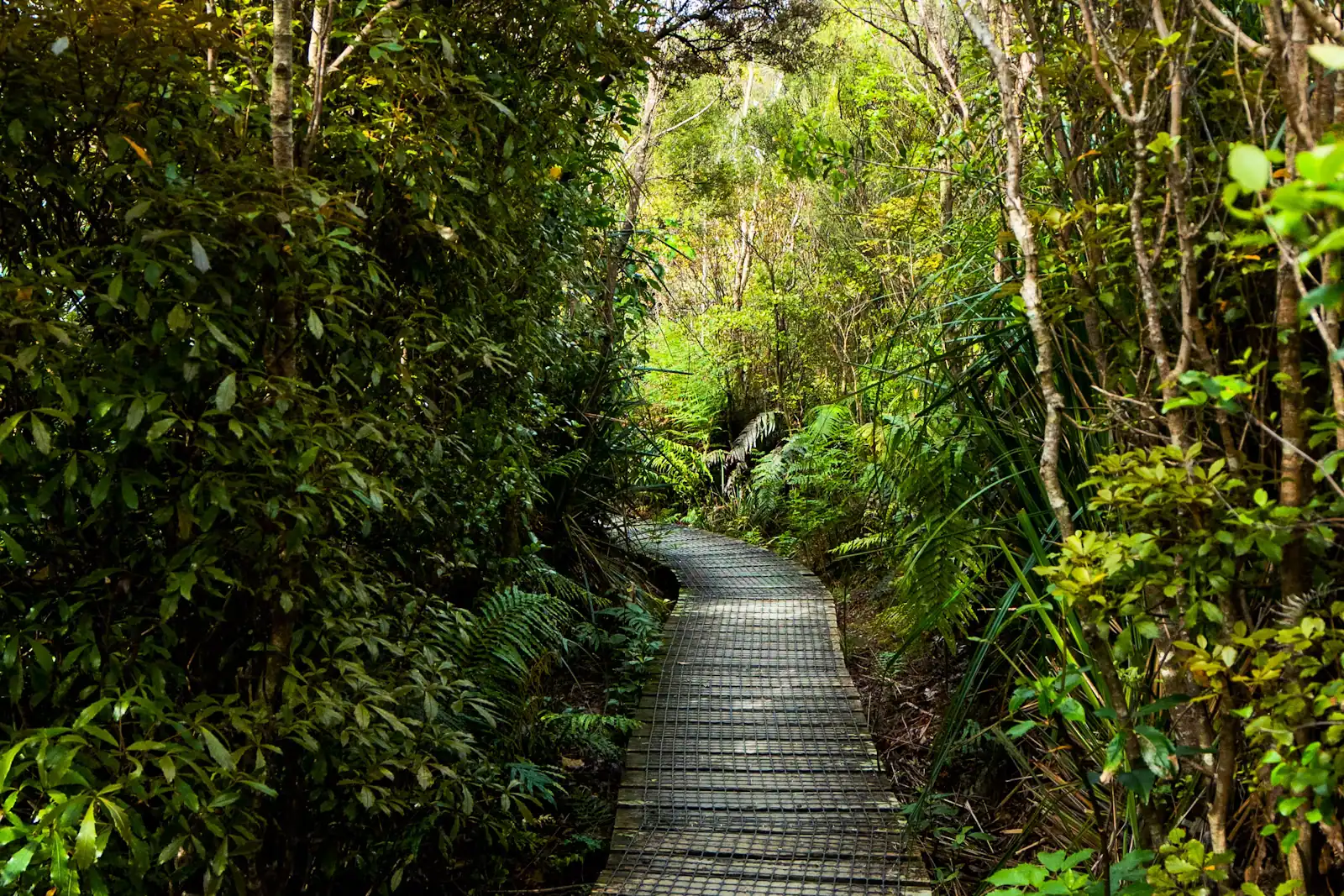
  • A raised timber boardwalk curving through dense green woodland and palmetto
    Park

    Gulf State Park

    Six thousand acres of dune, lake and pine between two beach towns, with 28 miles of paved trail and a village-sized campground.

    2–8 hoursTrails and the Nature Center are free. Parking at the Gulf beach and pier lots is a flat daily rate per vehicle, recently around $15.4 mi away

  • Two anglers casting from a concrete pier into open water in the last light of the evening
    Landmark

    Gulf State Park Pier

    1,540 feet of concrete over the Gulf, rebuilt twice after hurricanes, with a three-dollar walking ticket most visitors never notice.

    1–5 hoursTwo tickets: all-day fishing around $10 for an adult, and all-day sightseeing around $3. Children 11 and under are free for both.3.8 mi away

  • A narrow walkway running through thick forest with light coming through the canopy above
    Free
    Trail

    Hugh S. Branyon Backcountry Trail

    More than 28 miles of paved trail through swamp, pine ridge and dune, ridden by road bikes, wheelchairs and three-year-olds alike.

    1–5 hoursFree. There is no charge to use any part of the trail network.4.7 mi away

Gulf Place: common questions

How much is parking at Gulf Shores Public Beach?

Non-residents now pay by the hour rather than a flat day rate. Since 1 July 2026 the city has charged roughly two dollars an hour in the lots north of Beach Boulevard and around three an hour on the Gulf side, paid through the ParkMobile app using the zone number on the sign. The paid season runs from March to the end of November, so winter parking is free. Check the posted rate, because the ordinance has already been revised once.

Why is the sand at Gulf Shores so white?

Because it is almost entirely quartz. The grains were weathered off the southern Appalachian Mountains over geological time and carried down river systems into the Gulf, where currents sorted and deposited them along this shore. Quartz is close to colourless, so a beach made of little else reads as bright white and reflects rather than absorbs heat. The same grain size and shape are why the dry sand squeaks when you walk on it.

Is Gulf Shores Public Beach good for families with young children?

It is the most practical beach in the city for small children, mostly because of the infrastructure. There are restrooms and rinse showers on site, a playground, picnic tables, shaded pavilions and matting laid across the soft sand for strollers and beach carts. The Gulf shelves gently here. The trade-off is noise and density: this is the busiest access in Alabama, with live music from The Hangout carrying across the sand most of the summer.

What does a double red flag mean in Gulf Shores?

It means the water is closed, not that swimming is discouraged. Both Gulf Shores and Orange Beach treat double red as a genuine closure, and going in anyway has been handled as a municipal offence rather than left to a lifeguard's discretion. Single red means a high hazard, yellow moderate surf or current, green calm, and purple dangerous marine life. Penalties are set by ordinance and change, so check the current position with the city.

When is Gulf Shores beach least crowded?

Saturday, oddly. Almost every weekly rental on this coast changes over on a Saturday, so the day splits between families packing to leave and families arriving and shopping, and far fewer people are actually on the sand. Within any day, before nine and after five are the comfortable hours. By season, late August through October gives you warm Gulf water and a fraction of the summer crowd, with hurricane risk to watch.