Skip to content
Search
Menu

These bookings go through Viator, and we are paid for them. Your price is the same, and the payment had nothing to do with the picks.

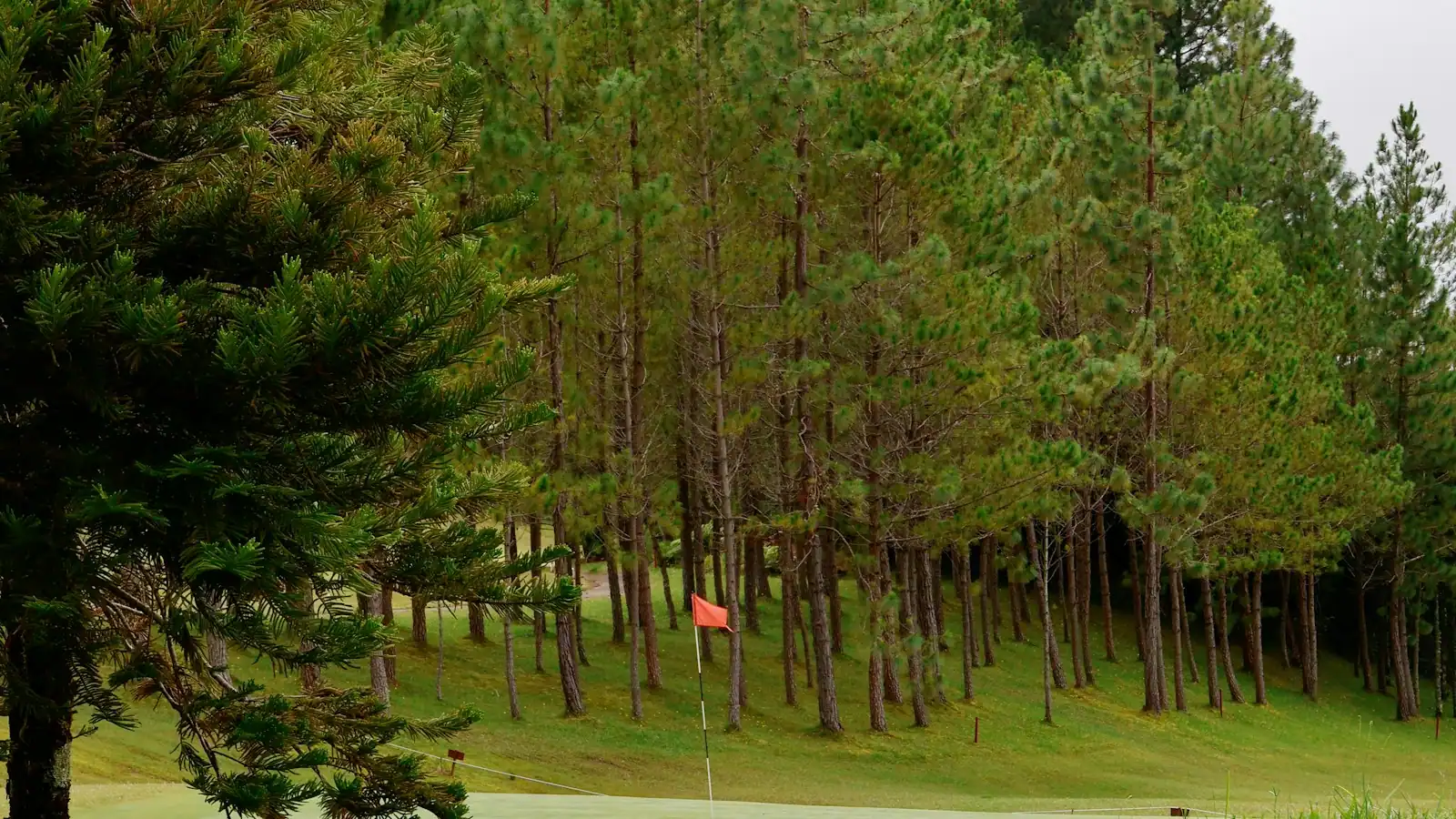
A golf fairway lined with tall evergreens with a flag on the green in the distance
Unsplash

Gulf State Park

Golf in Gulf Shores and Orange Beach

Last updated

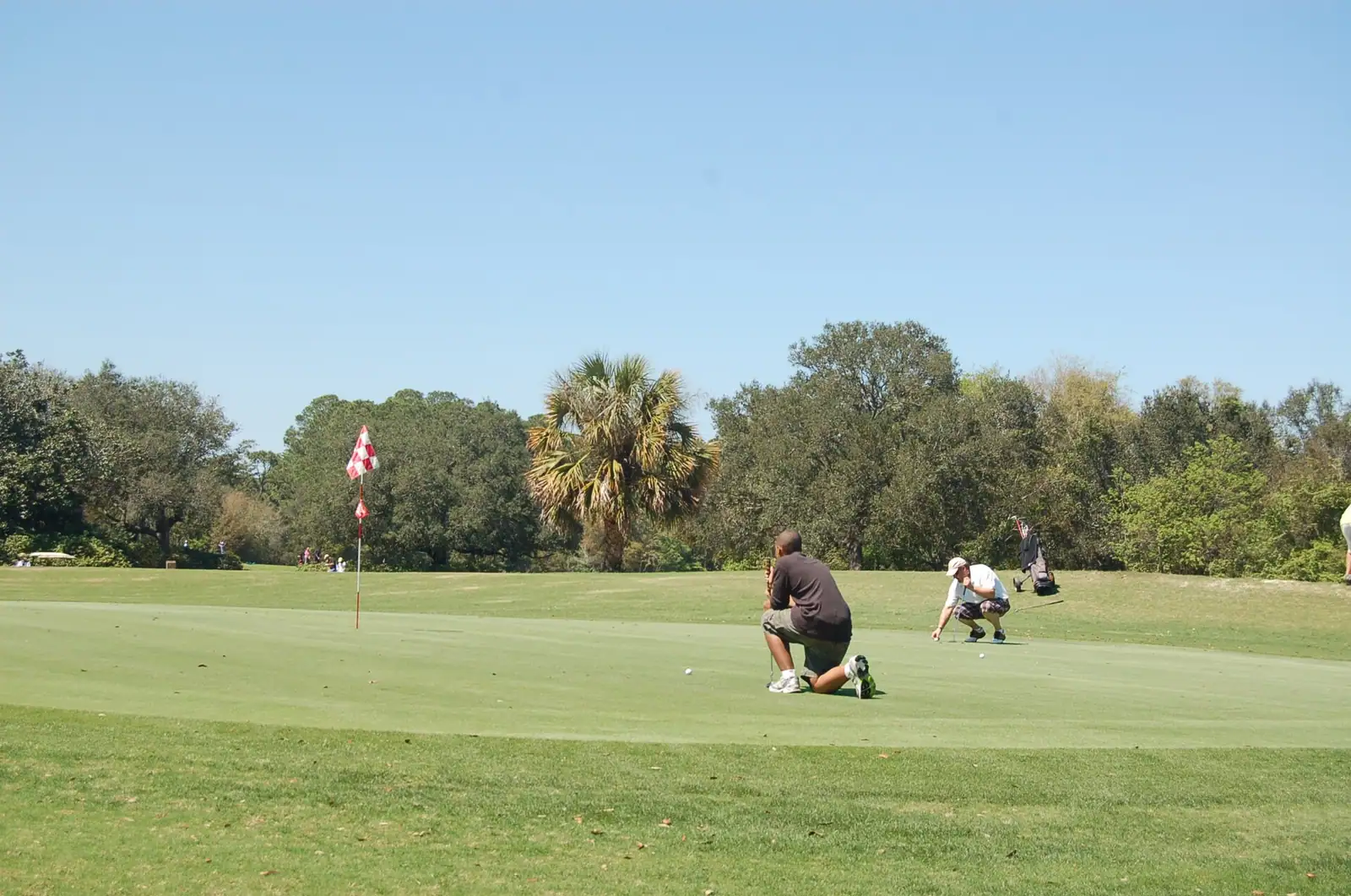
Golf around Gulf Shores and Orange Beach: Kiva Dunes, Craft Farms and the Peninsula, when to play, what a round costs and the wildlife rules on course.

The useful thing to understand about golf on the Alabama coast is that it runs on a different calendar from everything else here. Gulf Shores is a family beach destination and its year peaks between June and August, when the condominiums are full, the highway is solid and a tee time is the last thing on anybody's mind. That is also when the golf is at its worst: ninety-plus degrees by ten in the morning, humidity to match, and a thunderstorm building inland most afternoons. The golf peaks in October and November and again in March and April, and the cheapest rounds of the entire year are in January, when the town is quiet, the snowbirds are in residence and you can play a course that costs three figures in April for a fraction of it.

Almost nobody books a Gulf Shores holiday around that, and the people who do get a much better trip than the people who do not.

What is actually here is a compact set of courses rather than a golf capital. Within about twenty minutes of the beach you have Kiva Dunes and the Peninsula out on the Fort Morgan peninsula, Craft Farms' thirty-six holes just north of Gulf Shores, and GlenLakes a little further inland at Foley. Widen the circle to an hour and the options roughly double, including the Robert Trent Jones Golf Trail's Magnolia Grove complex up toward Mobile. This is not Myrtle Beach and there is no pretending otherwise: you will not find forty courses and a package for every budget. What you will find is one course genuinely worth travelling for and three or four others that hold up perfectly well against the rest of a holiday.

The course worth travelling for is Kiva Dunes, and the reason is straightforward geography. Jerry Pate laid it out in 1995 on the dune system at the end of the Fort Morgan peninsula, and it is the only beachfront golf course in Alabama. It plays to something over seven thousand yards from the back and about par 72, with the wind off the Gulf as the fourth club in your bag on half the holes.

The other thing that separates golf here from golf almost anywhere else is what lives on the property. The Peninsula's twenty-seven holes sit on roughly eight hundred and twenty acres with Bon Secour National Wildlife Refuge on two sides of them. That means alligators in the lagoons, gopher tortoise burrows in the sandy waste areas and protected dune habitat inside the boundary rope. There are local rules about all of it, they are not decorative, and they are covered further down this page.

One honest caveat. If golf is the entire point of your trip, Gulf Shores is a good week rather than a great one, and you should look hard at the day-trip options. If golf is three mornings out of seven while the rest of the family is on the sand, this is close to ideal.

Kiva Dunes, and the road you have to drive to get there

A golfer finishing a drive from an elevated tee on a wooded course under a cloudy skyUnsplash
A golfer finishing a drive from an elevated tee on a wooded course under a cloudy sky

Jerry Pate won a US Open and then built this, and it is the reason anybody discusses Alabama golf on a coastal trip at all. The land is genuine dune — sand ridges, scrub, sea oats — and the routing uses it rather than flattening it, so you get elevation change that has no business existing on a Gulf coast that is otherwise as level as a table.

What makes it play hard is wind rather than length, though at a shade over seven thousand yards from the back tees there is plenty of that too. An onshore breeze in the afternoon turns a mid-iron into a rescue club and makes the greens, which run firm, very difficult to hold. The local advice is the same as at any links: play the ball back, keep it down, and stop expecting a high soft shot to stay where it lands.

Now the part the course websites do not put in bold. Kiva Dunes is out on the Fort Morgan peninsula, which is a single two-lane road running roughly twenty-two miles west from Gulf Shores to a dead end at the fort. There is no alternative route. In June and July that road carries every beach rental, every ferry queue and every delivery truck on the peninsula, and a drive that takes twenty-five minutes at seven in the morning can take three times that at four in the afternoon.

Book the first or second tee time of the day. Not for the conditions, though they are better, but because the drive back afterwards is the difference between a good round and an aggravating one.

The golf calendar runs against the beach calendar

When to go

October and November. The best golf of the year. Humidity has broken, daytime temperatures sit in the seventies and low eighties, the bermuda is still healthy, and the beach crowd has gone home. Rates are moderate and tee sheets are busy with people who know this.

December to February. The cheapest golf on the coast, and better than its reputation. Days are often in the sixties and clear. The catch is a real one: the Alabama coast does get morning frost in midwinter, and a frost delay is not a rumour here — courses will hold the first groups until the greens thaw. Book mid-morning in January rather than first light, and expect dormant, off-colour bermuda that plays fine and looks terrible.

March and April. Peak rates, peak conditions and peak crowding. Spring break fills the town, the courses are in their best shape of the year and everybody wants the same times. Book weeks out, not days.

May. The last good month before the heat. Aeration often lands around the shoulders of the season, so ask when you book whether the greens have been punched recently — a freshly aerated green at full rate is a poor trade.

June to August. Play at first light or do not play. By ten in the morning it is uncomfortable, by two it is dangerous for anyone not used to it, and the afternoon thunderstorm risk is high enough that courses clear the property regularly. The upside is that summer twilight rates on this coast are genuinely cheap, and a nine-hole evening round after the beach is a good use of a day.

September. Fine golf and the peak of hurricane season. Ivan in 2004 and Sally in 2020 both came ashore here on 16 September, and storms that size take trees off courses for years. Check cancellation terms.

What the sand and the turf actually do to your round

A close view of a wedge sitting behind a golf ball on closely mown fairway grassUnsplash
A close view of a wedge sitting behind a golf ball on closely mown fairway grass

Two local conditions cost visiting players more shots than the yardage does.

The bunker sand. This coast sits on near-pure quartz, milled fine and pale, and a good deal of it ends up in the traps. It is soft, it is light, and a ball landing steeply into it plugs more readily than the coarser, heavier sand most visitors practise on. The adjustment is real: open the face a little more than usual, commit to taking sand, and expect the ball to come out higher and shorter than you have programmed. Half-hearted bunker shots leave the ball in the bunker here more often than anywhere else you have played recently.

The grain. Greens are bermuda, and bermuda grows toward the setting sun and toward water. On a coastal course that means grain running consistently in a direction that has nothing to do with the slope you are reading. A downgrain putt runs out; an into-grain putt of the same length feels like putting through carpet. Look at the cup: the ragged, browner edge is the downgrain side.

Add the two together with an onshore wind and the pattern is predictable. Visiting players lose strokes around the green rather than off the tee. If you have one practice hour before a trip here, spend it in a bunker and on a long lag putt, not on the range.

One more: the rough on the dune courses is sand and scrub rather than grass, and a ball in it is usually gone. Course management here is about staying on the short stuff, not about distance.

Booking, rates and stay-and-play

What it costs

Green fees on this coast move more with the season than with the course, which is unusual and worth exploiting.

  • Peak — March to early May, and October to November. The resort courses commonly sit somewhere in the region of $90 to $160 for eighteen holes with a cart, and the best times go first.
  • Summer. Rates fall and twilight rates fall further. The trade is heat and storm risk.
  • Winter. The cheapest of the year, with multi-round and snowbird arrangements widely available for anyone staying several weeks.

Practical points that save money or grief:

Ring the course. Rate cards here are seasonal, change without much notice and are frequently better by phone than by aggregator, particularly for a group of four wanting consecutive times.

Ask about aeration before you pay. It is the single question most likely to improve your week and almost nobody asks it.

Stay-and-play exists but is thin. Several local operators and the courses themselves put packages together with condominium rentals. Compare against simply booking the rental and the rounds separately, because with this few courses the package is not automatically the better deal.

Carts are the norm and often mandatory. Distances between green and next tee on the dune courses are long, and walking is frequently not an option. Check if that matters to you.

Clubs travel badly and hire is limited. Rental sets exist at the resort courses but inventory is small and quality varies. If you are playing three or more rounds, bring your own.

Nothing on this page is a live quote. Rates, policies and conditions change; confirm directly before you build a trip around them.

What everybody else does while you play

Local tips

  • Book the first tee time and be back by noon. On this coast that is not a sacrifice. The beach is better in the afternoon anyway, the drive is easier, and you get the whole rest of the day back.
  • Craft Farms is the right choice if you have limited time. It is the closest of the resort courses to town, which means the least driving, and thirty-six holes on one property covers two mornings without a second commute.
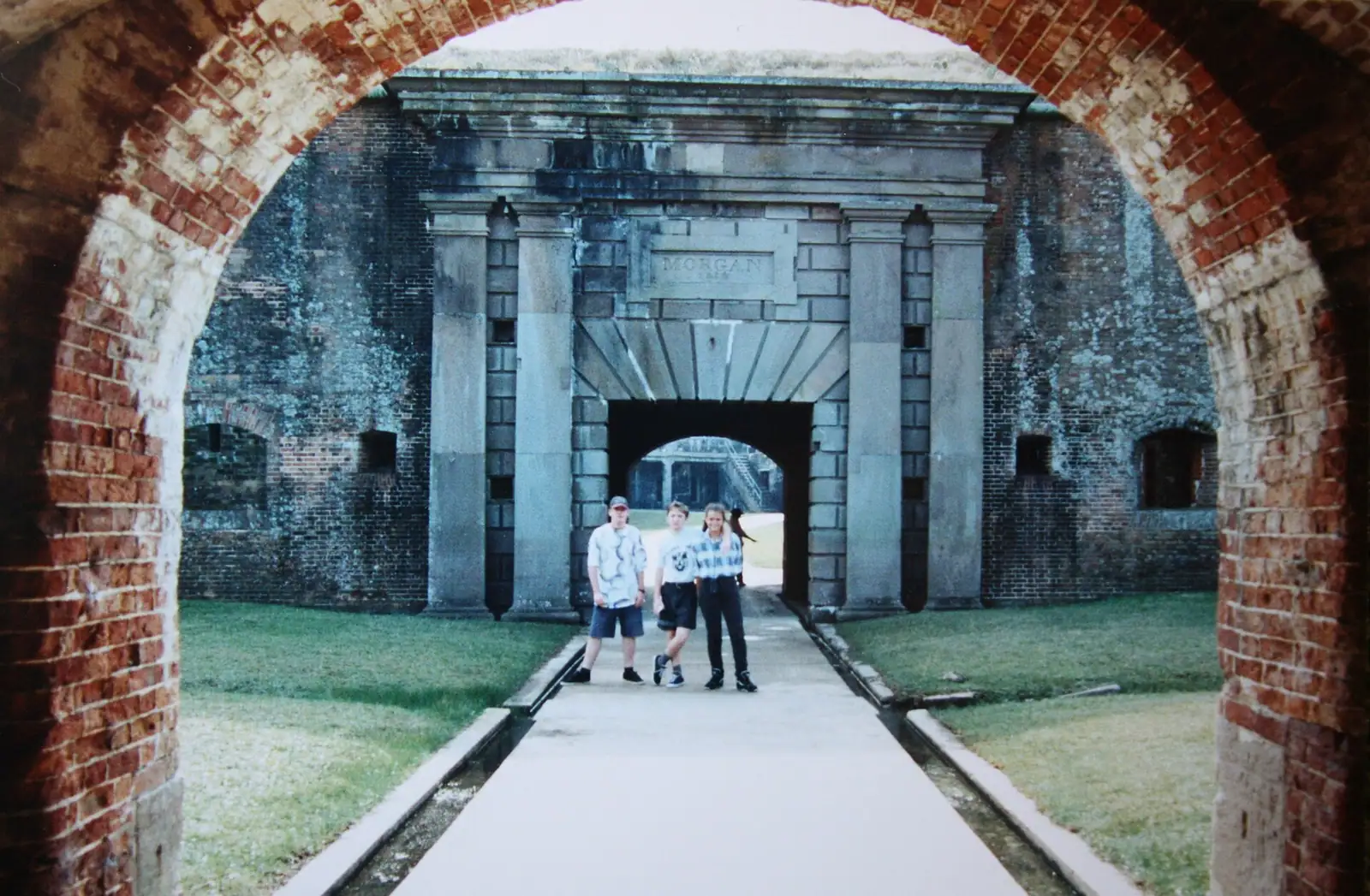
  • Kiva Dunes is the right choice if somebody wants to come along. The peninsula drive passes Bon Secour's trailheads and ends at Fort Morgan, so a non-golfing partner can walk the Jeff Friend Trail loop or tour the fort while you play, rather than sitting in a clubhouse.
  • The Peninsula suits a three-day golfer. Three nines means three genuinely different rounds without the novelty wearing off.
  • Consider the day trip rather than a fourth local round. Magnolia Grove on the Robert Trent Jones Trail is roughly an hour and a quarter away toward Mobile and is a step up in scale from anything on the beach. Allow for traffic and leave early.
  • Watch the dress code and the heat rule. Collared shirts are the norm, and in July a caddie-free morning round with one bottle of water is how people end up unwell. Take three.
  • Keep the round to a morning in summer. Afternoon lightning closes courses here regularly and there is no shelter on a dune fairway.

What is within reach, and what each one is for

A golfer at the top of the backswing on a sunlit fairway under a blue skyUnsplash
A golfer at the top of the backswing on a sunlit fairway under a blue sky

How they compare

CourseWhereShapeBest for
Kiva DunesFort Morgan peninsula18 holes, par 72, around 7,092 yards from the tips, Jerry Pate, 1995The one round to play if you only play one. Alabama's only beachfront course
Peninsula Golf & Racquet ClubFort Morgan Road27 holes on about 820 acres, three ninesVariety across three days, and the most wildlife you will see on a course
Craft Farms — Cotton CreekNorth of Gulf Shores off Highway 5918 holes, Arnold Palmer Signature DesignThe most conventional resort golf here, and the easiest to reach from town
Craft Farms — Cypress BendSame property18 holes, Arnold Palmer Signature DesignA second, different round without a second drive
GlenLakesFoley, about 20 minutes inland27 holesValue. The round to book when the resort rates are at their spring peak

Craft Farms is worth a note of its own: the two courses there are described as the only Arnold Palmer Signature Design layouts in Alabama, which makes thirty-six holes on one property a reasonable anchor for a golf trip even before the beach is factored in.

Beyond that circle, an hour or so of driving reaches Lost Key over the Florida line on Perdido Key, Rock Creek at Fairhope, Soldiers Creek at Elberta and the Robert Trent Jones Trail at Magnolia Grove near Mobile. Rates and conditions vary enough between these that ringing ahead is worth ten minutes.

Playing next to a wildlife refuge

Before you book

The Peninsula's twenty-seven holes occupy roughly eight hundred and twenty acres with Bon Secour National Wildlife Refuge along two sides, and the other courses here sit in the same landscape. That has consequences you do not meet at an inland club.

Alligators are resident, not visiting. They live in the lagoons and lakes on these properties year round and they sun themselves on the banks. The rule is simple and absolute: do not go into or near the water for a ball, at any distance, at any time of year, and particularly not in spring when females are on nests. A ball in a lagoon is a lost ball. Take the drop.

Gopher tortoise burrows are protected. You will see half-moon holes with fans of pale spoil in the sandy waste areas. The tortoise is a protected species in Alabama and its burrow shelters dozens of others. Courses here carry local rules covering relief from burrows — read the card rather than guessing, and never poke about in one.

The dune and the scrub are habitat. The roped-off areas on a beachfront course are not aesthetic. They protect sea oats and the endangered Alabama beach mouse that depends on them. Play it as a lateral hazard and stay out.

Snakes, occasionally. Cottonmouths near water, rattlesnakes in dry scrub. Both are far more common in a course's rough than most visitors imagine, and both would rather you left. Do not go hunting balls in deep scrub in shorts.

None of this makes the golf difficult. It does mean the smart play on this coast is to carry a few more balls than you would at home and to treat every water margin as out of bounds regardless of what the card says.

On the ground

Where to go

Every place below has its own page — hours, parking, what it costs and what to expect when you get there.

  • A raised timber boardwalk curving through dense green woodland and palmetto
    Park

    Gulf State Park

    Six thousand acres of dune, lake and pine between two beach towns, with 28 miles of paved trail and a village-sized campground.

    2–8 hoursTrails and the Nature Center are free. Parking at the Gulf beach and pier lots is a flat daily rate per vehicle, recently around $15.

  • Cars moving along a two-lane coastal highway with open water alongside it
    Historic site

    Fort Morgan State Historic Site

    A brick pentagon at the end of a 22-mile peninsula, where Farragut ran the Union fleet into Mobile Bay in August 1864.

    1–3 hoursRecently around $8 for an adult, about $5 for students, seniors and children aged 6 to 18, with a family rate and free entry for military with ID.

  • An aerial view of an empty pale sand shoreline meeting an unbroken block of dense pine forest
    Free
    Nature preserve

    Bon Secour National Wildlife Refuge

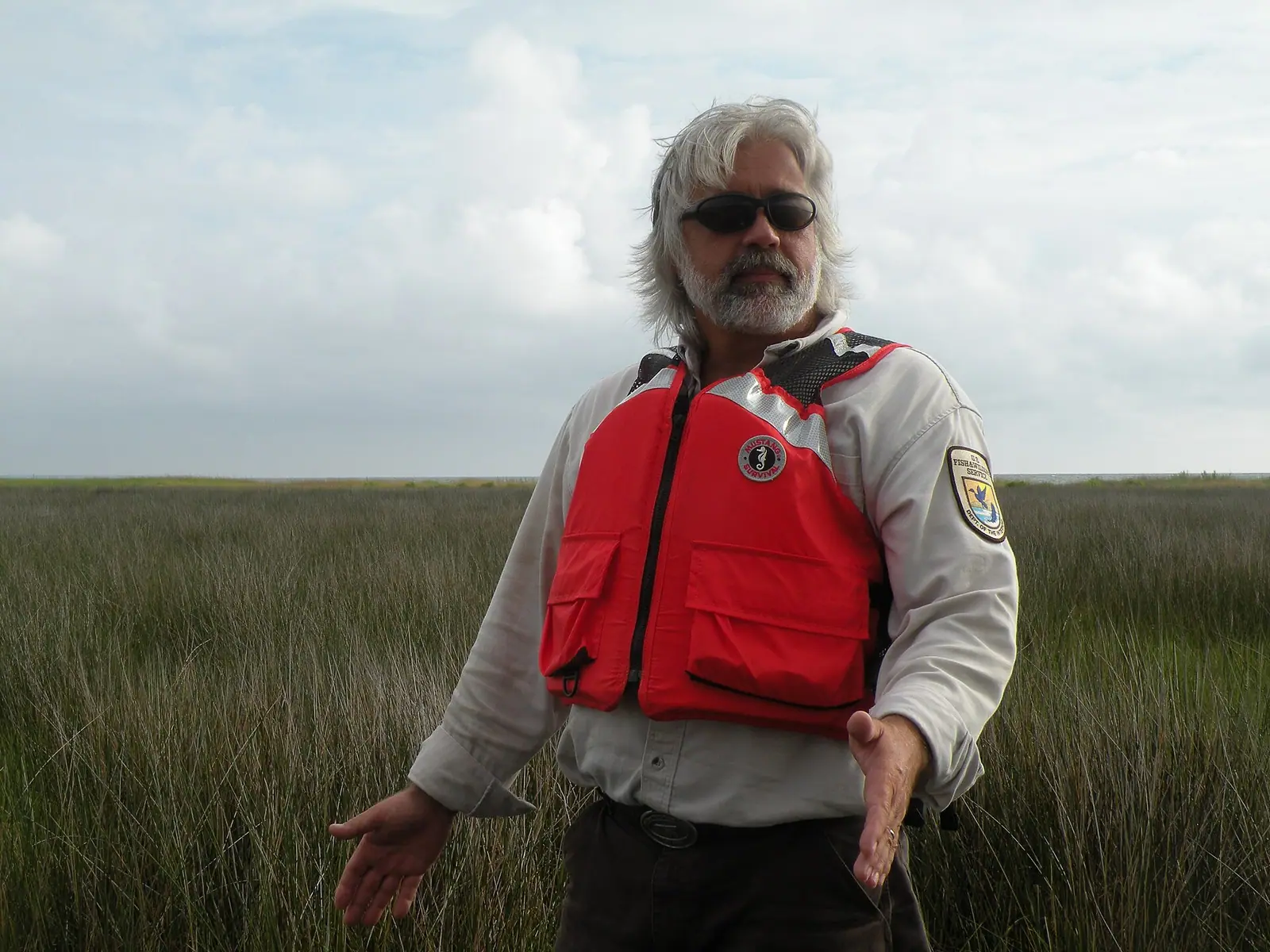
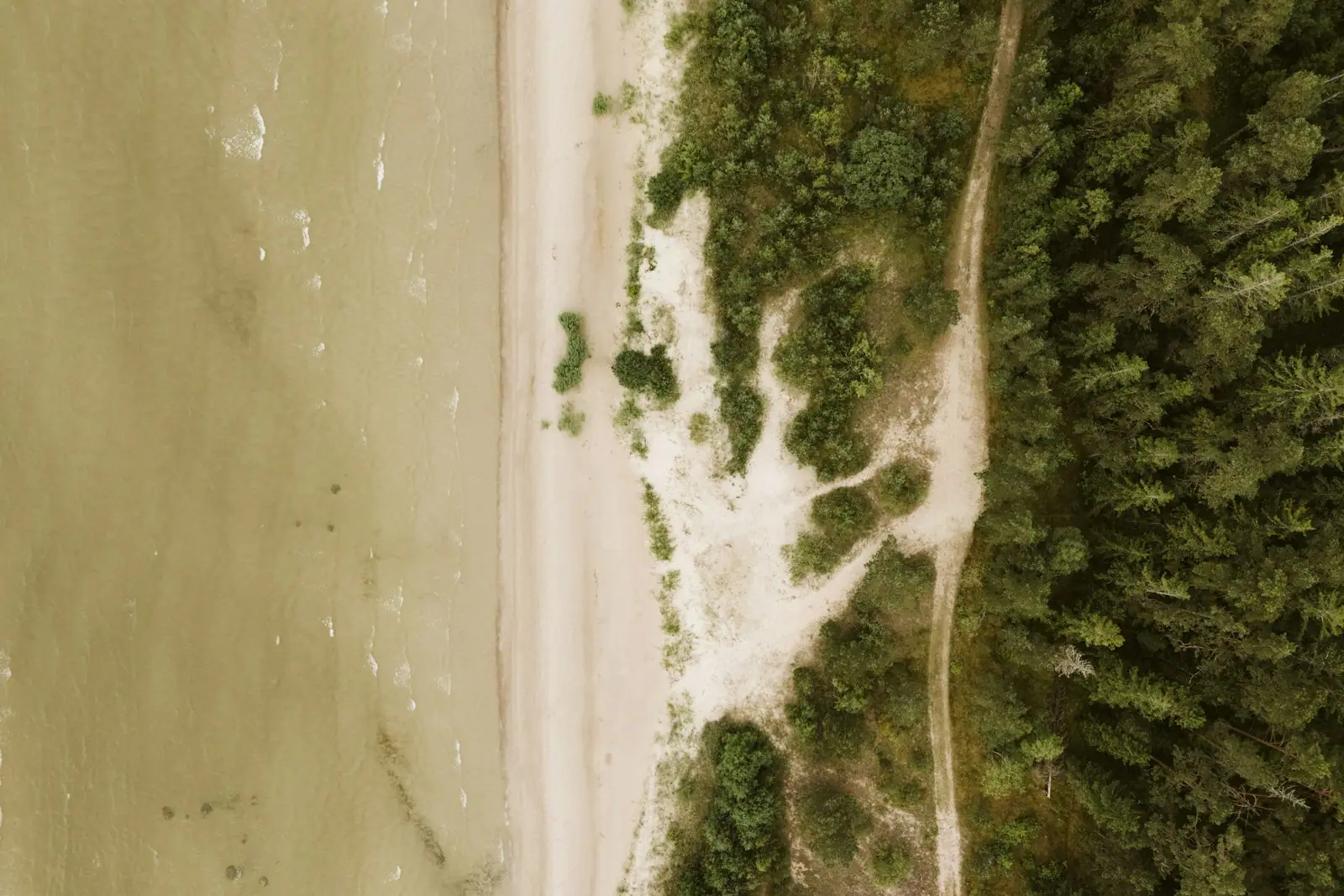
    Alabama's last large stretch of wild coastal dune, walkable on foot only, and protected largely for a nocturnal mouse.

    1–4 hoursFree. There is no entry fee and no parking charge at the refuge trailheads.

  • Rows of boats moored in a marina basin on flat water in early morning light
    Free
    Neighbourhood

    Orange Beach

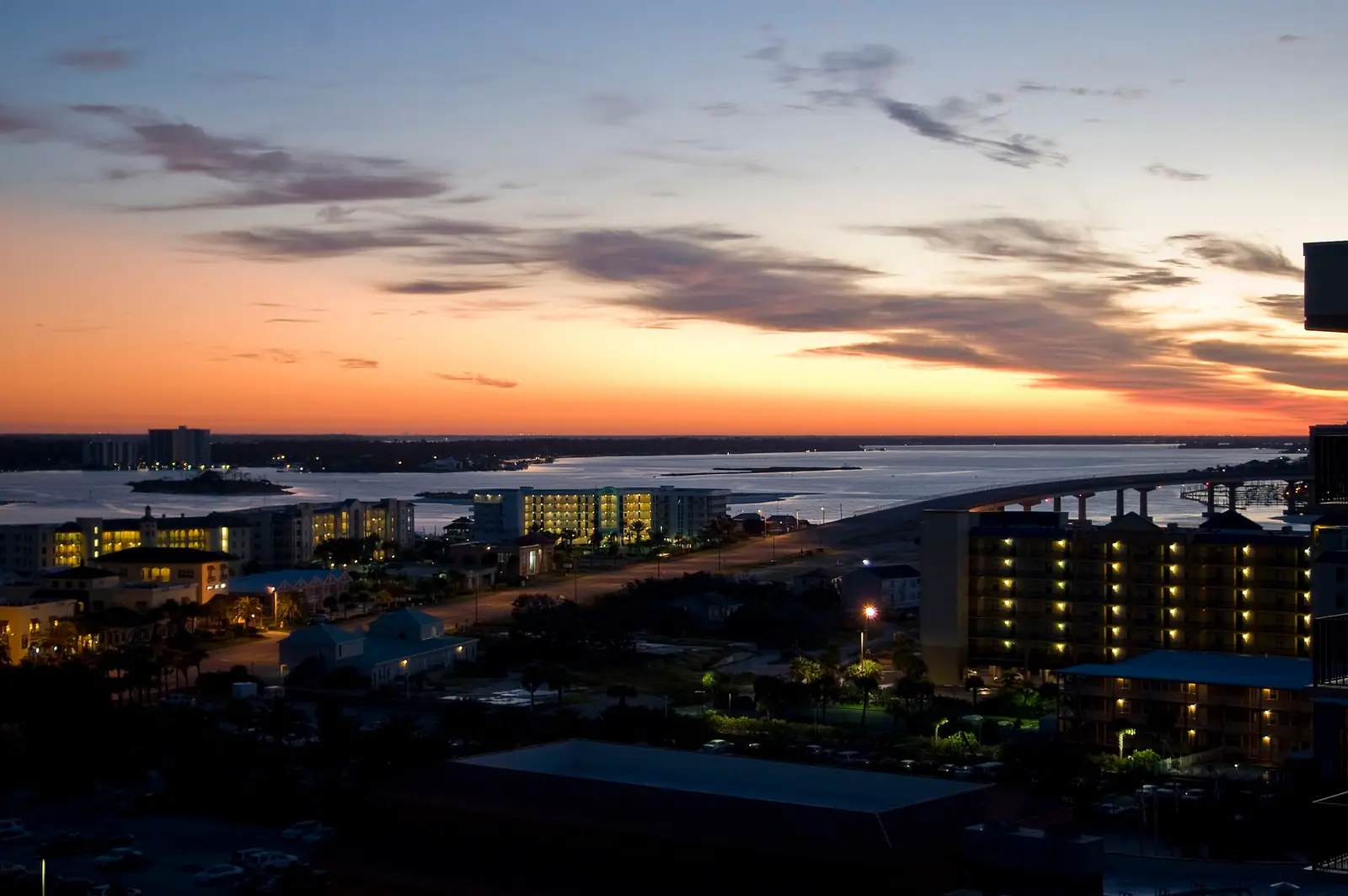
    Alabama's other beach city: nine thousand people, a maze of back bays and the only cut from those bays to open Gulf water.

    3–10 hoursFree to visit. Beach parking is charged at both city and state park accesses.

  • Aerial view of bright white sand meeting shallow water that shades from pale green to deep blue
    Free
    Beach

    Gulf Shores Public Beach

    Where Highway 59 runs out of land: pavilions, showers, volleyball nets, The Hangout next door and hourly parking since July 2026.

    2–7 hoursThe beach is free. Parking is not: non-residents pay by the hour through a phone app during the paid season.

  • An aerial view of a marina basin ringed by docks, moored boats and low waterfront buildings
    Free
    Shopping

    The Wharf

    A 220-acre marina and entertainment complex on the Intracoastal Waterway, with a 112-foot Ferris wheel and an amphitheatre behind it.

    1.5–5 hoursFree to walk around. The Ferris wheel, cinema, adventure attractions and concerts are all ticketed separately.

Straight answers

Questions people actually ask

What are the best golf courses in Gulf Shores?

Kiva Dunes is the one most visitors travel for — a Jerry Pate design from 1995 on the Fort Morgan peninsula, and the only beachfront course in Alabama. Craft Farms has thirty-six holes just north of town in the form of Cotton Creek and Cypress Bend, described as Alabama's only Arnold Palmer Signature Design courses. Peninsula Golf & Racquet Club offers twenty-seven holes on about 820 acres, and GlenLakes at Foley is the nearest value option.

How much is a round of golf in Gulf Shores?

It depends far more on the month than on the course. In the peak windows — March to early May and October into November — the resort courses commonly sit somewhere around $90 to $160 for eighteen holes with a cart. Summer rates fall and twilight rates fall further. Winter is the cheapest of the year, with multi-round and long-stay arrangements available. Ring the course directly; rate cards here change with the season.

When is the best time of year to golf in Gulf Shores?

October and November, with March and April close behind. Autumn gives you seventies and low eighties, broken humidity, healthy turf and a town that has emptied of beach traffic, at moderate rates. Spring gives you the best conditions of the year at the highest prices and the biggest crowds. Summer is playable only at first light. Winter is cheap and often lovely, with the caveat of genuine frost delays in the mornings.

Does it frost on the golf courses in Gulf Shores?

Yes, in midwinter, and courses hold play until the greens thaw. Frost on a green means the grass blades are frozen and walking on them damages the plant, so a delay of an hour or more on a December or January morning is routine rather than exceptional. Book mid-morning rather than first light in those months and expect dormant bermuda that is brown, looks alarming and plays perfectly well.

Are there alligators on the golf courses in Gulf Shores?

Yes, and they are permanent residents rather than occasional visitors. The lagoons and lakes on courses here hold alligators year round, and the Peninsula in particular borders Bon Secour National Wildlife Refuge on two sides. Never go to a water margin for a ball, at any distance, and be especially careful in spring when females are nesting. Treat every lagoon as out of bounds and carry a few extra balls.

Is Kiva Dunes worth playing?

If you play one round on this coast, make it this one. It sits on real dune ground at the end of the Fort Morgan peninsula, with elevation change that does not otherwise exist on the Alabama coast, firm greens and an onshore wind that changes clubs. It plays to a little over 7,000 yards from the back tees at around par 72. Book early in the day — the peninsula road is a single two-lane route that clogs badly in summer.

How far is the Robert Trent Jones Golf Trail from Gulf Shores?

The nearest Trail site is Magnolia Grove at Mobile, and it is a day trip rather than a local round — allow something like an hour and a quarter each way, more in summer traffic or if the Mobile tunnel is busy. It is a step up in scale from anything on the beach and is the obvious answer if you want a fourth round and have already played the local courses. Leave early and book the tee time before you commit to the drive.

Do you need to book tee times in advance in Gulf Shores?

In March, April, October and November, yes — weeks rather than days, particularly for a group of four wanting consecutive times. In summer and midwinter you can often play with a day or two of notice. Ring the course rather than booking through an aggregator: rates here are seasonal, they are frequently better by phone, and it is the only way to find out whether the greens have just been aerated.