Skip to content
Search
Menu

These bookings go through Viator, and we are paid for them. Your price is the same, and the payment had nothing to do with the picks.

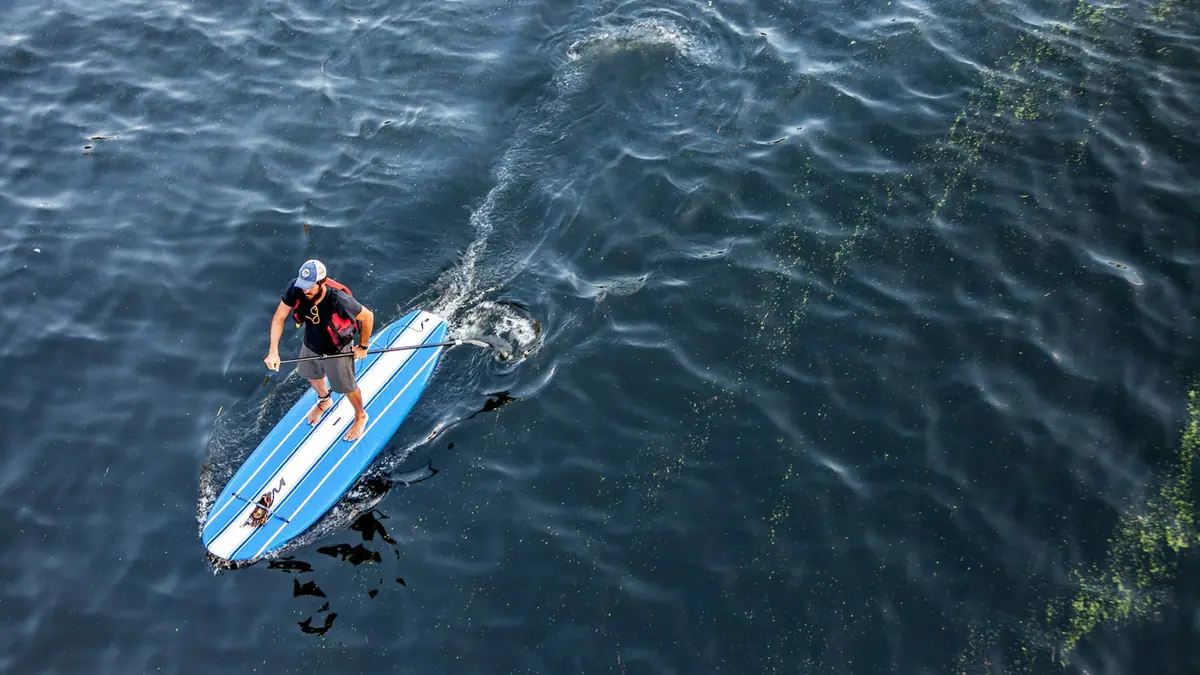
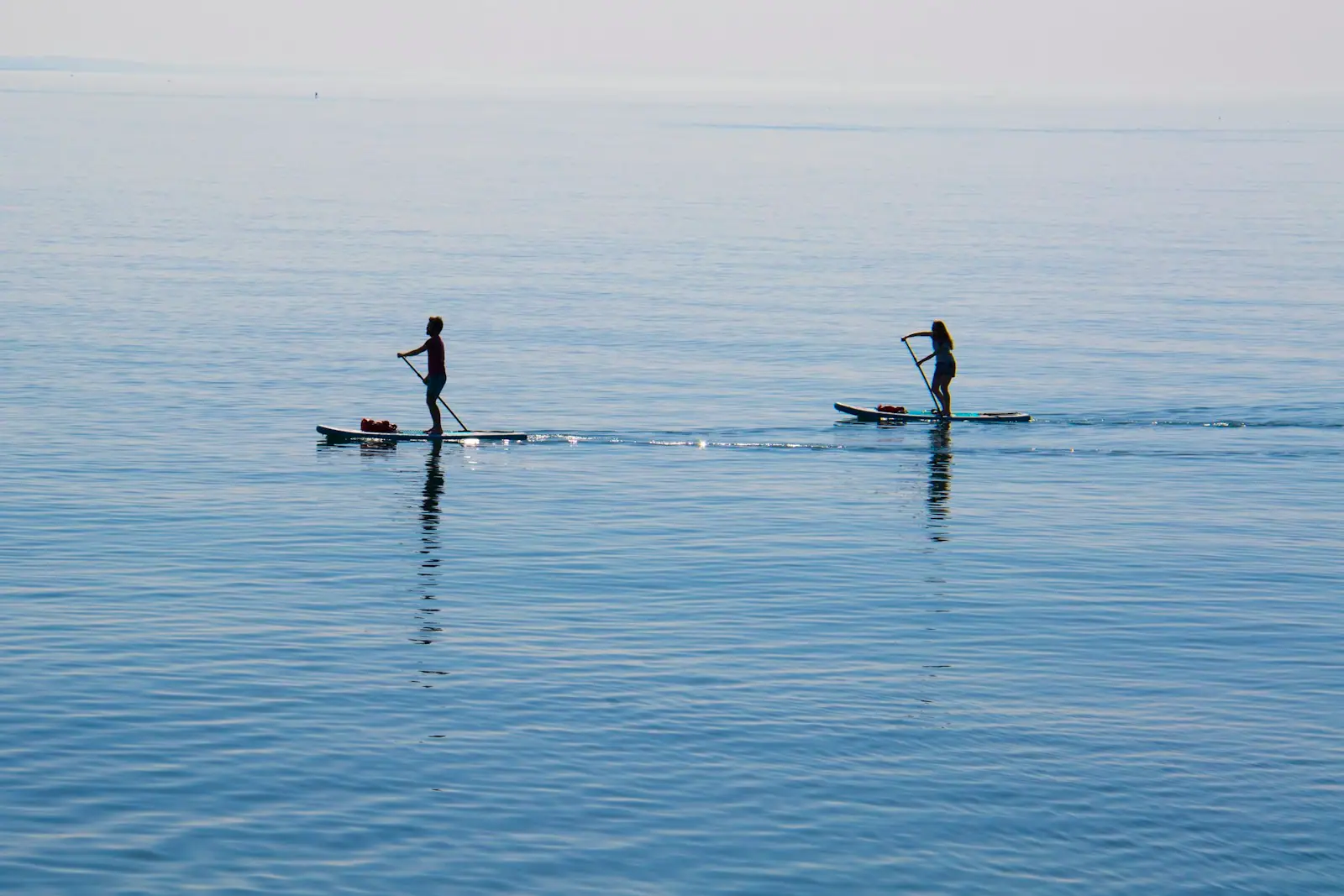
Two paddleboarders crossing a wide sheet of flat, mirror-calm water under a soft sky
Unsplash

Gulf State Park

Kayaking and Paddleboarding Behind the Beach

Last updated

Where to paddle around Gulf Shores and Orange Beach: the Back Bay Blueway launches, the state park lakes, Little Lagoon, and the water to stay off.

Nobody paddles the Gulf here, and the people who try generally do it once. The open water off Gulf Shores has a sandbar system, a shore break and a longshore current, and a sit-on-top with a cooler bungeed to the back is the wrong tool for all three. What makes this a paddling destination is everything on the other side of the road.

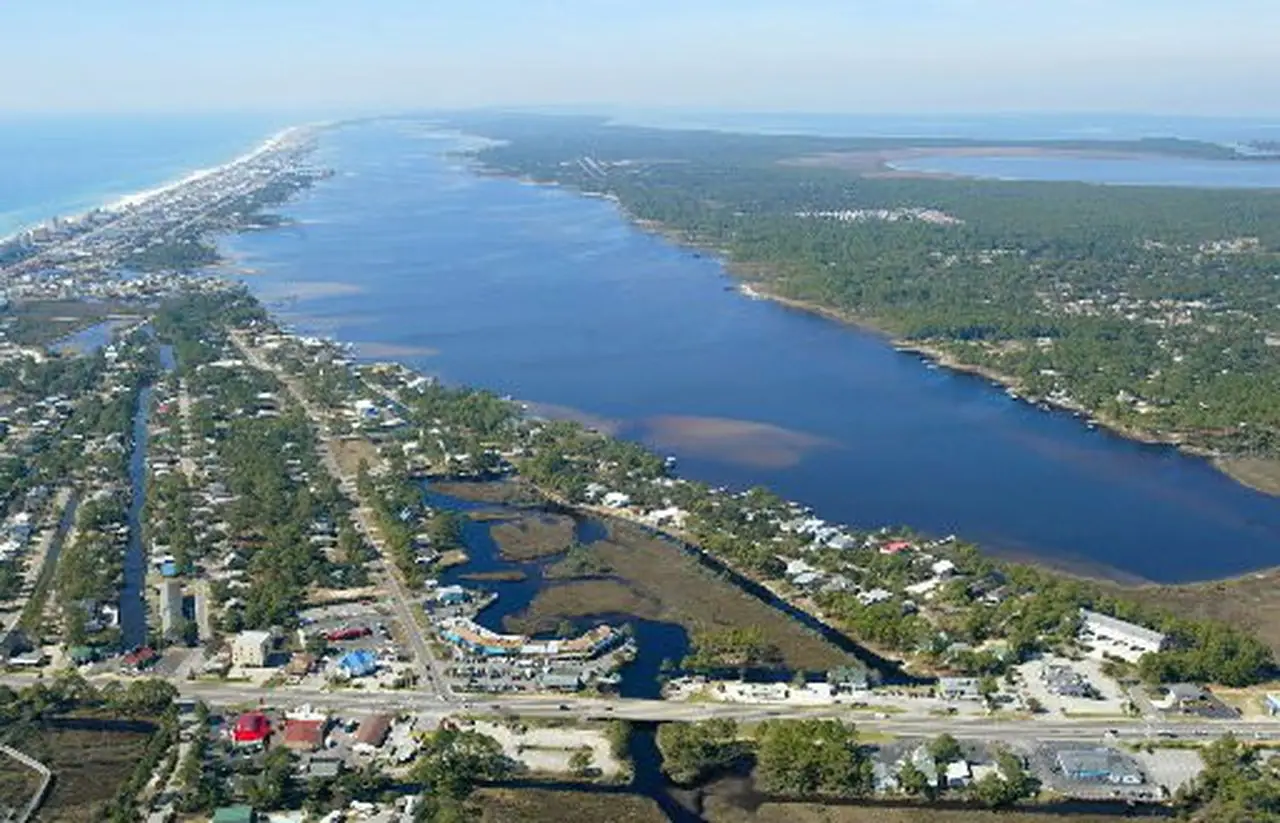
Behind the beach runs a continuous system of sheltered water: Little Lagoon stretching ten miles west parallel to the sand, the lakes inside Gulf State Park, Oyster Bay and Bon Secour Bay behind the Fort Morgan peninsula, then Wolf Bay, Terry Cove and the bayous around Orange Beach, all of it strung together by the Intracoastal Waterway. Gulf Shores, Orange Beach and Fort Morgan have mapped the usable parts of it as the Back Bay Blueway — four trails with twenty-one launch sites between them, which is an unusually generous amount of public access for a coast this short.

The character of that water is worth being precise about, because it is not what a visitor expects from a Gulf holiday. It is shallow, often only a few feet deep for hundreds of yards. It is protected, so it stays glassy on mornings when the beach is unswimmable. Much of it is brackish and some of it is genuinely fresh. And the shoreline is marsh grass, cypress and pine rather than sand, so the wildlife is wading birds, ospreys, terrapins and — in the fresh and lightly brackish stretches — alligators.

That last point is the one to absorb before you book anything. Alligators live in Lake Shelby, in Little Lagoon, in the refuge's Gator Lake and in the bayous. This is normal, it is not a reason to stay ashore, and it does change how you behave: you stay off the shoreline vegetation instead of hugging it, you do not tow a dog in the water behind you, and you do not get out to stretch your legs on a muddy bank in spring.

The other thing that shapes this page is the inventory. There is very little to book here. No guided paddling trip you can reserve months out from a distance, no naturalist-led sunrise tour, essentially nothing on the big booking platforms. What there is instead is a hire counter at the Lake Shelby day-use area, a scattering of local shops that will put a board on your roof or deliver it to a rental, and twenty-one public places to put in for free. That makes this the cheapest half-day on the Alabama coast and it makes this page a map rather than a shop window.

One practical rule governs everything below. Paddle in the morning. The sea breeze on this coast builds through the day, and on a ten-mile lagoon with nothing to break it, a fifteen-knot afternoon turns a pleasant hour into a long, wet slog back.
The Back Bay Blueway: four trails, twenty-one launches

A person paddling a red kayak along a sheltered stretch of calm waterUnsplash
A person paddling a red kayak along a sheltered stretch of calm water

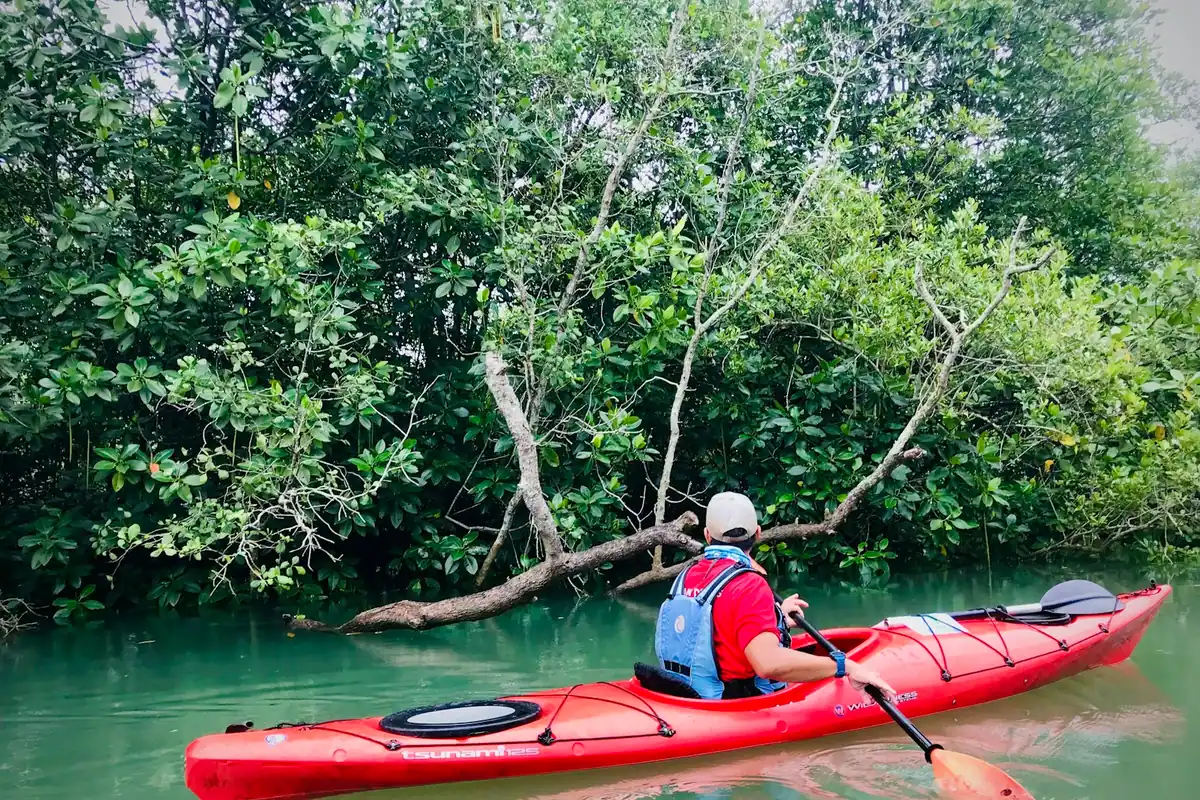
The Blueway is not a single route. It is a mapped set of public launches and linked paddles covering the back-bay water behind Gulf Shores, Orange Beach and the Fort Morgan peninsula, grouped into four trails with twenty-one places to put in between them.

That matters more than it sounds. The usual failure mode on an unfamiliar coast is spending an hour and a half looking for somewhere legal to unload a boat, and this system solves it. Launches range from formal ramps with car parks to simple graded banks at the end of a road, and a good number of them are free.

Broadly, the four sections work like this. The Gulf Shores water gives you Little Lagoon and the lakes, which is the flattest and the most family-tolerant. The Orange Beach water gives you Wolf Bay, Terry Cove, the bayous and the run out to Robinson Island, which is the prettiest and the busiest with boat traffic. The Fort Morgan side gives you Oyster Bay, Bon Secour Bay and the marsh behind the peninsula, which is the emptiest and the most exposed to wind. And the inland sections reach up toward Graham Creek and the pine savanna, which is the most interesting botanically and the least like a beach holiday.

Pick a launch that lets you paddle out into the wind and come home with it behind you. On flat water with no current to read, wind direction is the only variable that decides whether you enjoy the second half of the trip.

Three lakes and a canal inside the state park

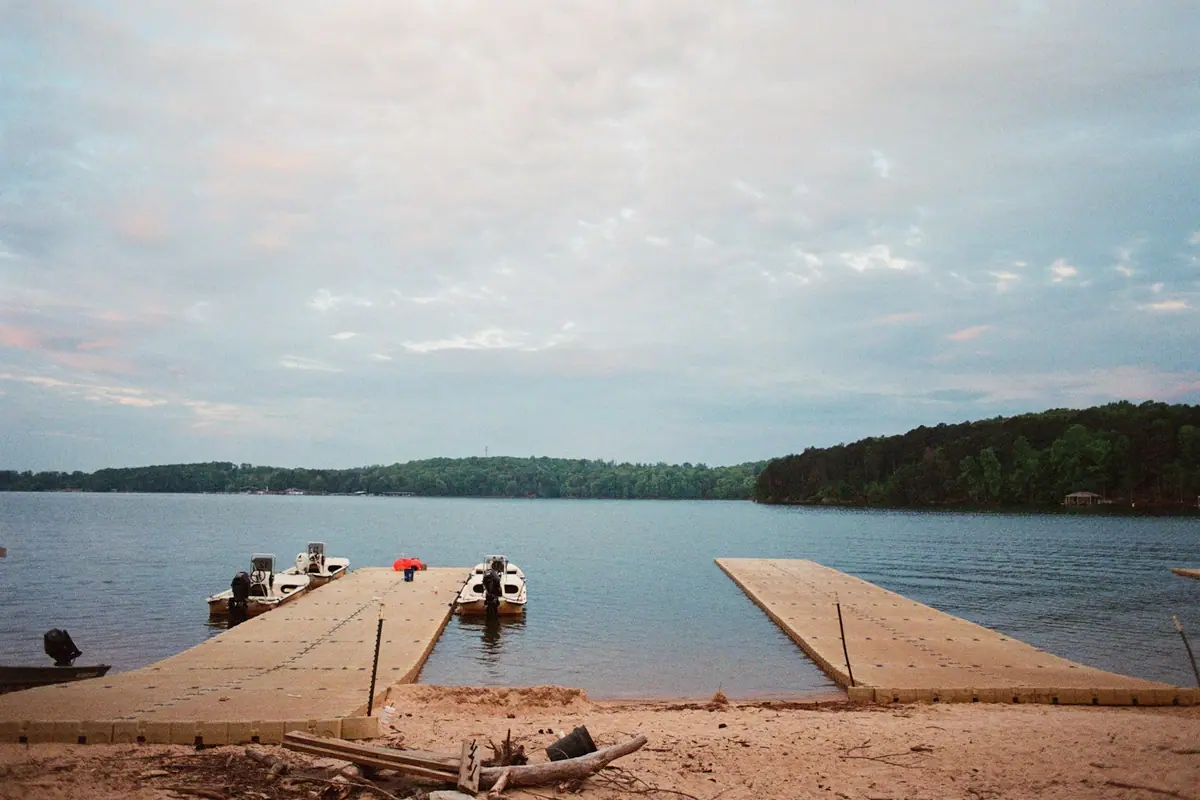
A floating dock and launch ramp on calm water with pines along the far bankUnsplash
A floating dock and launch ramp on calm water with pines along the far bank

Gulf State Park holds three freshwater lakes a few hundred yards from the Gulf: Lake Shelby, around nine hundred acres, with Middle Lake and Little Lake behind it. A dug canal connects all three, so you can cross the whole system without lifting a boat out of the water. For a first paddle with children, this is the best water in the destination and it is not a close contest.

The day-use area on Lake Shelby has the launch, the picnic shelters and a seasonal hire counter — the same concession that runs the park's segway tours — offering single and tandem kayaks, canoes and paddleboards by the hour or the day. Rentals can generally go anywhere across the three connected lakes, and boats are due back in the mid-afternoon rather than at closing time, which catches people out. Ask when you pay.

The trade-offs are honest ones. It is fresh water, so there are no dolphins and no mullet jumping, and the scenery is pine and lake rather than marsh and bay. There is no current and no tide to help or hinder you. And the alligators are real: all three lakes hold them, swimming is not permitted, and the sensible line is to keep away from the shoreline reeds, keep dogs out of the water entirely and give any animal you can see a wide margin.

What you get in return is glass-flat water within a ten-minute drive of every condominium in Gulf Shores, on a morning when the Gulf might be flying two red flags.

Wolf Bay, Terry Cove and the island you can paddle to

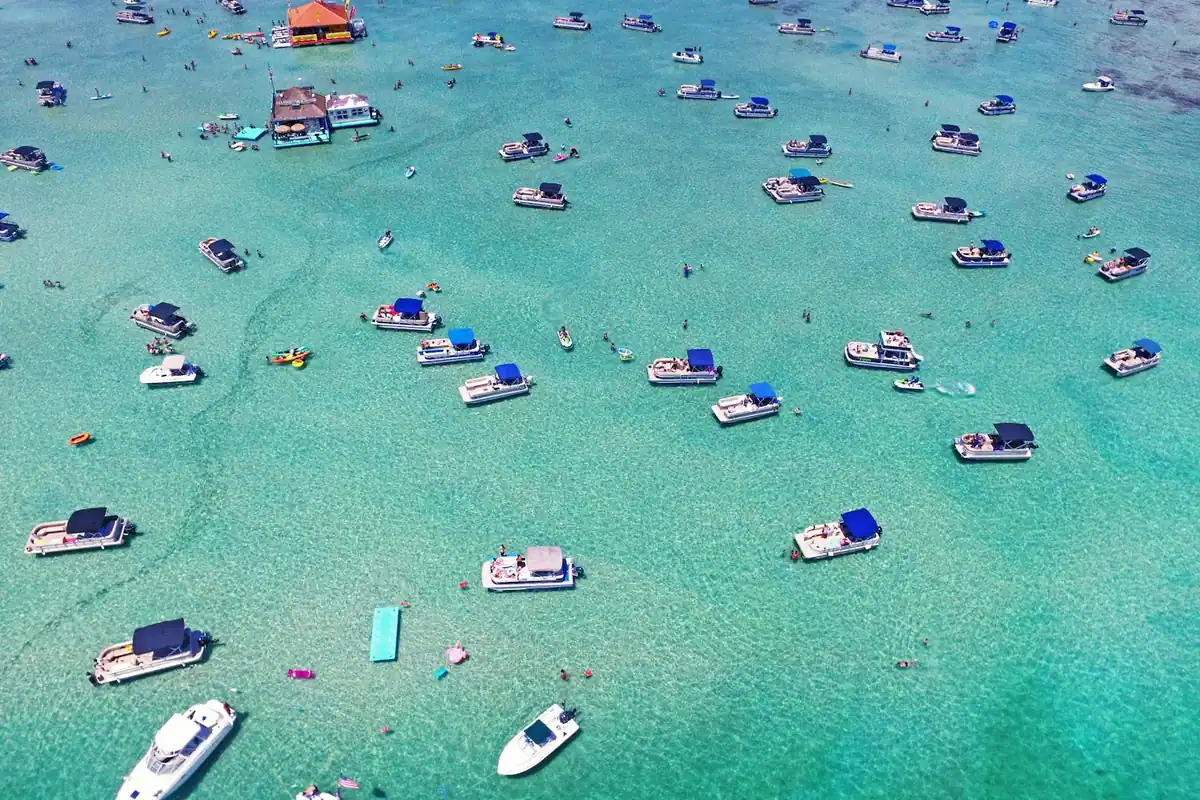
Aerial view of dozens of small boats anchored together over a pale shallow sandbarUnsplash
Aerial view of dozens of small boats anchored together over a pale shallow sandbar

The Orange Beach end is the prettiest paddling in the destination and also the one that requires the most awareness of other people.

Robinson Island sits just north of Perdido Pass, undeveloped, with no bridge and no facilities. It is reachable by kayak or paddleboard from launches at the eastern end, and on a weekday morning in May you can have a piece of sand to yourself within half an hour of leaving the car. On a Saturday in July the same island is ringed with anchored boats and music, which is a completely different and much noisier experience. Choose your day.

Terry Cove is sheltered, working water — marinas, charter boats, the occasional dolphin cutting through — and a short, interesting paddle that suits an hour rather than a morning.

Wolf Bay is bigger and quieter, fed by creeks, with marsh edges, wading birds and long views. It is the closest thing here to a wilderness paddle, and it is where to go if the point of the trip is birds rather than sand.

The thing to manage in all three is boat traffic. The channels here are used by centre consoles moving at speed, and a kayak is low, grey against the water and largely invisible to somebody looking at a chart plotter. Stay out of the marked channels, cross them at right angles and quickly, and carry something high-visibility — a bright hat, a flag on a pole, a coloured board. On a busy summer weekend, paddle before ten and be off the main water by lunchtime.

Hire, bring or buy: what it actually costs

What it costs

Three ways to get on the water here, and they suit different trips.

Hire on site. The Lake Shelby counter in Gulf State Park is the simplest option and puts you straight onto flat, protected water. Hourly and daily rates, single and tandem kayaks, canoes and boards. Expect to pay in the region of $20 to $40 an hour for a board or single kayak and more for a tandem or a full day, though rates move with the season and this page does not have a live quote. Boats are due back in the afternoon rather than at dusk.

Delivered hire. Several local shops will drop a kayak or paddleboard at a rental property or a launch for a multi-day hire, which is markedly better value than paying by the hour if you want to paddle three mornings out of seven. This is the option most visitors should take and the one fewest know about. Book before you travel in season.

Bring your own. With twenty-one public launches and no registration requirement for an unpowered boat, this coast is easy to paddle in your own kit. An inflatable board in a car boot works perfectly well here.

What to take, in order of how often people forget it: water, far more than you think; a leash, because wind takes an unattended board faster than you can swim after it; a dry bag; a whistle; long sleeves, because there is no shade on this water; and shoes you can stand in mud with.

Finally, the thing nobody sells you: the best paddle in Gulf Shores is free. Put in at a public launch at six-thirty in the morning, go two miles, and come back before the wind finds you.

Little Lagoon: ten miles, one cut, and a lot of wind

A paddler in a blue and white kayak on calm open waterUnsplash
A paddler in a blue and white kayak on calm open water

Before you book

Little Lagoon runs roughly ten miles east to west behind West Beach, separated from the Gulf by a single strip of road and dune, with only one opening to the sea at Little Lagoon Pass. It is shallow almost everywhere, it is rich, and it is a genuinely good paddle for two or three hours.

It is also the place on this coast where visitors most often get into trouble, for two reasons that have nothing to do with wildlife.

Fetch. Ten miles of open water with no islands and low banks means wind builds a short, steep chop very quickly. A morning that starts glassy can be unpaddleable by two in the afternoon, and a paddleboard in a fifteen-knot crosswind on Little Lagoon is a sail with a person attached. Check the forecast for wind speed and direction, not just for rain.

The pass. Little Lagoon Pass is narrow, and every tidal exchange for the whole lagoon squeezes through it. The flow runs hard, it runs out into the Gulf, and it is used by boats. Do not paddle into it, do not paddle near it on a falling tide, and do not let a child on a board drift toward it while you look at a bird.

Beyond that, the lagoon rewards patience. There are alligators in it, terrapins in the shallows, ospreys overhead and enough redfish and speckled trout that kayak fishing is a local habit rather than a novelty. Launch from one of the public access points along the north shore, paddle west into any breeze, and turn for home earlier than you think you need to.

The water to stay off

Before you book

Four places, and the reasoning is the same in each: current, traffic or both.

Perdido Pass. The only significant opening between the back bays and the Gulf at this end of the coast, which means the entire tidal exchange funnels through it under a highway bridge. The flow is strong, it changes direction, and the pass carries constant boat traffic including large offshore boats with limited visibility ahead. Look at it from the rocks; do not paddle it.

The Intracoastal Waterway. A commercial channel with tug and barge traffic. A loaded barge cannot stop, cannot manoeuvre around you and produces a wash that will capsize a paddleboard. Cross it briskly and at right angles if you must; never paddle along it.

The Gulf itself, in anything but a flat calm. Getting out through a shore break is manageable. Getting back in through one with a loaded boat, in a longshore current, with nobody watching, is where people come unstuck. If the beach is flying a yellow flag or higher, the answer is no.

Little Lagoon Pass on an ebb. Narrow, fast and pointed at the open Gulf. Not a place to find yourself being carried.

Two legal notes, because they are cheap to comply with. Alabama requires a wearable, correctly sized flotation device aboard for every person in a paddle craft, and young children must actually be wearing theirs rather than sitting on it — check the current age threshold before you go out with a toddler. A paddleboard used beyond a designated swimming area is treated as a vessel, which means the same rule applies, along with a whistle or other sound signal and a light if you are out after sunset. Non-motorised kayaks and boards do not generally require registration in Alabama.

On the ground

Where to go

Every place below has its own page — hours, parking, what it costs and what to expect when you get there.

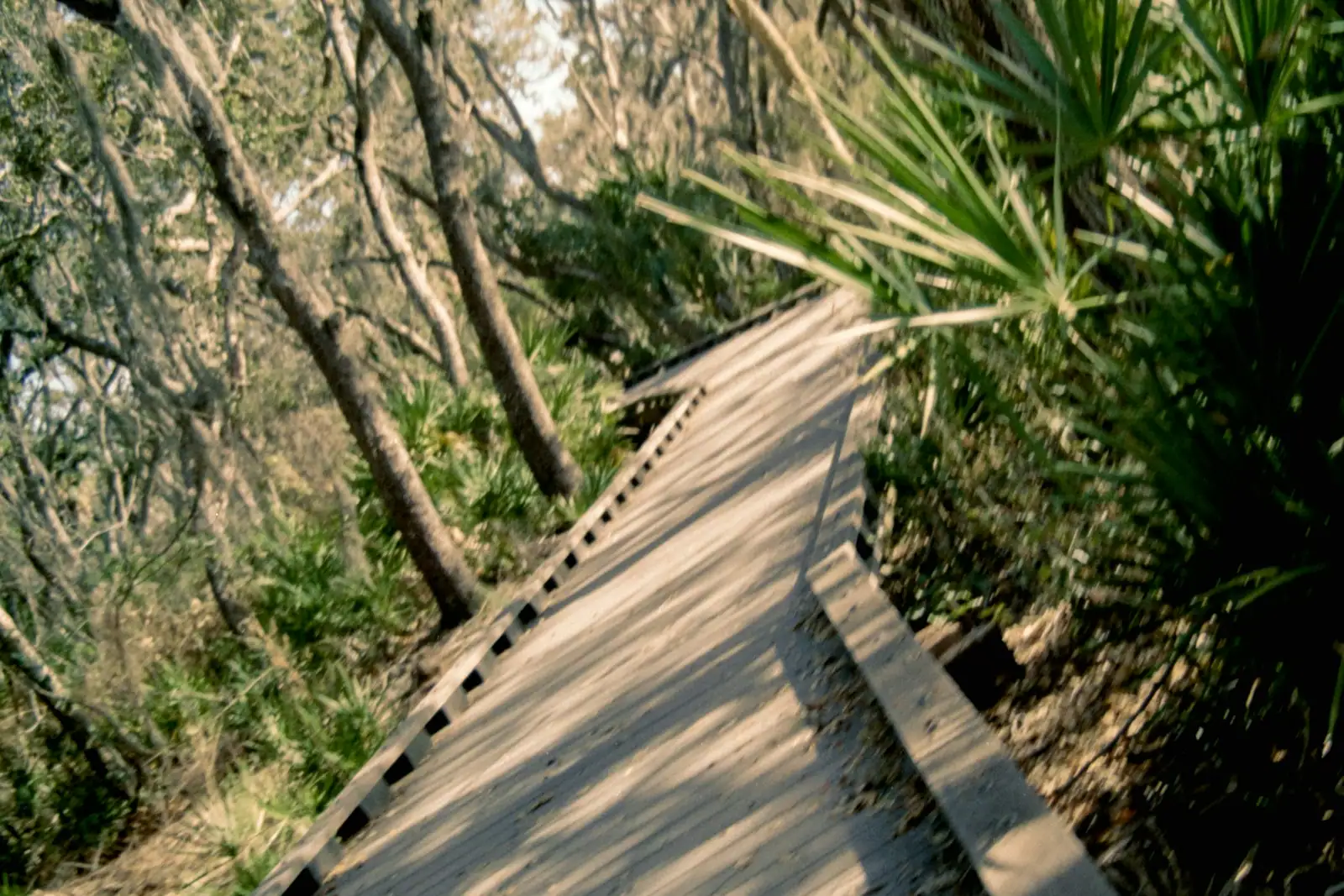
  • A raised timber boardwalk curving through dense green woodland and palmetto
    Park

    Gulf State Park

    Six thousand acres of dune, lake and pine between two beach towns, with 28 miles of paved trail and a village-sized campground.

    2–8 hoursTrails and the Nature Center are free. Parking at the Gulf beach and pier lots is a flat daily rate per vehicle, recently around $15.

  • Rows of boats moored in a marina basin on flat water in early morning light
    Free
    Neighbourhood

    Orange Beach

    Alabama's other beach city: nine thousand people, a maze of back bays and the only cut from those bays to open Gulf water.

    3–10 hoursFree to visit. Beach parking is charged at both city and state park accesses.

  • Aerial view of dozens of small boats anchored together over a pale shallow sandbar
    Free
    Nature preserve

    Robinson Island

    A twelve-acre island the city bought to stop anyone building on it, reachable only by boat and now closed in the middle for nesting birds.

    2–6 hoursFree to land on. Getting there is the cost: a boat rental, a charter seat or your own trailer.

  • Aerial view of a narrow tidal pass cut between two low sandy shorelines
    Free
    Water feature

    Perdido Pass

    The only gap in thirty-two miles of Alabama barrier coast, armoured with granite, and the wrong place to let anyone swim.

    1–3 hoursFree to visit. Parking at the adjoining Gulf State Park beach accesses is charged per vehicle per day.

  • A sandy shoreline fringed with pines beside flat, still freshwater
    Free
    Water feature

    Lake Shelby

    A coastal dune lake one dune ridge behind the Gulf, holding largemouth bass and redfish in the same water, with a free ramp.

    1–5 hoursFree to visit, fish from the bank and launch a boat. Pavilion reservations and equipment hire cost extra.

  • Two paddleboarders crossing a wide sheet of flat, pale, mirror-calm water under a soft sky
    Free
    Water feature

    Little Lagoon

    Ten miles of shallow, warm, brackish water behind West Beach, with one public ramp and a pass that eats propellers.

    1.5–5 hoursThe water is free to use. The city charges for parking at Little Lagoon Pass Park, recently around five dollars for up to four hours and ten for a full day.

Straight answers

Questions people actually ask

Where can you kayak in Gulf Shores?

Almost entirely behind the beach rather than on the Gulf. The main options are the three connected freshwater lakes inside Gulf State Park, Little Lagoon running ten miles west behind West Beach, Wolf Bay and Terry Cove at the Orange Beach end, and the marsh water behind the Fort Morgan peninsula. The cities map these as the Back Bay Blueway — four trails with twenty-one public launch sites between them, many of them free to use.

Can you rent kayaks and paddleboards in Gulf State Park?

Yes. A seasonal hire counter at the Lake Shelby day-use area rents single and tandem kayaks, canoes and paddleboards by the hour or the day, and rentals can be taken across all three connected lakes. Boats are generally due back in the mid-afternoon rather than at closing time, so confirm the return time when you pay. Park day-use parking is charged separately, per vehicle.

Are there alligators where you kayak in Gulf Shores?

Yes, in the freshwater and lightly brackish water — Lake Shelby and the other park lakes, Little Lagoon, Gator Lake in the refuge, and the bayous. This is normal here and paddlers share that water every day without incident. Keep well off the shoreline vegetation instead of hugging it for shade, never bring a dog into the water, do not get out on a muddy bank in spring, and never feed one.

Is paddleboarding on Little Lagoon a good idea?

In the morning, yes; in the afternoon, often not. Little Lagoon is about ten miles of open water with low banks and no islands, so wind builds a short steep chop quickly and a board becomes a sail. Check wind speed and direction rather than just the rain forecast, paddle out into any breeze so it is behind you coming home, and stay well away from Little Lagoon Pass, where the tidal flow runs hard toward the Gulf.

Can you kayak to Robinson Island?

Yes. Robinson Island lies just north of Perdido Pass, is undeveloped, has no bridge and is reachable by kayak or paddleboard from launches at the Orange Beach end. On a weekday morning outside high season you may have it largely to yourself. On a summer weekend it is ringed with anchored boats and is a loud, sociable sandbar rather than a quiet one. Stay clear of the pass itself, where the current runs hard.

Are there guided kayak tours in Gulf Shores?

Very few, and almost nothing you can reserve months ahead on a booking platform. Gulf Shores and Orange Beach together support only a small number of bookable tour products, and paddling is not among them in any consistent way. What exists instead is on-site hire at the state park, local shops that deliver boards and kayaks to rental properties, and twenty-one public launches. Most paddling here is self-guided, which is also why it is cheap.

Do you need a licence or registration to kayak in Alabama?

Non-motorised kayaks, canoes and paddleboards do not generally need registration in Alabama, and no boating education card is required to paddle one. What is required is safety equipment: a correctly sized wearable flotation device aboard for every person, with young children required to wear theirs, plus a sound signal such as a whistle and a light if you are out after dark. Fit a motor and the rules change entirely.

Can you paddleboard in the Gulf at Gulf Shores?

Only in a genuine flat calm, and it is rarely the best use of a morning. The Gulf here has a shore break, offshore sandbars and a longshore current, and the hard part is not getting out through the surf but getting back in through it with a loaded board and nobody watching. If the beach is flying a yellow flag or higher, do not launch. The back bays are flatter, more interesting and safer on almost every day of the year.