Skip to content
Search
Menu

These bookings go through Viator, and we are paid for them. Your price is the same, and the payment had nothing to do with the picks.

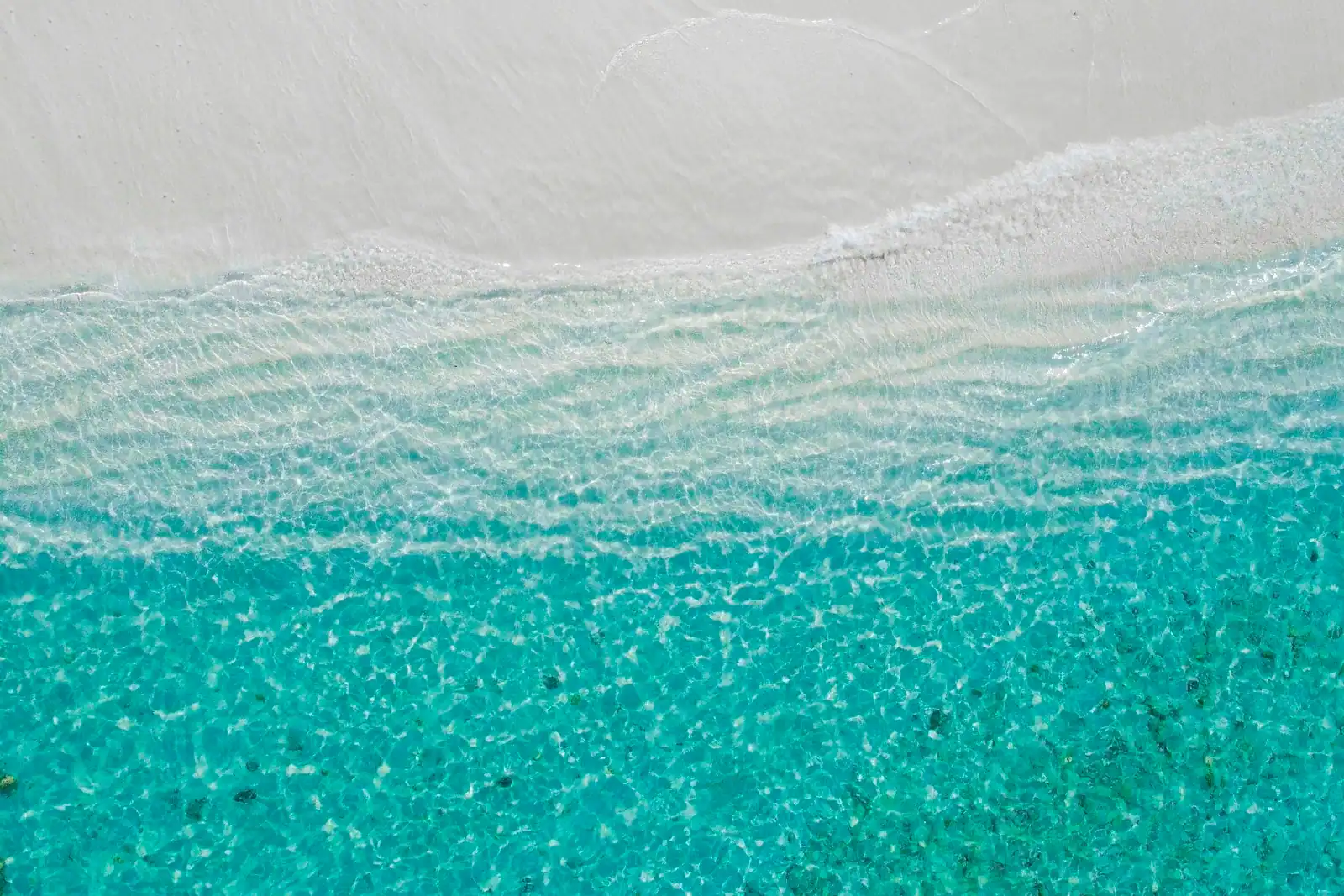
Aerial view of very pale sand meeting clear shallow water shading from green to blue
Unsplash

Things to Do

Gulf Shores Beaches: One Strand, Three Sets of Rules

Last updated

Alabama's 32 miles of quartz sand, access by access: where to park in Gulf Shores and Orange Beach, what the beach flags mean and when turtles nest.

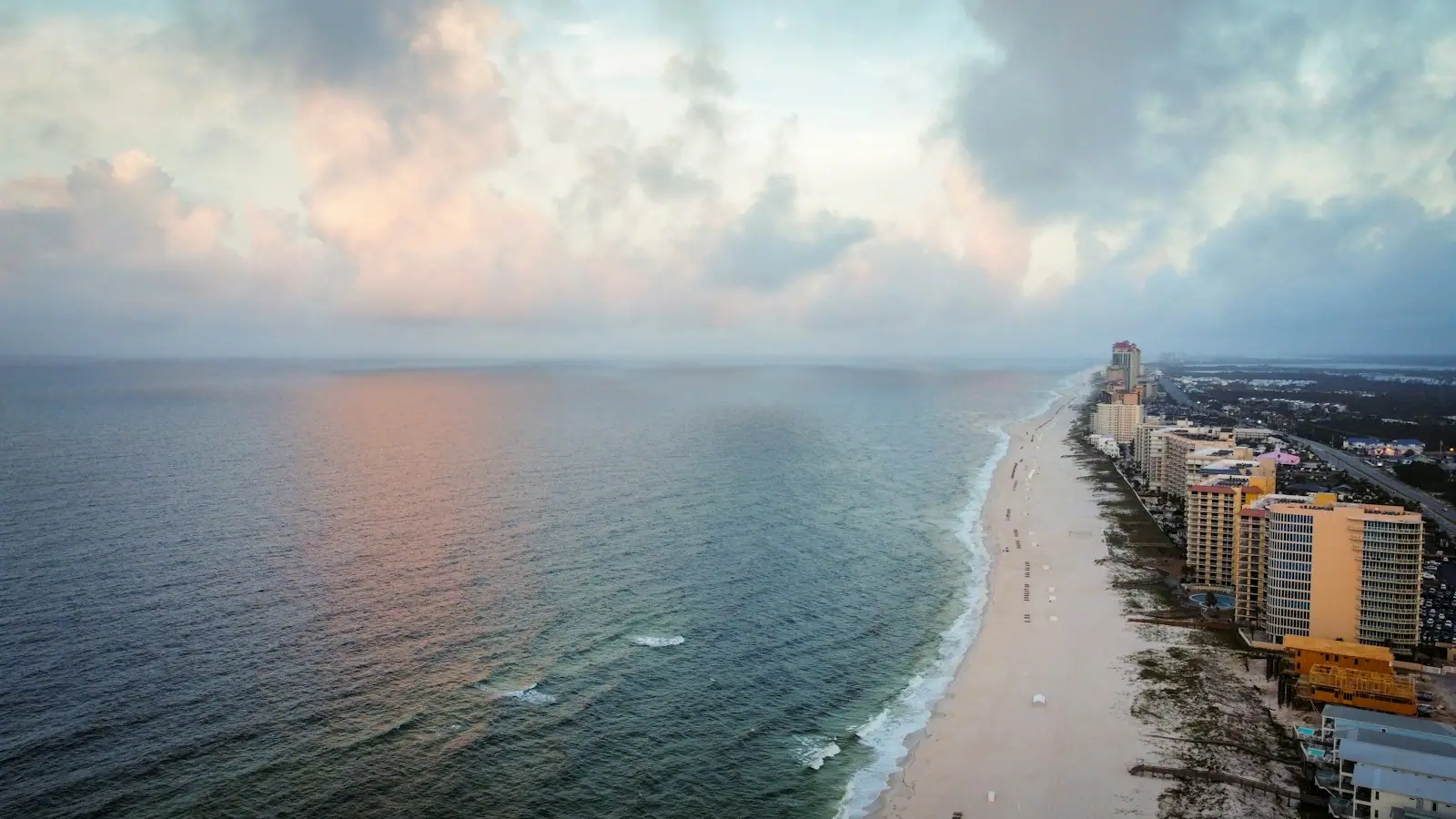
Alabama has less Gulf front than any other state on it — about thirty-two miles of it, beginning at the Florida state line by Perdido Pass and ending twenty-odd miles west at the fort on the tip of the Fort Morgan peninsula, where Mobile Bay opens. There is no archipelago here, no chain of keys, no inlets breaking it up apart from Perdido Pass in the east and the small cut at Little Lagoon Pass. It is one strand. Stand on it anywhere and the sand behind you and the sand ahead of you are the same sand.

What is not the same is who governs it. Somewhere near 13th Street the City of Gulf Shores hands over to Gulf State Park, and somewhere around the Orange Beach line the park hands over again. You cannot see any of those boundaries. You can absolutely feel them, because the parking rate, the payment system, the flag that flies and the officer who enforces it all change when you cross one. A family that drives ten minutes east for a change of scene can find a completely different set of rules under an identical stretch of sand. That is what this page is really about.

The sand itself deserves the reputation. It is overwhelmingly quartz, ground out of the Appalachian Mountains and carried down by rivers and by meltwater at the end of the last ice age, and it is graded so fine and so pale that it squeaks underfoot. The practical consequence matters more than the postcard one: white quartz reflects sunlight rather than absorbing it, so on an August afternoon when the asphalt in the car park is unwalkable barefoot, the sand fifty yards away is merely warm. Anyone who has crossed a dark-sand beach in Florida in July will notice within three steps.

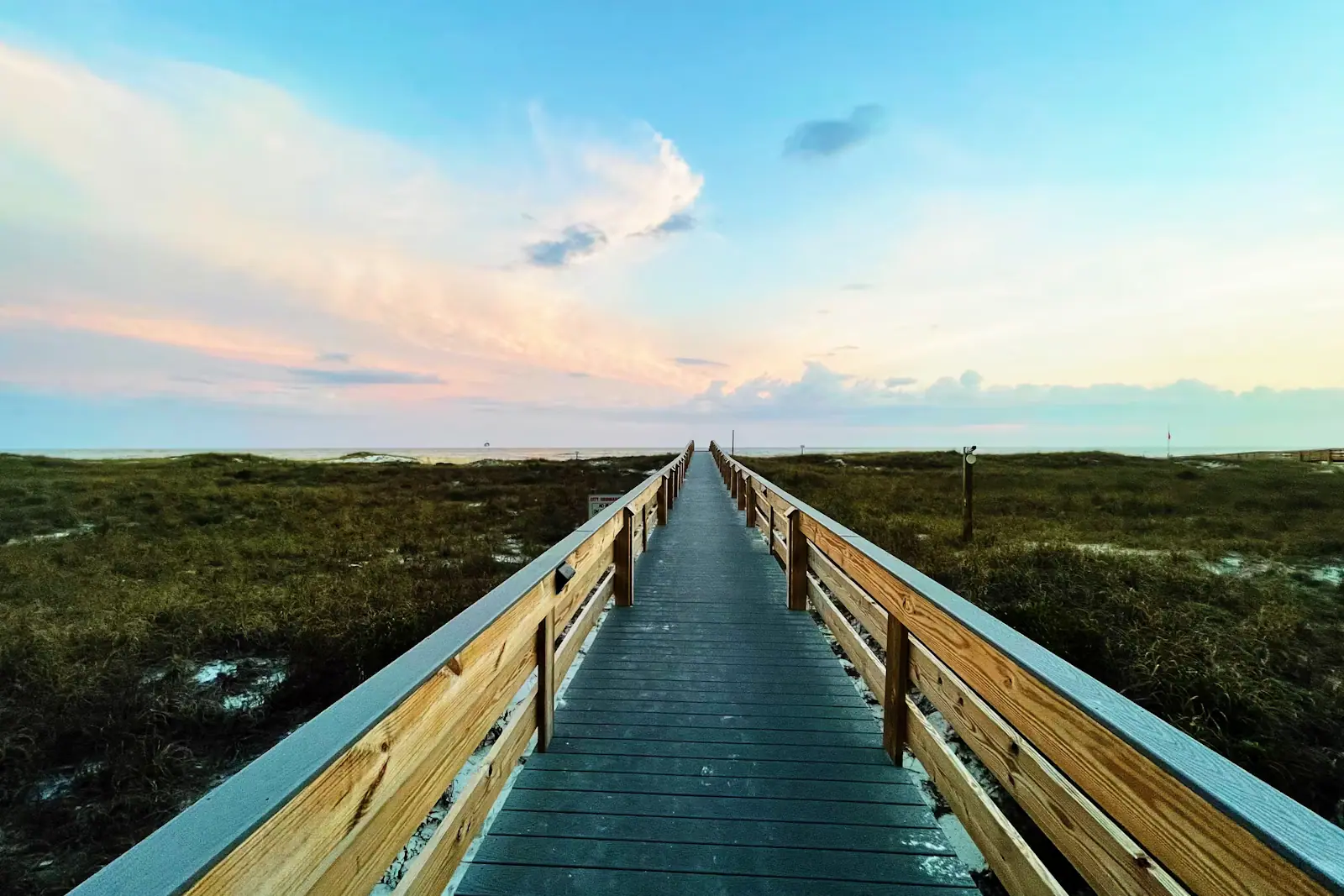
Here is the part that shapes how this destination actually works. Most visitors to Gulf Shores never use a public beach access at all. The rhythm here is a week in a rented condominium, in a tower with its own boardwalk over the dune, and you walk down in the morning with a cart. That is the default holiday, it works well, and it means the public accesses are used by day trippers, by people renting inland, and by everyone on the one afternoon they go somewhere else. Which is precisely when the parking question ambushes them.

The two rules that bite hardest are worth learning before you arrive. Double red flags mean the water is closed and entering the Gulf inside Gulf Shores or Orange Beach city limits is an offence, not a caution. And between the start of May and the end of October, this is a sea turtle nesting beach, which brings its own rules about lights, holes and what you leave behind you at night. Neither is onerous. Both are enforced.

Why the sand is this white, and why it does not burn

Clear shallow green water meeting a wide stretch of very pale sand under an open skyUnsplash
Clear shallow green water meeting a wide stretch of very pale sand under an open sky

The local account, and it is a good one, is that the beach is somewhere close to pure quartz that used to be the Appalachian Mountains. Rock weathered out of the southern Appalachians over an enormous span of time, rivers carried the grains down toward the coast, and at the end of the last glaciation a great deal of meltwater pushed the accumulated load out into the Gulf. Wave action then sorted it, kept the hard, light quartz and took the softer minerals away. What is left is a beach with very little iron, shell or organic material in it.

Two consequences you will notice on day one.

It is loud. Fine, dry, well-sorted quartz grains squeak and chirp underfoot when you walk on them above the tide line. Children find this more interesting than adults expect.

It is cool. A white surface reflects most of the solar spectrum instead of absorbing it into heat, so this sand stays walkable barefoot at times of day when the car park behind it is not. This is the single most underrated advantage of an Alabama beach holiday with small children, and the difference against a darker beach is immediate rather than marginal.

The third consequence is less pleasant and worth knowing. All that reflected light goes somewhere, and a good deal of it goes into your face from below. Sunburn under the chin and on the underside of the arms is a Gulf Shores speciality. Sunglasses and a hat with a brim are not vanity here.

Parking, and what changed in 2026

What it costs

This is the single most common way a beach day here goes wrong, and 2026 moved the goalposts in both directions.

Gulf Shores replaced its flat-rate beachfront parking with hourly charging from 1 July 2026. Reported non-resident rates are around $2 an hour north of Beach Boulevard and around $3 an hour south of it, covering Gulf Place, West Gulf Place and the designated street-end lots on West 5th, 6th, 10th and 13th. Payment is by the ParkMobile app, on-site pay stations or the posted QR codes. Overnight parking in the beachfront lots is prohibited. For a two-hour swim this is cheaper than the old flat rate; for a full day it is not.

Gulf State Park went the other way on 1 January 2026, raising day-use parking to about $15 for a car and about $35 for a vehicle with a trailer, a bus or a large RV. Annual passes are sold and pay for themselves quickly on a long stay.

Orange Beach runs pay stations and QR codes at its public accesses including Romar Beach, Cotton Bayou, Alabama Point and Shell Beach. Rates and enforcement are the city's, not Gulf Shores'.

Three practical points. A payment in one city does not carry into the next. Have a phone with signal and a card, because the coin era has ended here. And if you are renting a condominium with its own beach access, you will likely never pay any of this — which is exactly why it catches people out on the one day they go elsewhere.

Rates change by ordinance and this page will lag them. Read the sign at the lot.

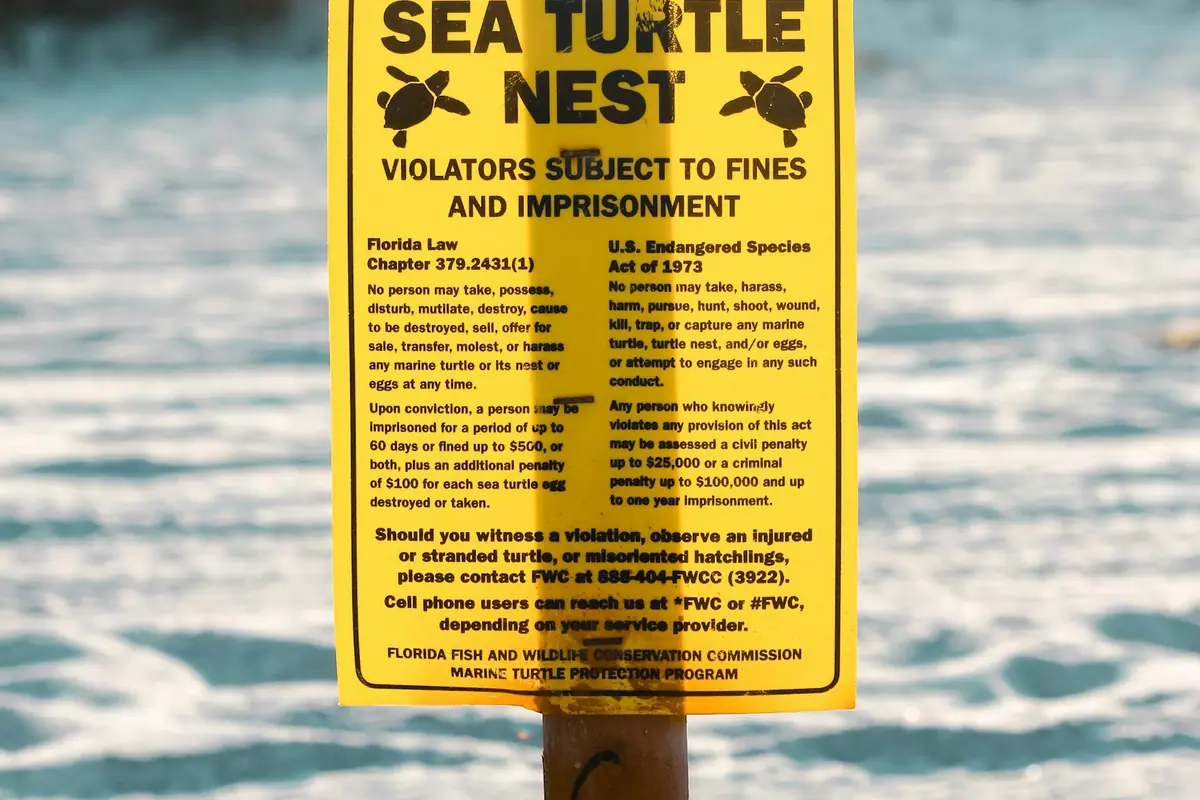
Turtle season, and the rules that come with it

A yellow sign staked into white sand warning that sea turtle nests must not be disturbedUnsplash
A yellow sign staked into white sand warning that sea turtle nests must not be disturbed

From 1 May to 31 October, every mile of this beach is potential nesting habitat. Loggerheads do most of the nesting in Alabama, with Kemp's ridley and green turtles recorded as well, and the volunteers who patrol it belong to Share the Beach, the state's sea turtle programme, which has been walking these miles since 2005. They start before dawn, find the previous night's crawls, mark and protect the nests and sit with them when they are due to hatch.

Four things are asked of you, and they are the same four everywhere on the Alabama coast.

Take your things off the beach at night. The Leave Only Footprints ordinance has been in force in both cities since 2016 and asks that chairs, tents, toys and rubbish come off the sand within about an hour of sunset. A hatchling that meets an abandoned beach tent will not reach the water.

Fill in your holes and flatten your castles. A hole dug for an afternoon is a trap for a two-inch turtle at midnight, and it is a genuine hazard for the volunteers walking in the dark too.

Kill the lights. Hatchlings orient toward the brightest horizon, which for the whole of human history was the sea. A lit balcony reverses that and sends them inland to die. Shield beachfront lights, close the curtains on the Gulf side after dark, and use a red-filtered torch on the sand rather than a phone.

Leave the nests alone. Marked nests are staked and taped. If you find an unmarked crawl or a struggling turtle, report it rather than handling it.

None of this costs you anything, and the most memorable half hour many visitors have here is spent standing behind a taped-off nest at dusk in August while a volunteer explains what is about to happen.

The beach month by month

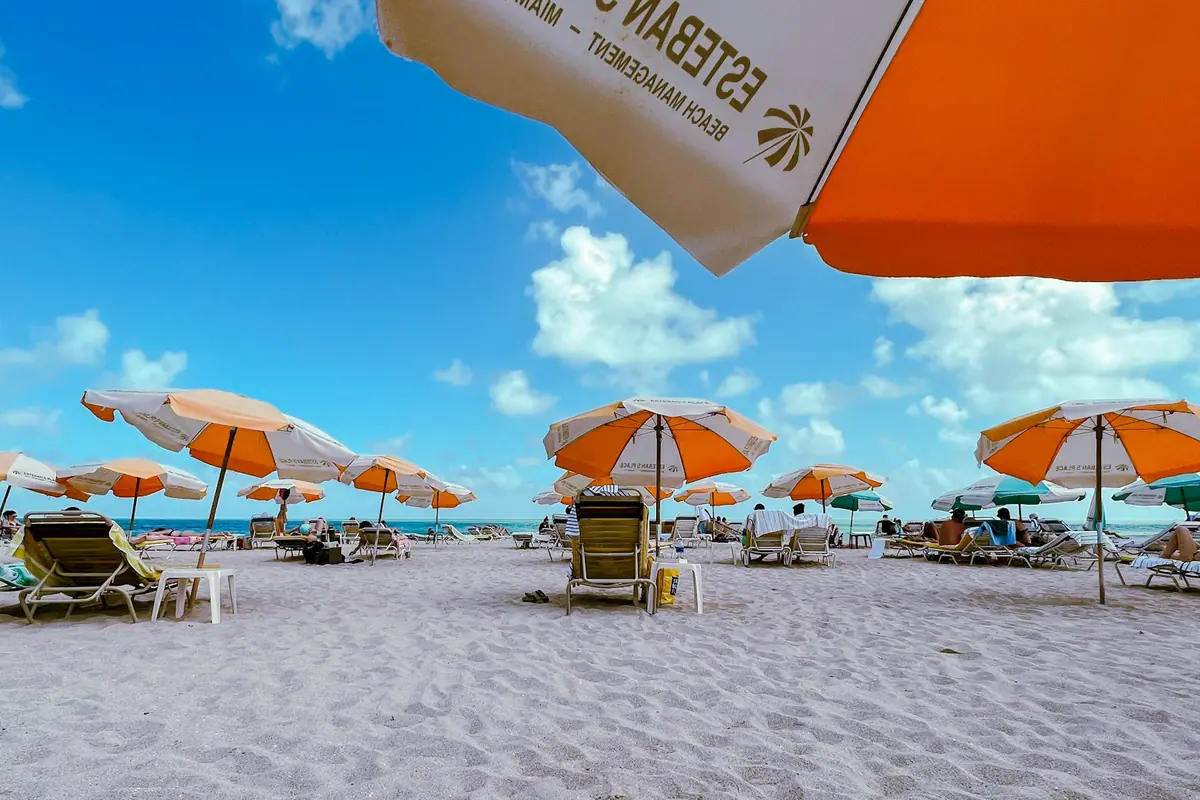
Rows of beach chairs and umbrellas set out on pale sandUnsplash
Rows of beach chairs and umbrellas set out on pale sand

When to go

March. Spring break, and it transforms the town rather than merely filling it. Water still cold enough that most people do not get in past their knees. Rates climb, traffic on Highway 59 is dreadful, and the far west end of Fort Morgan remains the escape.

April and May. Arguably the best six weeks of the year. Water warming through the seventies, air in the low eighties, the crowd not yet at full volume, and the Flora-Bama's Mullet Toss in late April as a set-piece. Turtle season opens 1 May.

June to August. The family season, at maximum. Water like a bath, days in the low nineties with humidity to match, thunderstorms building inland most afternoons, and every condominium full. Beautiful, expensive and busy. Start early, take the middle of the day off.

September. The quiet secret and the honest risk in one month. Water still warm, crowds gone once schools return, rates softening. It is also the statistical peak of hurricane season on this coast, and both Ivan and Sally arrived on 16 September. Buy the travel insurance.

October. The best month here and it is not particularly close. Water still swimmable well into the month, air in the low eighties, humidity finally broken, turtle season closing out, and the beach effectively empty. If your dates are flexible, take October.

November to February. Cold water, mild air, snowbirds in the condominiums and the campground, restaurants on winter hours. Not a swimming holiday. A very good walking, shelling, birding and cycling one, at a fraction of the price.
What this coast does not give you

A page that only sells is not much use, so here is the other side.

There is no reef and very little to snorkel. The bottom off the beach is sand, then sandbar, then more sand. The water is often beautifully clear and there is nothing under it but the occasional ray and a great deal of nothing. Anyone expecting Florida Keys snorkelling from the shore will be disappointed within twenty minutes.

There is no natural shade. Not one tree grows on this beach and there is no cliff, headland or dune high enough to sit under. Whatever shade you want, you carry or you rent.

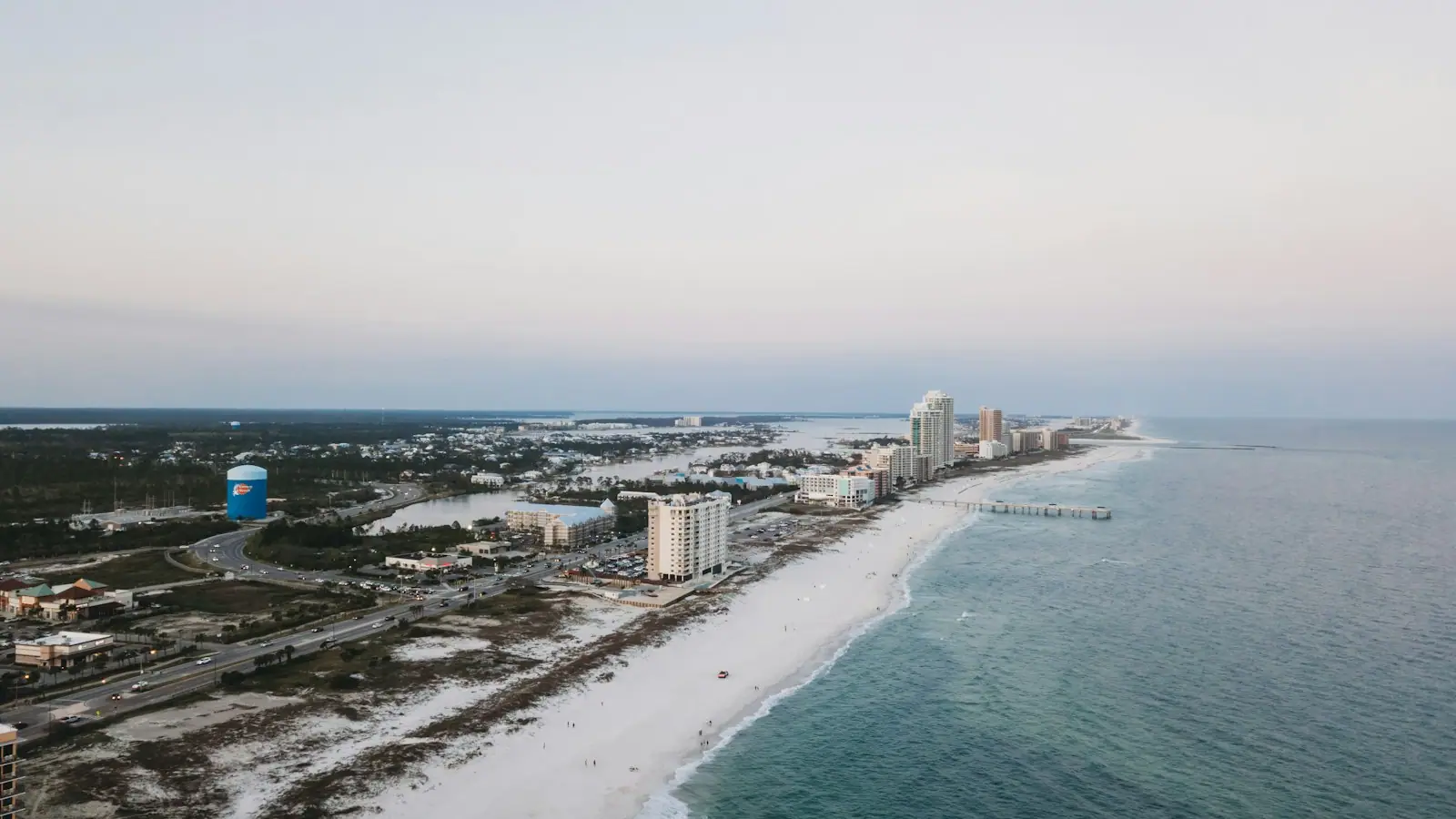
The architecture is condominium towers. This is a genuinely developed strand, and on the Gulf Shores and Orange Beach stretches the view inland is unbroken high-rise. The park's two miles and the far end of Fort Morgan are the exceptions, and they are why those two places appear so often on this site.

Seaweed happens. Some summers the sargassum lines are heavy, some they are absent. Nobody can tell you in advance which kind of week you have booked.

And the water is not cold enough to be refreshing in August. By late summer the Gulf here runs into the mid-eighties. It is lovely in June and something close to a warm bath by the third week of August, which is not everybody's idea of a swim.

If any of that is a deal-breaker, this is the wrong coast, and the honest thing is to say so on the page rather than after you have booked.

One beach, three sets of rules

How they compare

Running from west to east, the strand passes through four regimes, and knowing which one you are standing in is most of the practical knowledge on this page.

The Fort Morgan peninsula. Roughly twenty miles of two-lane road ending at the fort, with widely spaced access points, low-rise rentals and long stretches with nobody on them. Fewest services, fewest people, longest drive. No lifeguards at most accesses.

The City of Gulf Shores. The dense middle, centred on the Gulf Place public beach at the foot of Highway 59 where the shops and the restaurants are. Municipal parking, city ordinances, and the busiest sand in Alabama on a July Saturday.

Gulf State Park. About two miles of publicly held beach with a pavilion and the pier, no towers behind it, its own gate and its own separate parking fee. The one place on this coast where the view inland is dune rather than architecture.

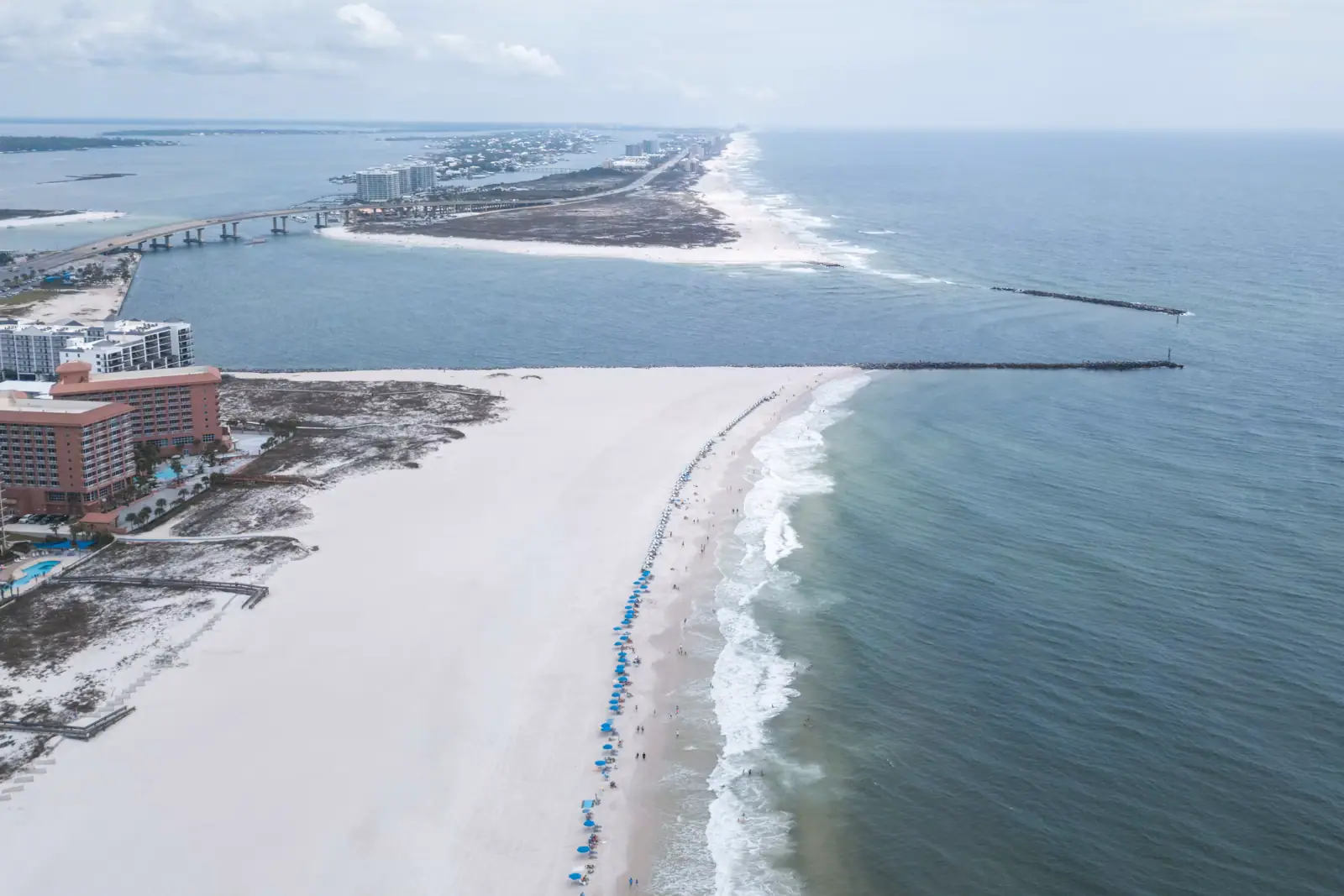
Orange Beach. East of the park: Romar Beach, Cotton Bayou, Alabama Point and the Perdido Pass jetties. Separate city, separate ordinances, separate kiosks and QR codes for parking.

The flag warning system is consistent across all four, which is the one thing that does travel with you. The parking arrangement is not, and neither is the person you will be arguing with about it.

The accesses, west to east

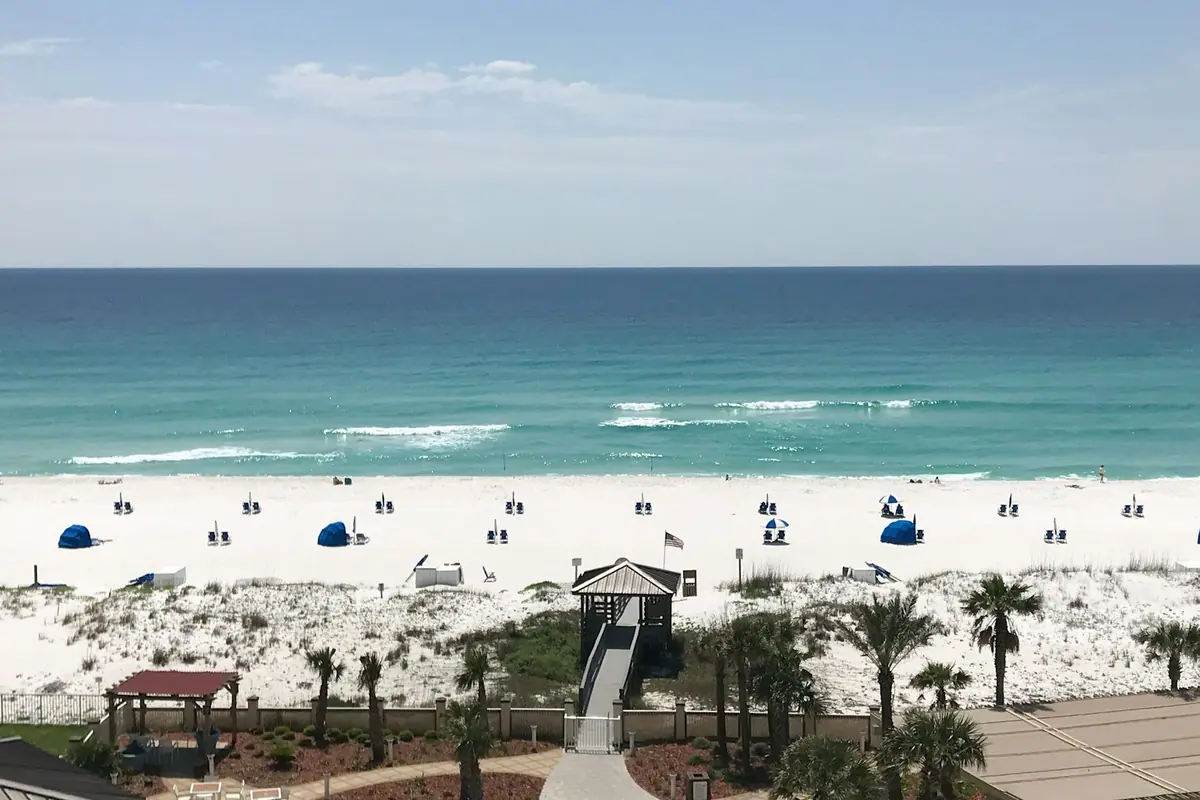
A timber dune walkover leading down to very pale sand with umbrellas and green Gulf water beyondUnsplash
A timber dune walkover leading down to very pale sand with umbrellas and green Gulf water beyond

How they compare

AccessWhereSuitsWatch for
Fort Morgan peninsula accessesAlong Highway 180, up to 20 miles west of townQuiet, space, shelling after a blowLong drive, few facilities, generally no lifeguard
Little Lagoon PassWest Beach at the lagoon cutFishing the pass, watching boats come throughStrong current in the cut — this is not a swimming spot
West Beach accessesHighway 182 west of Highway 59Staying on the west end without the crowdStreet-end parking is limited and fills early
Gulf PlaceFoot of Highway 59 in Gulf ShoresShops, food, restrooms, the main eventThe busiest sand in Alabama in July
Gulf State Park pavilionInside the park, off Highway 182No towers behind you, the pier next doorSeparate park parking fee; car park fills by mid-morning
Romar BeachOrange Beach, Highway 182A calmer alternative to Gulf PlaceRoadside access, limited shade
Cotton BayouOrange Beach, near Highway 161Families, decent facilitiesPopular; arrive before ten in season
Alabama PointEast end, by Perdido PassThe jetties, deep water, watching the boat trafficThe pass runs hard; swim well away from the rocks

The general rule is that everything within walking distance of Highway 59 is busy and everything more than fifteen minutes' drive from it is not. On a peak-season Saturday the difference between arriving at half past nine and half past eleven is the difference between parking and giving up.

The flags, and the law behind the double red

Low waves running up a wide, flat stretch of pale sand in late evening lightUnsplash
Low waves running up a wide, flat stretch of pale sand in late evening light

Before you book

The flag system is uniform along the whole Alabama coast and it is genuinely worth memorising, because unlike in many places it has legal force here.

  • Green — calm conditions. Still the Gulf; still capable of surprising you.
  • Yellow — moderate surf or current. Most drownings on this coast happen on yellow-flag days, not red ones, because yellow feels like permission.
  • Single red — high hazard, strong surf or current.
  • Double red — the water is closed. Inside the city limits of Gulf Shores and Orange Beach it is an offence to enter the Gulf when two red flags are flying, and it carries a fine and the possibility of arrest. Lifeguards will usually talk to you before anyone writes anything, but the ordinance is real and it is used.
  • Purple — dangerous marine life. Flown for jellyfish or man o' war, and it can fly alongside any of the colours above.

Flags are posted at guarded accesses and at lifeguard towers, and the cities publish the day's status. The sensible habit is to check before you load the car rather than after you have paid for parking.

Rip currents are the real hazard, and this coast produces them along the sandbar system running parallel to the beach. A rip is a narrow outbound channel, not an undertow, and it does not pull you down. It takes you away from shore, fast, and people drown fighting it. Caught in one, the escape is sideways: move across the flow, along the line of the beach, until the pull lets go, then angle back in with the breaking waves. If you are tired, float and signal instead.

Lifeguard cover is seasonal and does not extend to every access. Assume you are unguarded unless you can see a tower with someone in it.

On the ground

Where to go

Every place below has its own page — hours, parking, what it costs and what to expect when you get there.

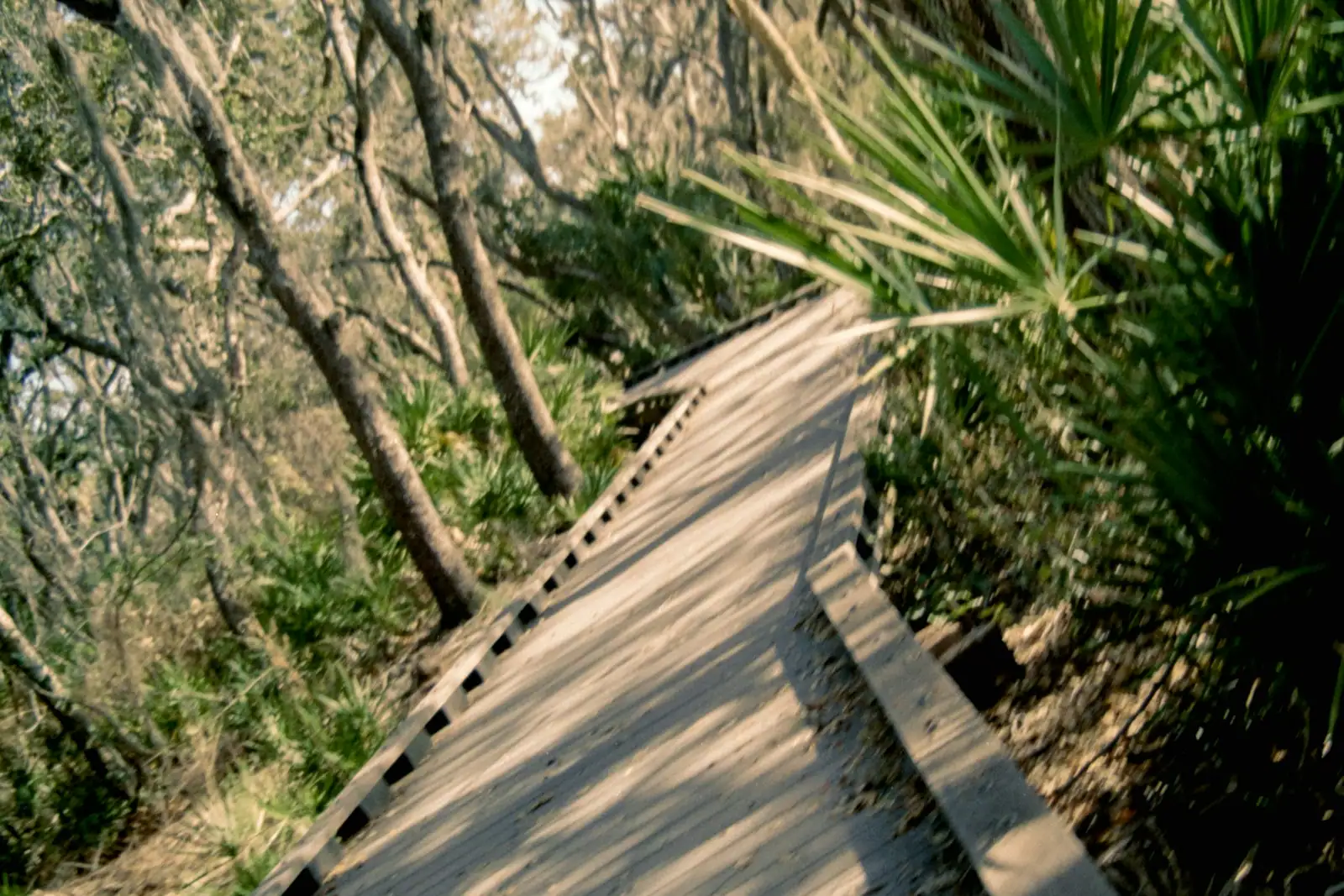
  • A raised timber boardwalk curving through dense green woodland and palmetto
    Park

    Gulf State Park

    Six thousand acres of dune, lake and pine between two beach towns, with 28 miles of paved trail and a village-sized campground.

    2–8 hoursTrails and the Nature Center are free. Parking at the Gulf beach and pier lots is a flat daily rate per vehicle, recently around $15.

  • Aerial view of a narrow tidal pass cut between two low sandy shorelines
    Free
    Beach

    Alabama Point

    Six thousand feet of beach beside the only rock on the Alabama coast, and the fastest water in the state running past the end of it.

    2–7 hoursFree to use. Parking at the state-run east access is charged at the Gulf State Park beach rate, fifteen dollars a day for a car in 2026.

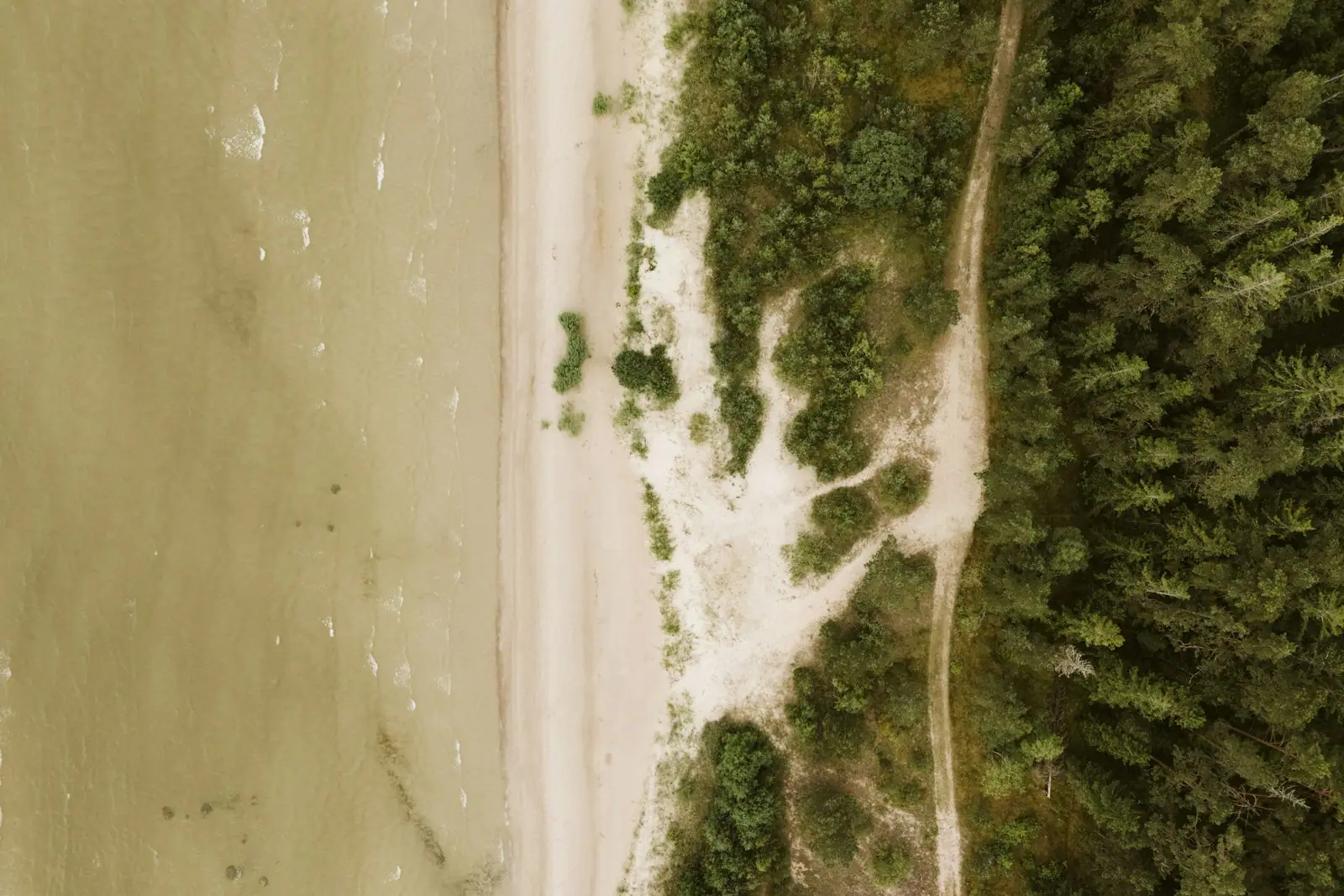
  • An aerial view of an empty pale sand shoreline meeting an unbroken block of dense pine forest
    Free
    Nature preserve

    Bon Secour National Wildlife Refuge

    Alabama's last large stretch of wild coastal dune, walkable on foot only, and protected largely for a nocturnal mouse.

    1–4 hoursFree. There is no entry fee and no parking charge at the refuge trailheads.

  • Aerial view of bright white sand meeting shallow water that shades from pale green to deep blue
    Free
    Beach

    Gulf Shores Public Beach

    Where Highway 59 runs out of land: pavilions, showers, volleyball nets, The Hangout next door and hourly parking since July 2026.

    2–7 hoursThe beach is free. Parking is not: non-residents pay by the hour through a phone app during the paid season.

  • Aerial view of dozens of small boats anchored together over a pale shallow sandbar
    Free
    Nature preserve

    Robinson Island

    A twelve-acre island the city bought to stop anyone building on it, reachable only by boat and now closed in the middle for nesting birds.

    2–6 hoursFree to land on. Getting there is the cost: a boat rental, a charter seat or your own trailer.

  • Sea oats on a low dune with a strip of white sand and bright turquoise water behind
    Free
    Beach

    Cotton Bayou Beach

    The Orange Beach access at the foot of Highway 161, with dune boardwalks, a state-park pay kiosk and no view of the bayou it is named for.

    2–6 hoursFree to walk on. Parking is charged by Gulf State Park: fifteen dollars a day for a car in 2026, with an annual pass sold separately.

  • A wide empty stretch of pale sand running away beside shallow clear water with almost nobody on it
    Free
    Beach

    West Beach

    A ribbon of sand with the Gulf on one side and a ten-mile brackish lagoon on the other, reached by numbered street ends.

    1.5–5 hoursThe beach is free. Designated parking spaces at the street ends and at Lagoon Pass Park are charged by the hour in season.

  • Gentle surf running onto pale sand with turquoise water beyond
    Beach

    Romar Beach

    A state park beach access with an Orange Beach address, which means state parking rules, not city ones, and a 1920s name nobody explains.

    1.5–5 hoursFree to walk on. Parking is the Gulf State Park flat daily vehicle rate, recently around $15.

Straight answers

Questions people actually ask

Why is the sand so white in Gulf Shores?

Because it is almost entirely quartz that started life in the Appalachian Mountains. Rivers and, at the end of the last ice age, a great deal of meltwater carried the weathered grains south to the Gulf, where wave action sorted out the softer minerals and left the hard, pale, fine quartz behind. With very little iron or shell in it the sand reflects sunlight instead of absorbing it, which is why it stays walkable barefoot on an afternoon when the car park is not.

How much does beach parking cost in Gulf Shores?

Gulf Shores switched from a flat rate to hourly charging on 1 July 2026. Reported non-resident rates are about $2 an hour north of Beach Boulevard and about $3 an hour south of it, paid through the ParkMobile app, pay stations or posted QR codes, with overnight parking prohibited in the beachfront lots. Gulf State Park charges separately, at around $15 a day for a car. Orange Beach runs its own kiosks. Check the sign at the lot.

What do the beach flags mean in Gulf Shores and Orange Beach?

Green is calm, yellow is moderate surf or current, single red is high hazard, double red means the Gulf is closed, and purple warns of dangerous marine life such as jellyfish. Purple can fly alongside any other colour. The critical one is double red: inside the city limits of Gulf Shores and Orange Beach it is an offence to enter the water when two red flags are up, and it carries a fine and the possibility of arrest.

Which is the best beach in Gulf Shores?

For services and atmosphere, Gulf Place at the foot of Highway 59, where the restaurants and shops are. For a beach without towers behind it, the Gulf State Park pavilion stretch, which also puts you next to the pier. For quiet, drive west onto the Fort Morgan peninsula, where the accesses thin out and so do the people. For a family day with easier parking than the centre, Cotton Bayou in Orange Beach.

When do sea turtles nest in Gulf Shores?

From 1 May to 31 October, with loggerheads doing most of the nesting and Kemp's ridley and green turtles also recorded. Volunteers from Share the Beach, which has patrolled the Alabama coast since 2005, walk the beach before dawn to find and protect new nests. During the season you are asked to take everything off the sand within an hour of sunset, fill in any holes you dig, and shield or switch off lights that shine onto the beach.

Are there rip currents at Gulf Shores?

Yes, and they are the main cause of drownings here. Sandbars run parallel to this beach and water piled over them by the surf escapes seaward through narrow gaps, which is what a rip current is. It carries you away from shore rather than under. The escape is lateral: move across the flow along the line of the beach until it releases you, then come in at an angle on the breaking waves. If you are tired, float and signal instead.

Are Gulf Shores beaches free?

The sand is free and publicly accessible; the parking usually is not. Gulf Shores now charges by the hour at its beachfront lots, Gulf State Park charges a day-use fee per vehicle, and Orange Beach operates pay stations at its accesses. Walking or cycling in costs nothing, which is a real option if you are staying within a mile or two. Most visitors in a rented condominium use the building's own access and never pay a parking fee at all.

How warm is the water at Gulf Shores?

Warm for longer than most American beaches. The Gulf here climbs through the seventies in April and May, sits in the eighties through the summer, and can reach the mid-eighties by late August, which some visitors find too warm to be refreshing. September and October are still comfortably swimmable. From December to March it drops into the fifties and sixties and swimming stops being the point of the trip.

Can you take dogs on the beach in Gulf Shores?

Not on the main public Gulf beaches. Both Gulf Shores and Orange Beach restrict dogs on the public beach, and Gulf State Park's beach areas are similarly limited, though the park's trail network is a good option with a leashed dog. Some rentals and some stretches on the Fort Morgan peninsula are treated differently. The rules are set by city ordinance and do change, so check the current position with the city before you travel with a dog.

What is the best month to visit the beach in Gulf Shores?

October, if your dates are flexible. The water is still swimmable well into the month, the air sits in the low eighties, the summer humidity has broken, the crowds have gone home and rates fall. April and May are the runner-up, with warming water and the run-up to full season. June to August are hot, humid and crowded but reliable. September is lovely and is also the statistical peak of hurricane season.