Skip to content
Search
Menu

These bookings go through Viator, and we are paid for them. Your price is the same, and the payment had nothing to do with the picks.

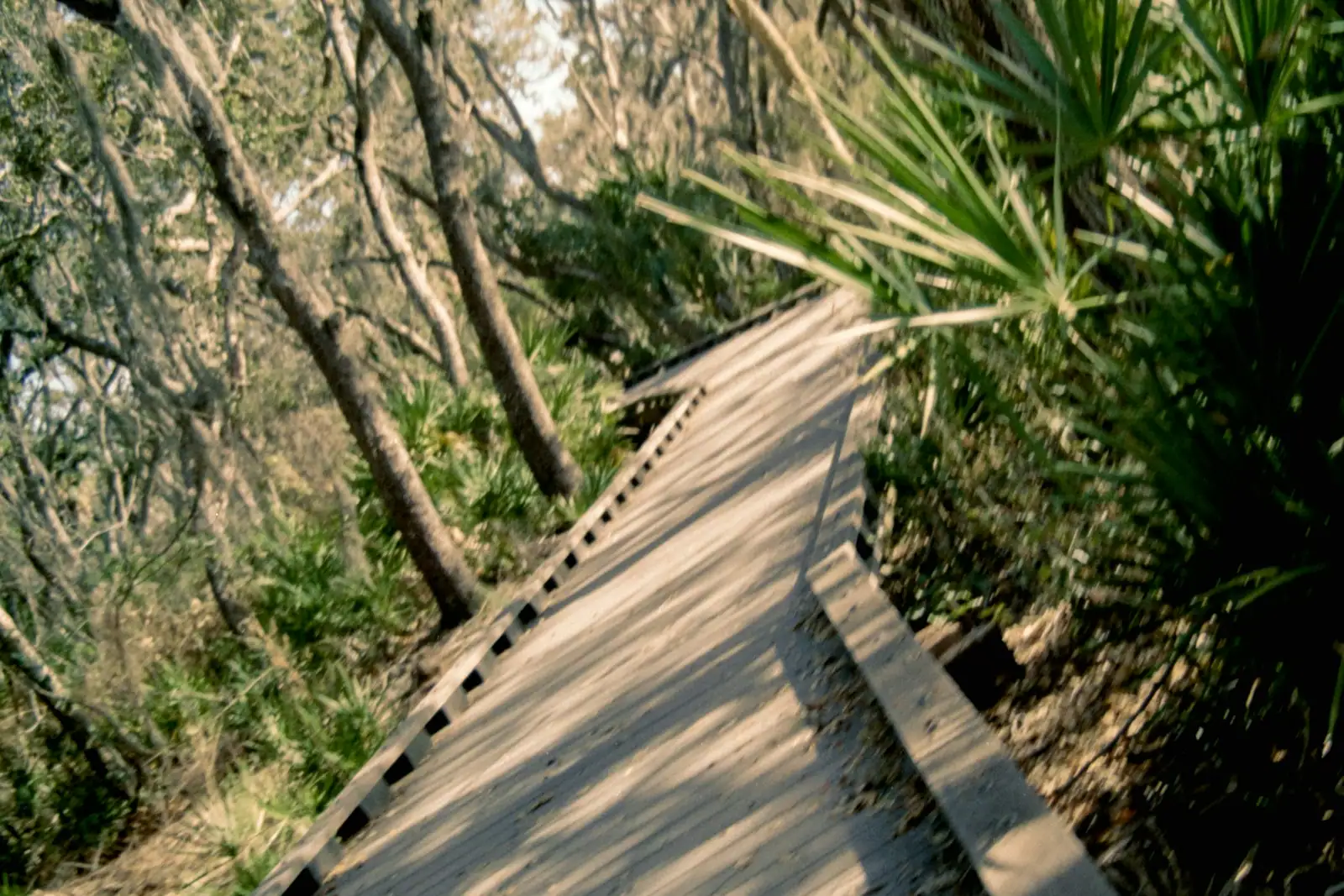
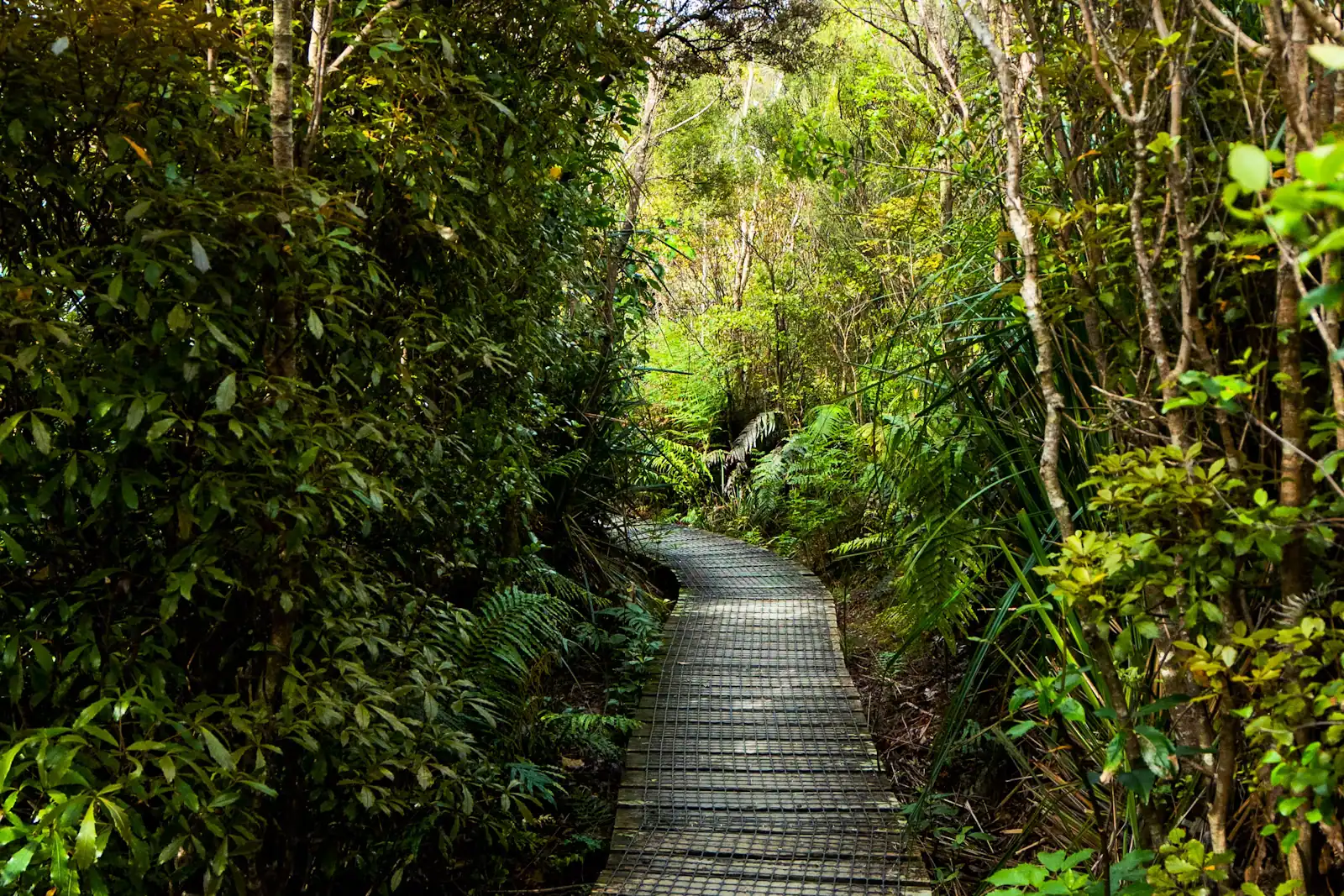
A narrow walkway running through thick forest with light coming through the canopy above
Unsplash

Trail

Hugh S. Branyon Backcountry Trail

Last updated

More than 28 miles of paved trail through swamp, pine ridge and dune, ridden by road bikes, wheelchairs and three-year-olds alike.

A paved trail photographs badly. It looks like a municipal footpath, and visitors scrolling for something to do in Gulf Shores skip past it towards the jet skis. That is a mistake, and the reason is in the surface: because every mile of this network is sealed and largely flat, a road cyclist doing twenty miles before breakfast, a grandmother in a wheelchair, a family towing a trailer full of toddlers and a runner training for a marathon all use the same corridor. There are very few places in the American Southeast where the same path genuinely works for all four.

It carries the name of Hugh S. Branyon, who ran Gulf State Park as its superintendent from 1970 until he retired in 2009 and spent decades arguing that the land behind the beach was worth something. The first section opened in 2003. Today the network runs to more than twenty-eight paved miles and links Gulf Shores to Orange Beach straight through the middle of the park, built jointly by the two cities and the state. Readers of USA Today's 10Best awards voted it the best recreational trail in the country in 2023, in 2024 and again in 2025, which for a trail in a state with one coastal park is not a small thing.

What you ride through is the real attraction. Within a few miles you pass out of coastal scrub into longleaf pine on a sand ridge, drop into freshwater marsh, cross a hardwood swamp on boardwalk, and come out along a lake basin where alligators lie on the bank in plain sight. Counts differ: the trail foundation describes eighteen trails across seven ecosystems, while the cities and the visitor bureau more often quote up to twenty-six trails and nine habitats. The disagreement is about how you count spurs, not about what is there.

Go early. The same flat, shadeless stretches that make it fast in March make it punishing at two in the afternoon in July.

Getting there and parking

The network has many entrances rather than one. For a first visit, aim for the trailhead parking near the Nature Center inside Gulf State Park, reached from Highway 135 north off the beach road, or from Canal Road (Highway 180) on the park's northern side.

Orange Beach maintains its own access points at the eastern end, signed off Canal Road and from the streets behind Perdido Beach Boulevard. Gulf Shores connects from the west, including links that run north from the beach road.

Because it crosses two city limits and a state park, the trail is not shown consistently on every mapping app. The trail foundation publishes a current map and it is worth looking at before you set off, particularly if you intend a long ride.

There is no parking charge at the inland trailheads. If you park at a Gulf beach lot instead, the state park's daily vehicle rate applies, which is a reason to start inland.

Four ways in, and which one suits you

There is no single entrance, which is the main reason visitors never get on it. Pick an access that matches what you actually want.

From the Nature Center area in Gulf State Park. The best first visit. Parking, staff who will tell you what is currently nesting or basking, and short loops that get you into woodland within minutes. Suits a family testing whether anyone enjoys this.

From the campground. If you are staying in the park you can ride out of your site. This is the single strongest argument for camping here over booking a condominium tower on the beach road.

From the Orange Beach side. Access points off the eastern end put you into the wetter, swampier habitats first, and the Orange Beach segments tend to be quieter than the stretches closer to Highway 59.

From the beach road. Connections run north from the coastal highway, which means anyone in a rental between the two towns can reach the network without a car. In summer traffic this is not just virtuous, it is faster.

For distance riders, the useful mental model is a spine with loops hanging off it: you can string together a flat ten to twenty-five miles without repeating much, and without meeting a hill anywhere.

Bike rental is available in both towns and through concessions in the park, and a trailer or tag-along is a normal request rather than an exotic one.
What you actually ride through

The trail's whole claim is habitat change over short distances, and it delivers that more convincingly than the flat photographs suggest.

Nearest the Gulf you are in coastal scrub and secondary dune: low, wind-pruned vegetation, sand underfoot either side of the pavement, full sun. Move north and the ground rises fractionally onto old dune ridges carrying longleaf pine, where the trees are widely spaced and the floor is needles and wiregrass, and the temperature drops noticeably in the shade.

Behind that the land falls into freshwater marsh and then into coastal hardwood swamp, crossed on raised boardwalk. This is where the trail earns the word backcountry. It is dark, wet, loud with frogs at dusk, and entirely unlike anything a visitor expects to find a ten-minute ride from a beach chair.

Around the lake basins the water opens out and the wildlife becomes obvious rather than glimpsed: herons and egrets standing in the shallows, turtles stacked on logs, ospreys overhead, and alligators on the banks doing nothing at all in a way that unsettles people.

Spring and autumn migration are the other reason to be here. This coastline is a first or last landfall for songbirds crossing the Gulf, and in April a stand of trees on a sand ridge can hold more warblers than you will see in a year at home.

Alligators, snakes and the rules that matter

American alligators live throughout the park's lakes, marshes and swamp, and the trail runs past them rather than around them. Most encounters are an animal on a far bank behaving like a log. The rules are short and not negotiable.

  • Keep well back. If an alligator moves towards you, leave; they are not curious about people who have not been feeding them.
  • Never feed one, anywhere, ever. It is illegal in Alabama and it is what turns an indifferent animal into a dangerous one.
  • Keep dogs leashed and away from the water's edge. A dog at a lake bank is the single most common way this goes wrong.
  • Do not let small children run ahead at a water crossing.

Venomous snakes live here too, including cottonmouths near the water. They are not looking for you. Stay on the pavement or the boardwalk and the risk is close to nil.

Two more mundane hazards will affect far more visitors. Mosquitoes and biting flies in the wetter sections are serious from May to September and worst at dawn and dusk, so carry repellent. And there is no water, no shade and no restroom across long stretches of the network, so plan a loop around the facilities rather than assuming you will find some.

Trails are open daylight hours and there is no charge to use any of them.

Near Backcountry Trail

Straight-line distances, so allow more on the road — the island is long and has one main parkway.

  • A raised timber boardwalk curving through dense green woodland and palmetto
    Park

    Gulf State Park

    Six thousand acres of dune, lake and pine between two beach towns, with 28 miles of paved trail and a village-sized campground.

    2–8 hoursTrails and the Nature Center are free. Parking at the Gulf beach and pier lots is a flat daily rate per vehicle, recently around $15.0.8 mi away

  • A sandy shoreline fringed with pines beside flat, still freshwater
    Free
    Water feature

    Lake Shelby

    A coastal dune lake one dune ridge behind the Gulf, holding largemouth bass and redfish in the same water, with a free ramp.

    1–5 hoursFree to visit, fish from the bank and launch a boat. Pavilion reservations and equipment hire cost extra.1.9 mi away

  • Two anglers casting from a concrete pier into open water in the last light of the evening
    Landmark

    Gulf State Park Pier

    1,540 feet of concrete over the Gulf, rebuilt twice after hurricanes, with a three-dollar walking ticket most visitors never notice.

    1–5 hoursTwo tickets: all-day fishing around $10 for an adult, and all-day sightseeing around $3. Children 11 and under are free for both.1.8 mi away

  • Rows of boats moored in a marina basin on flat water in early morning light
    Free
    Neighbourhood

    Orange Beach

    Alabama's other beach city: nine thousand people, a maze of back bays and the only cut from those bays to open Gulf water.

    3–10 hoursFree to visit. Beach parking is charged at both city and state park accesses.3.2 mi away

Backcountry Trail: common questions

How long is the Hugh S. Branyon Backcountry Trail?

More than twenty-eight paved miles in total, spread across a connected network rather than one continuous path. Counts of the individual trails differ: the trail foundation's own site describes eighteen trails across seven ecosystems, while the cities and the visitor bureau often quote up to twenty-six trails and nine habitats. The difference is about how spurs and connectors are counted, not about how much trail exists on the ground.

Can you ride a bike on the Backcountry Trail?

Yes, and most people do. The entire network is paved and close to flat, which makes it one of the easiest long rides in the Southeast for a family, and fast enough that road cyclists use it for training before the day heats up. Bikes, e-bikes, trailers and adaptive cycles can be hired through concessions in Gulf State Park and from shops in both Gulf Shores and Orange Beach.

Are there alligators on the Backcountry Trail?

Yes. American alligators live in the lakes, marshes and swamp the trail passes through, and seeing one from a boardwalk or a bank is common rather than lucky. They are not fenced off. Keep a wide distance, keep dogs leashed and well back from the water's edge, and never feed one, which is illegal in Alabama and the reason problem animals exist at all.

Is the Backcountry Trail wheelchair accessible?

Largely yes, and unusually so for a nature trail. Every mile is sealed and the terrain is close to level, so wheelchairs, adaptive cycles and strollers use the same routes as everyone else, including the raised boardwalk through the hardwood swamp. The limitation is facilities rather than surface: long sections have no restroom, water or shade, so it is worth planning a loop around the trailheads that do.

Where does the Backcountry Trail start?

There is no single start. The network has trailheads in Gulf Shores, in Orange Beach and at several points inside Gulf State Park, and it links the two towns through the middle of the park. For a first visit, the parking near the park's Nature Center off Highway 135 is the easiest introduction, with short loops, staff on hand and woodland within a few minutes of leaving the car.