Skip to content
Search
Menu

These bookings go through Viator, and we are paid for them. Your price is the same, and the payment had nothing to do with the picks.

Small boats lying at anchor on flat grey water under a heavy cloud-filled sky
Gary Todd from Xinzheng, China

Landmark

Mobile Bay Ferry

Last updated

Forty minutes across the mouth of Mobile Bay, no advance tickets, and a service that has been suspended more than once.

Photo: Gary Todd from Xinzheng, ChinaCC0

Closed at the moment

Sailings are suspended when winds exceed about 35 mph or seas exceed about six feet, and the service has had longer suspensions in the past, including during 2020 and again in 2023. Confirm on the day that it is running.

The ferry does something the map makes obvious and the roads make impossible. Fort Morgan and Dauphin Island sit about three miles apart across the mouth of Mobile Bay and roughly three hours apart by car, because the only land route runs all the way up one side of the bay, through Mobile, and back down the other. The ferry closes that gap in about forty minutes.

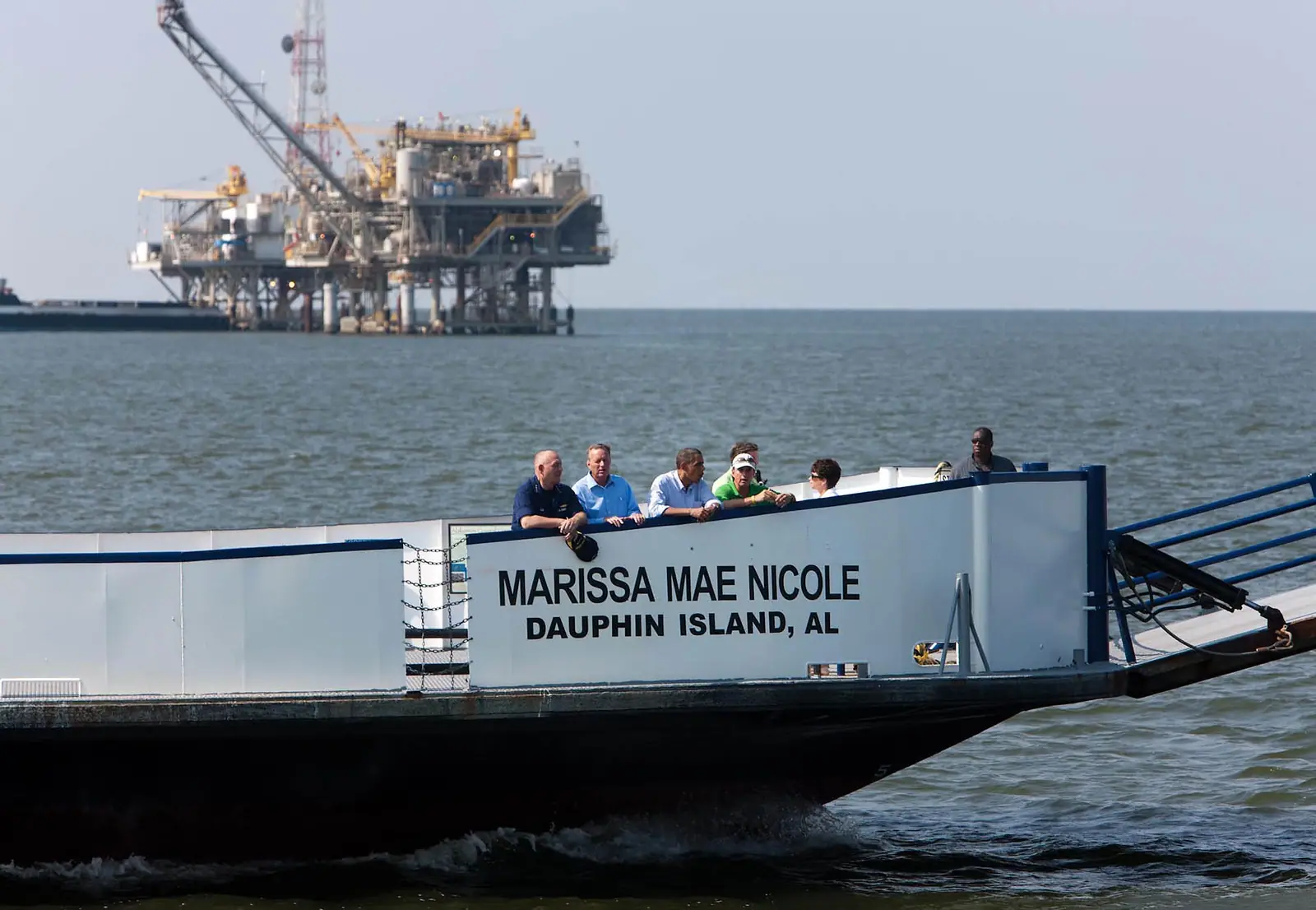
It is a working vehicle ferry rather than a sightseeing cruise, and the distinction matters. Two vessels operate, the Fort Morgan and the Marissa Mae Nicole, with at least one running year-round and both in service through the busy summer. Departures go roughly every ninety minutes, with the first out of Fort Morgan around eight in the morning. The evening trips only run during Daylight Saving, which catches people out in November.

Fares are modest and charged per element rather than per party: a small vehicle under twenty-two feet, everyone in it charged separately as passengers, a lower rate for a motorcycle, and a foot-passenger fare that includes a bicycle. Children of three and under and pets travel free. There is no online booking and no advance ticketing of any kind. You drive to the landing, you queue, you buy at the window, and on a summer afternoon you may wait for a later sailing.

Then there is the thing that has to be said clearly. This service has stopped before. It was suspended in the pandemic, it has had temporary shutdowns since, and it suspends routinely whenever winds top thirty-five miles an hour or seas exceed six feet. Do not build a day around it without confirming, that morning, that it is sailing.

Getting there and parking

The eastern landing is at the very end of Fort Morgan Road (Highway 180), immediately beside the fort, about twenty-two miles west of the Highway 59 junction in Gulf Shores. Allow forty minutes of driving and more at rental changeover on a Saturday.

The western landing is on Dauphin Island, where the crossing connects to Highway 193 north towards Mobile.

There is no scheduled bus, shuttle or taxi rank at the Fort Morgan end. Ride-hailing coverage out here is thin and should not be relied on for a return leg.

Foot passengers and cyclists can use the crossing without a vehicle at the lower fare, with a bicycle included, which makes the peninsula-to-island ride an appealing day for anyone travelling light.

Queue on the approach road at the landing. There is no separate ticket office to visit in advance and nothing to collect.

What it costs and how boarding works

Fares published by the operator have recently looked like this, one way:

Recent one-way fare
Vehicle under 22 feet$15.00
Vehicle 22 feet and over$20.00
Motorcycle$7.00
Each passenger, including the driver$6.00
Pedestrian, bicycle included$6.00
Children 3 and under, and petsFree

So a car with two adults and two older children is the vehicle fare plus four passenger fares, one way, and double that if you come back the same way.

Boarding is first come, first served. The operator states plainly that tickets are not sold online or in advance, and there is no reservation system to join. You buy at the landing.

Practically, that means arriving well before the sailing you want, particularly at weekends between May and September, when a full boat can leave you waiting ninety minutes for the next one. The queue is a single line of cars on the approach road with limited shade and no facilities beyond the landing itself, so take water.

Fares and schedules are set by the operator and change. The published timetable is the one to check, and the operator directs passengers to its own updates for current sailings.

Check that it is running. Every time.

This is the most useful paragraph on the page and the one visitors most often skip.

The crossing is weather-limited by design. The operator suspends sailings when winds exceed roughly thirty-five miles an hour or seas exceed about six feet, which on a bay entrance in a northerly blow happens several times a winter and occasionally in summer ahead of a system.

Beyond weather, the service has a history of longer stoppages. It was suspended in April 2020 during the pandemic, and there have been other temporary shutdowns since, including in 2023. A car ferry across a shipping channel is an expensive thing to run for a small population, and the funding and operating arrangements have not always been stable.

The practical rules, in order.

Check the day you intend to travel, not the week before, and check the operator's own updates rather than a third-party listing.

Have a plan B that does not involve the crossing. If you are on the Gulf Shores side, that plan is the fort, the refuge and the peninsula beaches, which is a good day anyway. If you are on the Dauphin Island side, it is a three-hour drive.

And if you are catching a specific return sailing, be at the landing early. Missing the last boat of the day on the wrong side of Mobile Bay is a long, expensive evening.

Is the crossing worth doing at all

It depends entirely on why you are going.

As a shortcut, yes, obviously. If Dauphin Island is your destination and you are already on the Fort Morgan peninsula, forty minutes on a boat against roughly three hours around the bay is not a close call.

As a day trip from a Gulf Shores rental, it is a commitment. You drive twenty-two miles to the landing, cross, spend a few hours on Dauphin Island and come back, and that is most of a day and a real spend for a family of four in both directions.

As an experience in its own right, it is better than it sounds. You cross a working ship channel with the Port of Mobile's traffic on it, bulk carriers and container ships passing close, oil and gas structures visible offshore, dolphins in the wake more often than not, and Fort Morgan's walls receding behind you. Forty minutes on open water for six dollars as a foot passenger is good value by any measure.

As a cycling link, it is quietly excellent. A bicycle travels with the foot-passenger fare, which makes a Fort Morgan to Dauphin Island ride a genuinely appealing day out for anyone who rides.

What it is not is a scheduled tour. There is no narration, no guide and no guarantee. It is public transport across a bay, which is exactly its charm.

Near The Ferry

Straight-line distances, so allow more on the road — the island is long and has one main parkway.

  • Cars moving along a two-lane coastal highway with open water alongside it
    Historic site

    Fort Morgan State Historic Site

    A brick pentagon at the end of a 22-mile peninsula, where Farragut ran the Union fleet into Mobile Bay in August 1864.

    1–3 hoursRecently around $8 for an adult, about $5 for students, seniors and children aged 6 to 18, with a family rate and free entry for military with ID.650 ft away

  • A long causeway bridge crossing open water towards a low shoreline
    Free
    Landmark

    Dauphin Island

    Fifteen miles of barrier island with 1,778 residents, a Civil War fort and a continental flyway, across the water from Fort Morgan.

    4–9 hoursThe island, the beach and the bird sanctuary are free. The ferry, Fort Gaines and the Estuarium each charge separately.5.6 mi away

  • An aerial view of an empty pale sand shoreline meeting an unbroken block of dense pine forest
    Free
    Nature preserve

    Bon Secour National Wildlife Refuge

    Alabama's last large stretch of wild coastal dune, walkable on foot only, and protected largely for a nocturnal mouse.

    1–4 hoursFree. There is no entry fee and no parking charge at the refuge trailheads.11.8 mi away

  • A wide empty stretch of pale sand running away beside shallow clear water with almost nobody on it
    Free
    Beach

    West Beach

    A ribbon of sand with the Gulf on one side and a ten-mile brackish lagoon on the other, reached by numbered street ends.

    1.5–5 hoursThe beach is free. Designated parking spaces at the street ends and at Lagoon Pass Park are charged by the hour in season.17.5 mi away

The Ferry: common questions

Is the Mobile Bay Ferry running?

At the time of writing it is operating, with at least one vessel running year-round and both in service through the summer. But this is a service with a history of stoppages: it was suspended in April 2020 and has had other temporary shutdowns since, including in 2023, and it suspends routinely when winds exceed about thirty-five miles an hour or seas exceed six feet. Check the operator's own updates on the day you intend to sail.

How much does the Mobile Bay Ferry cost?

Recently fifteen dollars one way for a vehicle under twenty-two feet, twenty for anything longer, seven for a motorcycle, and six dollars for each passenger including the driver. A foot passenger pays six dollars with a bicycle included, and children aged three and under travel free, as do pets. Everyone in the car is charged separately on top of the vehicle fare, which people underestimate when budgeting a return trip.

Can you book the Mobile Bay Ferry in advance?

No. The operator states that tickets are not sold online or in advance, and boarding is first come, first served at either landing. You drive to the queue and buy at the window. On summer weekends a full sailing can leave you waiting roughly ninety minutes for the next departure, in an open queue with little shade, so arrive early and take water with you.

How long does the Mobile Bay Ferry take?

About forty minutes across the mouth of Mobile Bay between Fort Morgan and Dauphin Island, with departures roughly every ninety minutes through the day. The alternative by road runs all the way around the bay through Mobile and takes close to three hours, which is the entire reason the crossing exists. The latest evening sailings only operate during Daylight Saving.